The birds found the parks first. Long before anyone drew a boundary, the continent's flyways ran through these same river corridors, barrier islands and mountain funnels, and the Park Service now protects an outsized share of the best of it. Two hundred and seven park units list birdwatching as an activity, and the spread between them is the whole story: a green river corridor through desert concentrates everything with wings, a barrier island catches whatever the Atlantic flyway drops, and a winter wetland in Florida stacks wading birds shoulder to shoulder.
The counts below come from each park's official checklist, which is the honest way to compare them. But raw numbers are only the start of a good bird park. The ten that follow earn their ranking on what you will actually see, and when.
The ten best national parks for birdwatching
01Grand Canyon
Grand Canyon fees, hours and alertsFour hundred forty-seven species, the longest checklist in the system, and the number still undersells it. The Colorado River is a green corridor through the desert, so riparian birds, canyon specialties and high-plateau species stack into one park. Then there is the headliner: California condors, nine feet of wingspan, seen regularly from the South Rim in the warmer months. The Park Service's own tip is to scan the cliffs and Douglas firs below Bright Angel Lodge late in the afternoon, which means your condor watch comes with a rim view and, if you time it right, a cocktail after.
02Big Bend
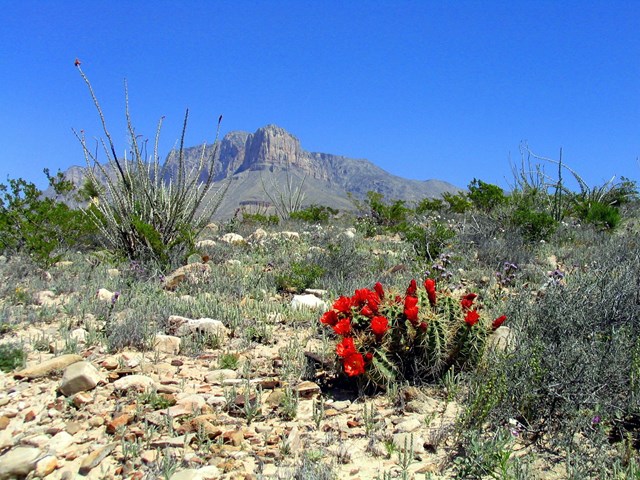
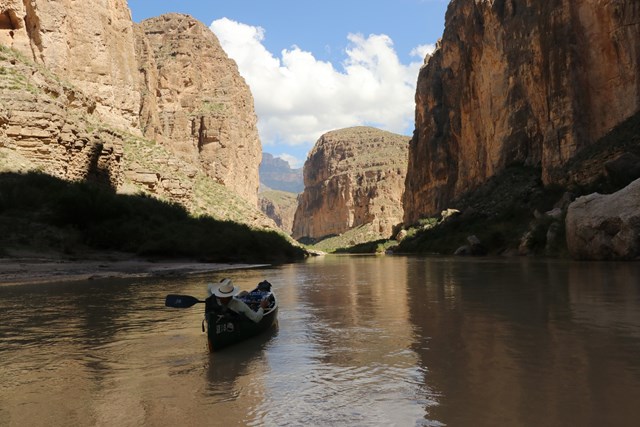
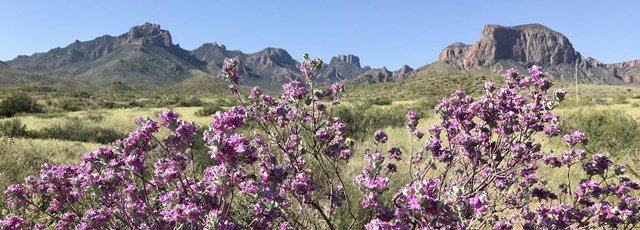
Big Bend fees, hours and alertsFour hundred nine species in one of the least-visited big parks in the lower 48, which is the kind of trade a birder takes every time. The Chisos Mountains rise out of the Chihuahuan Desert like an island, and their high woodlands hold the only nesting Colima warblers in the United States: a little gray bird with a white eyering that ornithologists knew only from Mexico until it turned up in the Chisos in 1928. Serious listers drive to Big Bend for that bird alone, then stay for the roadrunners, vermilion flycatchers and everything else the border funnels through.
03Everglades
Everglades fees, hours and alertsThree hundred fifty-nine species, but you come for one season and one trail. From December through March the marshes dry down, the wading birds crowd around the shrinking water, and a slow morning on the Anhinga Trail out-delivers most guided tours anywhere in the country: herons, egrets, anhingas and wood storks at arm's length, alligators underneath. Winter is also when the park is walkable, which is not a coincidence. Summer belongs to the mosquitoes, and they can have it.
04Padre Island
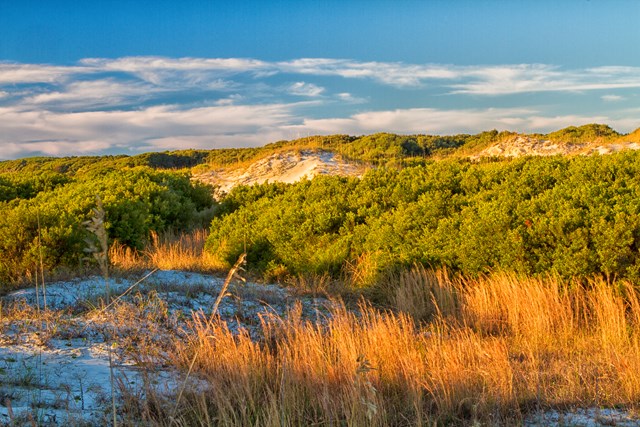
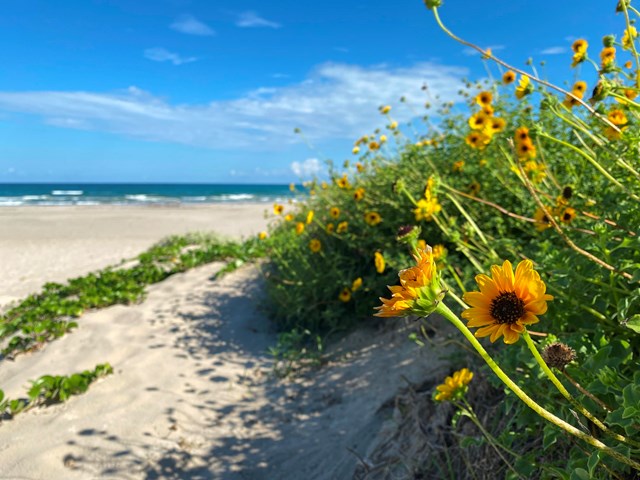
Padre Island fees, hours and alertsThree hundred seventy-two species on a barrier island that catches whatever the sky drops. Each spring, trans-Gulf migrants cross six hundred miles of open water and make landfall on the first vegetation they see, which is Padre Island. A north wind in April can ground thousands of them at once - warblers, orioles, tanagers dropping into the grass and shrubs in what birders call a fallout, which is one of the great spectacles in American birding and explains the checklist's length despite the park having barely a tree.
05Cape Hatteras
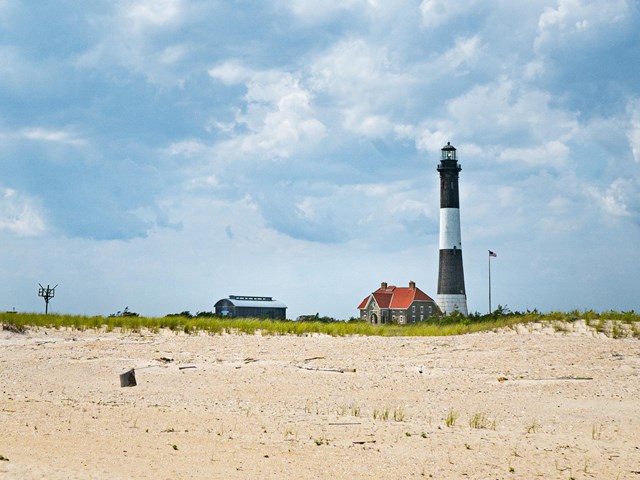
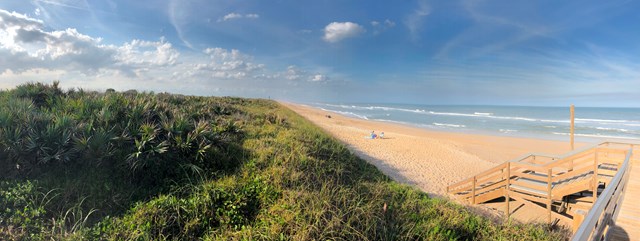
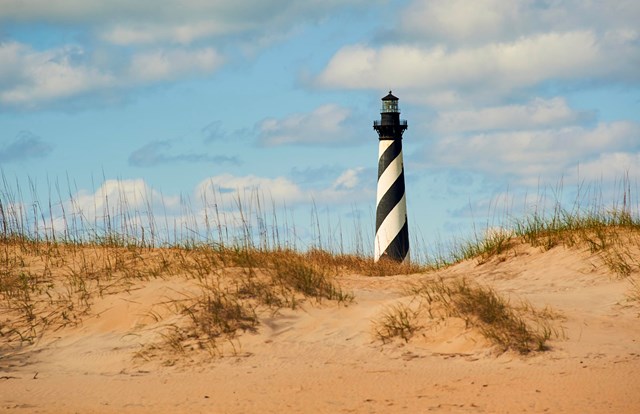
Cape Hatteras fees, hours and alertsThree hundred sixty-nine species, because barrier islands are the Atlantic flyway's rest stops and Hatteras is the one that sticks farthest into the ocean. Shorebirds and waders work the flats all year, fall brings the southbound parade down the Outer Banks, and winter fills the sounds with waterfowl. It is also one of the few places on this list where a non-birder traveling with you has a lighthouse to climb while you scope the ponds.
06Golden Gate
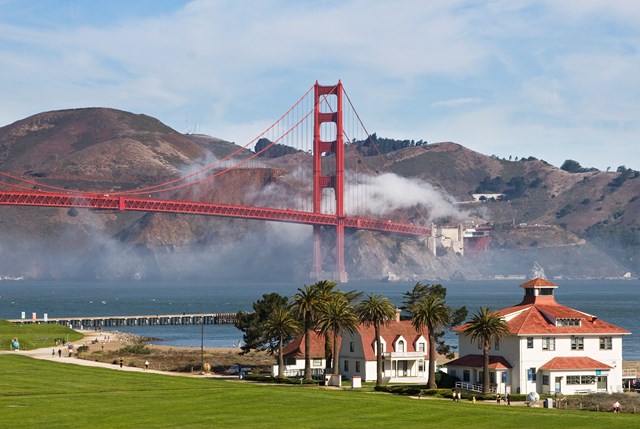
Golden Gate fees, hours and alertsThree hundred sixty-eight species inside a metropolitan area, which is the quiet proof that habitat edge beats wilderness for bird variety: ocean, bay, marsh and headland in one park. The showpiece is the hawk watch. Every fall, from mid-August into early December, Golden Gate Raptor Observatory volunteers count the Pacific raptor flyway from Hawk Hill in the Marin Headlands - 19 species of hawks, falcons and eagles riding the wind past the Golden Gate Bridge all season. It is the rare world-class migration you can watch with a latte within reach.
07Death Valley
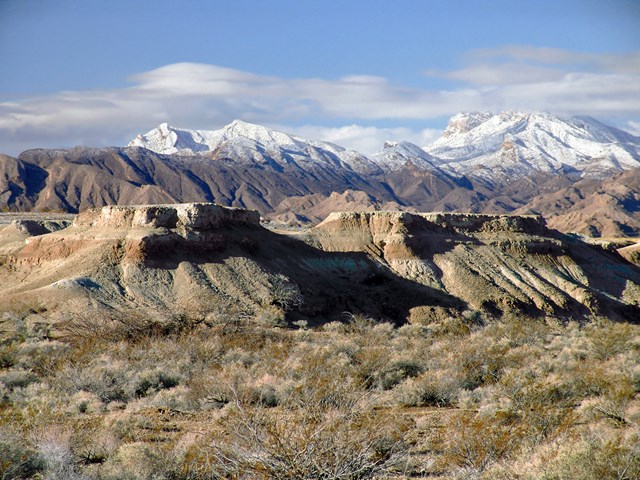
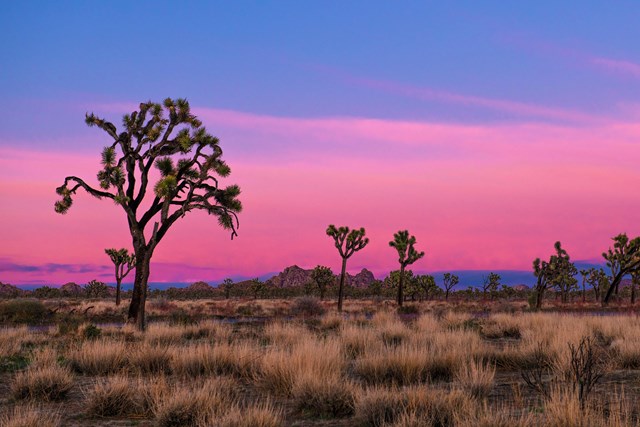
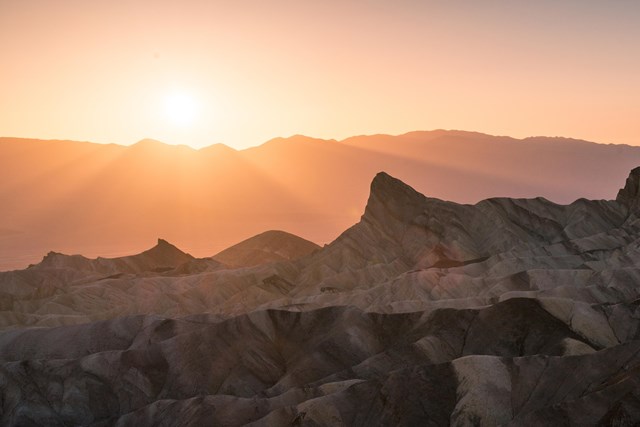
Death Valley fees, hours and alertsThree hundred eighty-four species in the driest place in North America, which surprises everyone until they think like a bird. In a desert, everything with wings concentrates at water, and Death Valley's springs, seeps and the greenery at Furnace Creek pull migrants out of an enormous empty sky. Spring and fall are the seasons: you bird the oases at dawn, watch the desert specialties the rest of the morning, and concede the afternoon to the heat, the way the birds do.
08Channel Islands
Channel Islands fees, hours and alertsThree hundred fifty-four species, and one you can see nowhere else on Earth. The island scrub-jay lives on Santa Cruz Island and only Santa Cruz Island - the only bird species endemic to a single island in North America, bigger and bluer than its mainland cousin, and famously unbothered by the people who make the boat trip to meet it. Add the seabird colonies, the island foxes trotting past your scope, and the pelicans commuting along the cliffs, and the boat fare pays for itself.
09Dry Tortugas
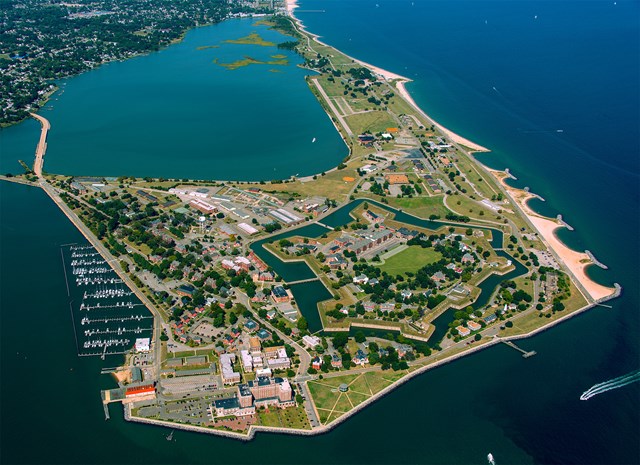
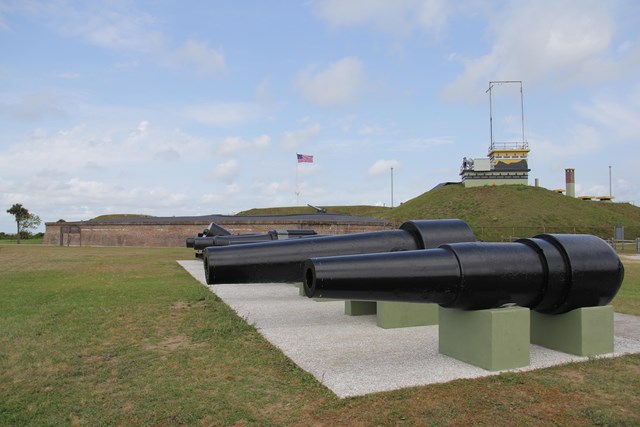
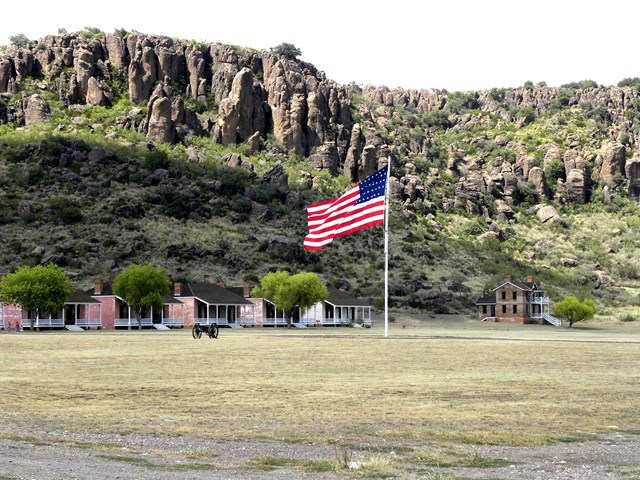
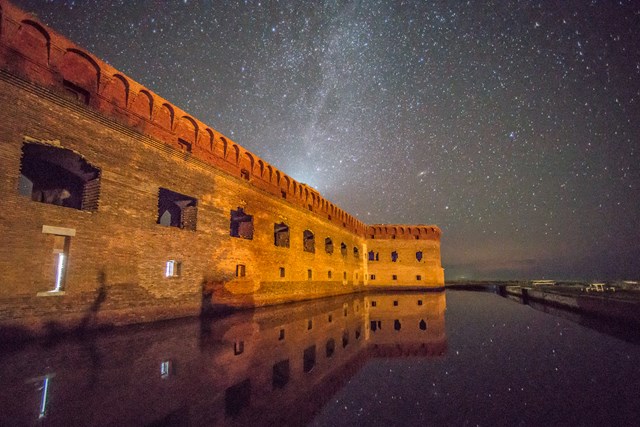
Dry Tortugas fees, hours and alertsTwo hundred eighty-nine species on the checklist, and almost none of them live there. The Tortugas are seven scraps of coral seventy miles past Key West, and their genius is location: the only regular nesting site in the continental United States for sooty terns, brown noddies, masked boobies and magnificent frigatebirds, plus a spring migration that drops northbound birds onto Fort Jefferson's parade ground like a layover. Fewer than 40 species bother with the place in winter. Go from early April to mid-May, when Bush Key hums and the whole Gulf seems to be passing through.
10Yellowstone
Yellowstone fees, hours and alertsTwo hundred eighty-nine species, and the most charismatic winter birding on the list. Trumpeter swans - North America's largest waterfowl, eight feet of wingspan - hold on the park's open rivers through the snow. Bald and golden eagles work the same water, ospreys return with the thaw, and the great gray owl on the park checklist is the bird that keeps people driving the Lamar Valley at first light. The megafauna get the postcards. The birds are why you bring the scope.




The island scrub-jay lives on Santa Cruz Island and only Santa Cruz Island - the only bird species endemic to a single island in North America, bigger and bluer than its mainland cousin, and famously unbothered by the people who make the boat trip to meet it.
When to go: the birding year in the parks
Spring is migration, and migration is the main event. From early April through mid-May, trans-Gulf migrants make landfall at Padre Island and the Dry Tortugas, warbler waves push up the coasts, and desert oases like Death Valley's fill with birds refueling. If you only plan one birding trip a year, plan it for late April.
Summer is for specialties. The migrants have arrived and settled in to breed: Colima warblers in the Chisos, sooty terns in the Tortugas, songbirds everywhere at dawn. The rule everywhere south of the snow line is the same - bird hard from first light until mid-morning, then surrender the day.
Fall belongs to the hawks. Southbound raptors concentrate along ridgelines and coasts, and you can watch the parade without moving: Hawk Hill in the Marin Headlands runs its count from mid-August into early December, while shorebirds stage down the Atlantic barrier islands through October.
Winter has its own logic. The Everglades dry down and the wading birds bunch up from December through March. Yellowstone's swans and eagles hold on the open rivers all winter. And from December 14 to January 5, the Christmas Bird Count runs its annual census, more than 125 years old and open to anyone with a free morning.
Our guide to the best time to visit a national park covers the weather half of the equation; the birds handle the rest.
How to start birding in a national park
Birding has the lowest barrier to entry of any park activity. You need no permit, no reservation, no gear beyond your eyes. A few things make the difference between a walk and a bird list.
- 1
Dawn beats noon. Birds sing and feed in the first hours of the day and go quiet in the heat. Every experienced birder's schedule is built around this, and so is every good birding memory.
- 2
Edges beat interiors. Birds concentrate where habitats meet: shoreline and marsh, forest and meadow, desert and spring. Pick trails that run along a boundary and you will see more in a mile than in five miles of deep woods.
- 3
Steal the local knowledge. Every park keeps an official bird checklist, and each park page below links you to it under Wildlife. The eBird hotspot for any of these parks shows what people saw there this week. Between the two, you know what is possible before you leave the parking lot.
- 4
Let the phone do the homework. The free Merlin Bird ID app from the Cornell Lab identifies birds by their songs as you record, which quietly removes the hardest part of starting out. It is not cheating. It is how everyone learns now.
- 5
Take the ranger walk. Most of the parks above run free bird walks in season, led by people who know which tree the owl is in. The checklist gets longer faster with a local.
- 6
Write it down. A species count for the morning, even a short one, is the hook that turns a walk into a hobby. Ask anyone who started.
A short history of birdwatching
American birding was born as an act of protest against hunting. At the end of the 1800s, a popular holiday tradition called the Side Hunt sent teams out on Christmas to see who could shoot the biggest pile of birds. On Christmas Day 1900, the ornithologist Frank Chapman proposed counting them instead: 27 birders ran 25 counts that day, from Toronto to Pacific Grove, California, and tallied about 90 species. The Christmas Bird Count has run every year since, now the longest-running wildlife census on Earth.
The sport's second founding came in 1934, twice. That April a 25-year-old named Roger Tory Peterson published A Field Guide to the Birds - rejected by at least four publishers, printed in a cautious run of 2,000 copies at $2.75, sold out in two weeks. His trick was drawing birds the way you actually see them: simplified, at a distance, with arrows pointing at the two marks that matter. The same year, conservationists bought a ridge in Pennsylvania where hunters shot migrating hawks for sport and turned it into Hawk Mountain, the world's first refuge for birds of prey. Identification and protection, the twin pillars of the whole enterprise, date to the same twelve months.
The third founding was digital. Life lists moved to notebooks, then to eBird, launched in 2002 by the Cornell Lab and Audubon, which turned a hundred years of private tallies into a shared, public map of where the birds actually are. The checklist counts on this page descend from that same impulse: somebody, somewhere, counted. The parks just gave them somewhere good to stand.
All 207 parks with birdwatching
Below is every Park Service unit where the official record lists birdwatching, with each park's checklist count where one is published. The counts reward coastline and water, so scan past the top: some of the best days are hiding in the middle of the list.
Free to enter Charges an entrance feePoints are the Park Service reference point for each unit, not a boundary.