A bus can do two very different jobs in a national park. It can be free transportation, dropping you at a trailhead with no narration and no agenda. Or it can be the whole show: a reserved seat, a planned route and a guide explaining what rolls past the window. Confusing the two is how people end up on a shuttle expecting a lecture, or paying for a tour when they only wanted a lift.
The Park Service lists 16 units with bus and shuttle guided tours. These seven are worth planning around, ranked on the quality of the ride and the clarity of the choice. The ranking is an editorial choice, not a promise that any bus runs on the day you arrive; seasonal schedules, road work and restoration projects all move the goalposts. Check the park's current transportation page, then enjoy the rare pleasure of watching a national park go by while someone else drives.
The seven best bus and shuttle tours in the national parks
01Denali
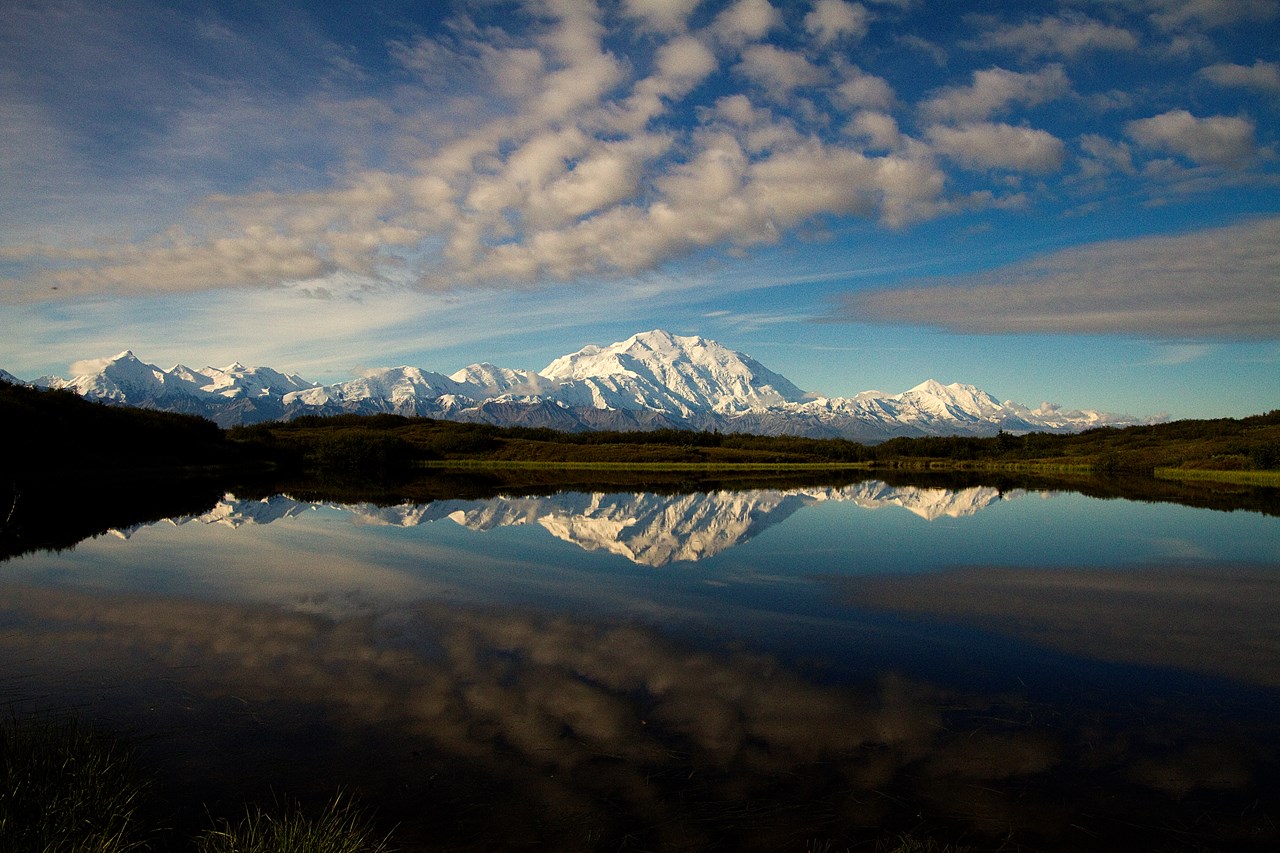
Denali fees, hours and alertsThe greatest bus ride in the system, on a road you cannot simply drive. Denali makes the two-bus choice explicit: tan tour buses carry certified driver-naturalists on fixed round-trip itineraries, while green transit buses let you hop off for a hike and board a later one. In 2026 the Natural History Tour ran about 4.5 to five hours to Primrose Ridge at Mile 17 and the Tundra Wilderness Tour about five to 5.5 hours to the East Fork near Mile 43, at $116.75 and $144.75 per adult respectively, park entrance fee included. The Pretty Rocks bridge was completed in September 2026, but the park expected full west-end bus service to resume only for the 2027 season, so buy the tour for the year you are going, not for an old brochure photo of Wonder Lake. Tour buses do not hop, do not stop at road campgrounds and answer to the concessioner, not the ranger desk.
02Glacier
Glacier fees, hours and alertsThe most handsome buses in America. Glacier runs its interpretive tours on a fleet of historic red buses, rollback tops included, some of which have been climbing Going-to-the-Sun Road since the mid-1930s. They were the first authorized motor transportation in any national park, and a seat in one is still the classic way to see the road if you would rather watch the scenery than the drop-offs. Sun Tours adds interpretive trips highlighting Blackfeet culture from both sides of the park. For pure transportation, the park's Logan Pass shuttle runs in season; in 2026 it became a ticketed express from Apgar, Lake McDonald Lodge, St. Mary and Rising Sun, so check the current system before assuming you can flag a bus at any pullout. The red bus is the tour; the shuttle is the tool.
03Crater Lake
Crater Lake fees, hours and alertsThe ride that lets the driver see the caldera too. Crater Lake's concession-operated summer trolley makes a narrated circuit of the 33-mile Rim Drive in about two hours, with five to seven overlook stops and enclosed, wheelchair-accessible trolleys seating 25. Service usually begins in July and runs into September. Two things this is not: it is not a hop-on shuttle to an arbitrary trailhead, and it is not the boat. Lake boat tours are unavailable in 2026 and 2027 while the Cleetwood Cove trail and lakeshore facilities are rebuilt, so buy a trolley ticket for the rim views, not for a lake landing that does not currently exist.
04Acadia
Acadia fees, hours and alertsThe free one, and one of the best ideas in the park system. Acadia's Island Explorer is a fare-free, propane-powered bus system linking the park's trailheads, carriage roads, campgrounds and Bar Harbor, running since 1999 with partner support. There is no narration and no ticket: this is transportation as a park amenity, and it turns a car-free Acadia vacation from a stunt into a plan. Park once, ride all week, and get off at whatever trailhead looks good. The seasonal routes and schedules change, so pick up the current map before you build the itinerary.
05Grand Canyon
Grand Canyon fees, hours and alertsThe South Rim of the Grand Canyon offers both bus jobs side by side. The park's free shuttles loop between the visitor center, lodges, campgrounds, trailheads and overlooks on three to five routes depending on the season, the flexible choice when you know where you want to get off. The paid coach tours, operated by Xanterra, sell guided trips to Hermits Rest, Desert View and the sunrise and sunset points, with wheelchair-accessible coaches by prior arrangement. A coach to Desert View is not a substitute for a shuttle to your trailhead, and a free shuttle is not a geology lecture. Neither South Rim plan transfers to the North Rim, where services and access differ. Check the current schedule before you build the day around a bus.
06Everglades
Everglades fees, hours and alertsAt Everglades, the Shark Valley tram is a narrated two-hour tour of a 15-mile loop straight into the River of Grass, with alligators, wading birds and a guide who knows where both tend to be. It is a seated interpretation of one extraordinary place, not a transfer between the park's far-flung districts; Shark Valley is an hour's drive from Flamingo, so decide which Everglades you want before you buy. The open-air tram runs in sun and heat, so bring water and a hat, and remember that wildlife sets its own schedule. No sighting is promised, but the odds here are as good as the park system offers.
07Gettysburg
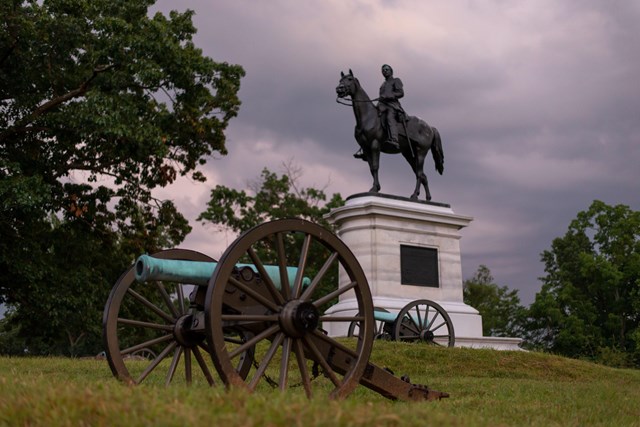
Gettysburg fees, hours and alertsThe person talking matters more than the vehicle. At Gettysburg, the park licenses battlefield guides through its own examination, and a bus carrying one turns a drive past monuments into an account of decisions made on the ground you are crossing. You can tour the field in your own car for free, and plenty of visitors should; the licensed guide is for the visitor who wants the terrain explained, not just seen. Confirm that a particular bus trip includes a licensed guide, where it boards and how long it spends at stops. The wheel is old. The story is the product.






When to ride: a bus-and-shuttle year in the parks
Summer is the full menu. Denali's buses, Glacier's red fleet, Crater Lake's trolley and Acadia's Island Explorer all run their deepest schedules, and all are at their most competitive. Book the narrated tours ahead, especially Denali, and treat the shuttle systems as the way around full parking lots rather than as a backup.
Spring and fall are the shoulder play. Acadia's buses run into the fall color, South Rim shuttles thin out with the crowds, and battlefield tours get easier to book. Some systems simply stop: Crater Lake's trolley packs up in September, and Going-to-the-Sun Road services end with the alpine season. Check whether the bus outlasts the crowds before planning around it.
Winter is the off-season for wheels. Most park shuttle and tour systems suspend entirely, the South Rim's routes contract, and Denali's road belongs to the snow. The exception that proves the rule is a ranger program or a ski-shuttle, not a narrated tour. Assume nothing runs until the park's page says it does.
How to pick the right bus
- 1
Decide whether you want interpretation or transportation. Denali sells both on the same road, and Glacier and the Grand Canyon run the two side by side. Narration, a fixed route and a reserved seat cost money; a seat to the trailhead often costs nothing. Buy the one you actually need.
- 2
Book the scarce seat first. Denali's tour buses and Glacier's red buses fill ahead, and both answer to concessioners, not to the park's information desk. The rest of the day can be built around the ticket, not the reverse.
- 3
Check the year's road, not the brochure's. Denali's tours end at Mile 43 until west-end service resumes, and Crater Lake's boat tours are suspended through 2027. A completed bridge or a reopened road changes what a tour can show you, and marketing lags behind both.
- 4
Read the reboarding rules. A tour bus does not wait while you hike, and some shuttles, like Glacier's 2026 Logan Pass express, board ticketed passengers only. If your plan is hop-off, hop-on, buy the product that allows it.
- 5
Plan the last mile. Shark Valley is an hour from the park's other districts, Logan Pass shuttles board at specific lots, and battlefield tours leave from specific doors. The bus solves the park's roads, not your arrival at its stop.
A short history of the park bus
The park bus is older than the park road. In 1914, Roe Emery and Walter White introduced motorized sightseeing to Glacier, the first authorized motor transportation in any national park, and the White Motor Company buses they ordered in the 1930s became the red fleet still climbing to Logan Pass today. Yellowstone's yellow stages and Yosemite's early auto caravans came from the same idea: the park as a place you were shown.
The second act was triage. By 1972, the new Anchorage-to-Fairbanks highway was about to pour traffic into what was then Mount McKinley National Park, and Park Service leaders, watching what crowds had done to Yosemite and Yellowstone, restricted private cars beyond Savage River and put visitors on buses. It was the system's first big bet that a shuttle could protect both wildlife and the experience of watching it, and it worked: Denali's is now the longest continuously running shuttle system in the Park Service.
Since then the bus has become standard equipment. Acadia's fare-free Island Explorer arrived in 1999, Zion and the Grand Canyon built mandatory or near-mandatory shuttle seasons, and Glacier's red buses kept their 1930s sheet metal over modern running gear. The national park was invented for the railroad, adapted to the automobile, and saved, in more than one valley, by the bus.
All 16 parks with bus and shuttle tours
Below is every Park Service unit that lists bus or shuttle guided tours. Click through for each park's fees, hours and alerts, and read the park's own transportation pages for the operator, schedule and booking rules that apply this season. A listing is not a promise that any particular bus runs today.
Free to enter Charges an entrance feePoints are the Park Service reference point for each unit, not a boundary.