Organ Pipe Cactus National Monument
Look closely. Look again. The sights and sounds of Organ Pipe Cactus National Monument, an International Biosphere Reserve, reveal a thriving community of plants and animals. Human stories echo throughout the Sonoran Desert, chronicling thousands of years of desert living. A wilderness hike, a scenic drive, or a night of camping will expose you to a living desert abounding with hidden life.
Alerts
- ClosureTemporary Road Closures in Effect
The following roads are temporary closed: West Border Road (Roosevelt Reservation) from the Lukeville Port of Entry west to Quitobaquito Springs, East Border Road (Roosevelt Reservation) from the Lukeville Port of Entry east to the Santa Rosa Mountains, and Camino de Dos Republicas. See Alerts for more info.
- CautionFeral Dogs May Be Seen in Organ Pipe Cactus National Monument
Feral dogs may be present at the Twin Peaks Campground and around the Kris Eggle Visitor Center. Visitors should not attempt to feed or water these dogs or approach them in any way as they may carry disease or become hostile.
- CautionPozo Nuevo Road to Bates Well Ranch High Clearance, 4-Wheel Drive Only
High Clearance, 4-wheel drive is required from where Pozo Nuevo Road begins along South Puerto Blanch Drive to Bates Well Ranch area. The road is washed out in areas. Bates Well Ranch is still accessible from the north on Darby Well Road.
Fees & passes
| Type | Cost | |
|---|---|---|
| Private VehicleValid for 7 days. This fee includes all occupants of a non-commercial vehicle. | $25 | |
| MotorcycleValid for 7 days. Admits up to 2 private, non-commercial motorcycles with up to 4 total passengers. | $20 | |
| Per PersonValid for 7 days. This fee applies to bicycles and walk-ins (per person) | $15 | |
| Passes | ||
| Annual Entrance - ParkThis pass is valid for Organ Pipe Cactus National Monument for one year from the month of purchase. The pass admits all passengers in a private vehicle and is non-transferable. | $45 | |
| Annual Entrance - ParkThis pass is valid for Organ Pipe Cactus National Monument for one year from the month of purchase. The pass admits all passengers in a private vehicle and is non-transferable. | $45 | |
Organ Pipe Cactus offers several options for visitors to purchase their admission into the monument. Discover these options below and select which is right for you! Your fee dollars help pay for maintenance, interpretive operations, and preservation efforts at the monument. Thank you for your support!
Hours
| Organ Pipe Cactus National Monument | Daily · All Day |
When to go
March draws the most visits here and July the fewest, averaged over 2021 to 2025.
Campgrounds
| Alamo Canyon Campground | 4 sites | |
| $16 a night · Open 24 hours a day, 365 days a year. You can self-register 24 hours a day at the campground. · 4 reservable | ||
| Twin Peaks Campground | 209 sites | |
| $20 a night · Open 24 hours. | ||
Every campground here has its own page on Campsite Atlas, with site counts, hookups, rig limits and booking windows. All of them on one page → How park camping works
Visitor centers
- Kris Eggle Visitor Center ↗Passport stamp
The Kris Eggle Visitor Center is a great place to start your visit at Organ Pipe Cactus. Rangers there provide orientation to the monument, answer questions, and offer suggestions on how to best enjoy your experience during your time here.
Explore
Things to do
- Hike the Historic Old County Road!3-5 Hours
Enjoy scenic views along an 8-mile one-way hike as you explore a historic wagon road through the Sonoran Desert!
Opens on the Park Service site - Hike the Estes Canyon/Bull Pasture Loop1-3 Hours
The moderate Estes Canyon trail provides ample wildlife and wildflower viewing opportunities while a steep, strenuous climb up the Bull Pasture spur trail will reward visitors with spectacular views of the Sonoran Desert.
Opens on the Park Service site - Hike the Senita Basin Loop2-3 Hours
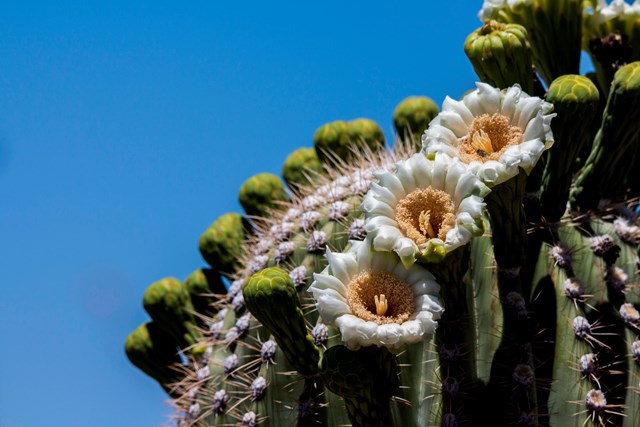
Easy loop trail located in a low elevation area on the south side of the Puerto Blanco Mountains. This lush basin is one of the few places you can see all three of the park’s columnar cacti coexisting: saguaro, organ pipes, and the senita cacti.
Opens on the Park Service site - Drive the Ajo Mountain Loop2-5 Hours
The Ajo Mountain Drive is a 21-mile (34 km) graded, one-way dirt road that gives visitors an excellent overview of the landscape and flora or Organ Pipe Cactus National Monument.
Opens on the Park Service site - Hike to Lost Cabin4-5 Hours
Looking for a lengthier hike that showcases Organ Pipe’s mining history? This 8 mile (12.9 kilometers) round-trip hike includes the Victoria Mine site and an old stone mining house known as Lost Cabin.
Opens on the Park Service site - Hike to Victoria Mine3-4 Hours
Experience Organ Pipe’s mining history by hiking to Victoria Mine, one of the oldest prospecting sites in southwest Arizona and the heart of gold and silver mining in the Organ Pipe area.
Opens on the Park Service site
Show all 12Hide
- Unearth Dripping Springs Mine2-3 Hours
Stumble upon an old copper mine while exploring along the trail in the Puerto Blanco Mountains!
Opens on the Park Service site - Hike Alamo Canyon1-2 Hours
The Alamo Canyon Trail follows an old road to a historic ranch house and corral, and provides ample wildlife and wildflower viewing opportunities.
Opens on the Park Service site - Hike Arch Canyon60-90 Minutes
One of the most photographed sites along the Ajo Mountain Drive are the double arches carved into the mountains. Walking the easy, relatively flat Arch Canyon trail provides wonderful opportunities to see wildflowers and gaze upon the rhyolite…
Opens on the Park Service site - Walk Your Pet along Palo Verde Trail90-120 Minutes
Easy, pet-friendly trail that connect the Kris Eggle Visitor Center to Twin Peak Campground. Provides beautiful views of the Ajo Mountains.
Opens on the Park Service site - Watch the Sunset from Desert View Trail30-60 Minutes
Searching for that quintessential desert sunset? The Desert View trail has your back! This short, 1.2 mile (1.9 km) can be reached from Twin Peaks Campground and loops around striking stands of organ pipe cacti.
Opens on the Park Service site - See Endangered Pupfish Along the Visitor Center Nature Trail15-30 Minutes
Next to the Kris Eggle Visitor Center is a 1/10th of a mile paved nature trail that loops by a small pond and showcases native Sonoran Desert plant life.
Opens on the Park Service site
Films
National Park Service productions, public domain.
News
- Organ Pipe Cactus National Monument Certified as a Dark Sky Park ↗2026-05-15
The National Park Service and DarkSky International are pleased to announce Organ Pipe Cactus National Monument as a Dark Sky Park.
Map
Interactive map by the National Park Service
On the National Register nearby
- Milton MineSite · Lukeville · 5 mi
- Victoria MineSite · Lukeville · 7.4 mi
- Gachado Well and Line CampBuilding · Lukeville · 12.1 mi
- Dos Lomitas RanchHistoric district · Ajo · 14 mi
Public land nearby
Distances are approximate. Wilderness Atlas publishes a center point and an acreage for each area rather than a boundary, so each area is treated here as a circle of the same size and the figure is the gap to that circle.
Guidebooks for Arizona's national parks and the Southwest
We earn a small commission if you buy through these links. It does not change what we list.
Titles come from Open Library's catalog, matched by subject.
Reference
Wildlife
Full checklist: 274 birds, 73 mammalsHide
Raptors & owlsAmerican Kestrel · Barn Owl · Black Vulture · Burrowing Owl · Common Black-Hawk · Cooper's Hawk · Crested Caracara · Ferruginous Hawk · Ferruginous Pygmy-owl · Golden Eagle · Great Horned Owl · Harris' Hawk · Long-eared Owl · Merlin · Northern Harrier · Osprey · Peregrine Falcon · Prairie Falcon · Red-tailed Hawk · Sharp-shinned Hawk · Swainson's Hawk · Turkey Vulture · White-tailed Kite · Zone-tailed Hawk · elf owl
Waterfowl & wadersAmerican Coot · American White Pelican · American Wigeon · Black Rail · Black-crowned Night-Heron · Blue-winged Teal · Brown Pelican · Bufflehead · Canada Goose · Cattle Egret · Cinnamon Teal · Common Goldeneye · Common Loon · Common Merganser · Double-crested Cormorant · Eared Grebe · Great Blue Heron · Great Egret · Green Heron · Green-winged Teal · Hooded Merganser · Least Bittern · Least Grebe · Lesser Scaup · Northern Pintail · Pied-billed Grebe · Red-breasted Merganser · Ring-necked Duck · Ruddy Duck · Sandhill Crane · Snowy Egret · Western Grebe · White-faced Ibis · wood duck · wood stork
Shorebirds & seabirdsAmerican Avocet · Baird's Sandpiper · Black Tern · Bonaparte's Gull · California Gull · Common Snipe · Forster's Tern · Greater Yellowlegs · Grey Phalarope · Heermann's Gull · Herring Gull · Killdeer · Least Sandpiper · Least Tern · Lesser Yellowlegs · Long-billed Curlew · Long-billed Dowitcher · Red-necked Phalarope · Ring-billed Gull · Semipalmated Plover · Solitary Sandpiper · Spotted Sandpiper · Stilt Sandpiper · Western Sandpiper · Willet · common tern · wilson's phalarope
Gamebirds & dovesBand-tailed Pigeon · CommonGround-dove · Gambel's quail · Inca Dove · Mourning Dove · Rock Dove · White-winged Dove
WoodpeckersAcorn Woodpecker · Gila Woodpecker · Ladder-backed Woodpecker · Lewis' Woodpecker · Northern Flicker · Red-breasted Sapsucker · flicker · red-naped sapsucker
Hummingbirds & swiftsAnna's Hummingbird · Black-chinned Hummingbird · Broad-billed Hummingbird · Broad-tailed Hummingbird · Calliope Hummingbird · Costa's Hummingbird · Rufous Hummingbird · Vaux's Swift · White-throated Swift
Also on the checklistAbert's Towhee · American Cliff Swallow · American Goldfinch · American Pipit · American Redstarat · American Robin · Audubon's Warbler · Bank Swallow · Barn Swallow · Bell's Vireo · Belted Kingfisher · Bendire's Thrasher · Bewick's Wren · Black Phoebe · Black-and-white Warbler · Black-chinned Sparrow · Black-headed Grosbeak · Black-necked Stilt · Black-throated Blue Warbler · Black-throated Gray Warbler · Black-throated Green Warbler · Black-throated Sparrow · Blue Grosbeak · Blue-gray Gnatcatcher · Brewer's Blackbird · Brewer's Sparrow · Bronzed Cowbird · Brown Creeper · Brown Thrasher · Brown-crested Flycatcher · Brown-headed Cowbird · Buff-collared Nightjar · Bullock's oriole · Bushtit · Canvasback · Canyon Towhee · Canyon Wren · Cassin's Kingbird · Cedar Waxwing · Chipping Sparrow · Clark's Nutcracker · Clay-colored Sparrow · Common Moorhen · Common Raven · Common Yellowthroat · Cordilleran Flycatcher · Curve-billed Thrasher · Dark-eyed Junco · Dickcissel · Eastern Meadowlark · Eastern Phoebe · European Starling · Evening Grosbeak · Fox Sparrow · Gadwall · Golden-crowned Kinglet · Golden-crowned Sparrow · Grace's Warbler · Gray Flycatcher · Gray Vireo · Great-tailed Grackle · Greater Roadrunner · Green-tailed Towhee · Hammond's Flycatcher · Hermit Thrush · Hermit Warbler · Hooded Oriole · Horned Lark · House Finch · House Sparrow · House Wren · Hutton's Vireo · Indigo Bunting · Lark Bunting · Lark Sparrow · Lawrence's Goldfinch · Lazuli Bunting · Le Conte's Thrasher · Lesser Goldfinch · Lesser Nighthawk · Lincoln's Sparrow · Loggerhead Shrike · Lucy's Warbler · Macgillivray's Warbler · Magnolia Warbler · Mallard · Marsh Wren · Mountain Bluebird · Nashville Warbler · Northern Beardless-Tyrannulet · Northern Mockingbird · Northern Rough-winged Swallow · Northern Shoveler · Northern Waterthrush · Olive-sided Flycatcher · Orange-crowned Warbler · Pacific-slope Flycatcher · Painted Bunting · Painted Redstart · Phainopepla · Pine Siskin · Purple Finch · Purple Martin · Pyrrhuloxia · Red-breasted Nuthatch · Red-eyed Vireo · Red-winged Blackbird · Redhead · Rock Wren · Rose-breasted Grosbeak · Roseate Spoonbill · Ruby-crowned Kinglet · Rufous-crowned Sparrow · Rufous-winged Sparrow · Sage Sparrow · Savannah Sparrow · Say's Phoebe · Scarlet Tanager · Scissor-tailed Flycatcher · Scott's Oriole · Song Sparrow · Sora · Steller's Jay · Summer Tanager · Swainson's Thrush · Swamp Sparrow · Tecolote occidental · Tennessee Warbler · Thick-billed Kingbird · Townsend's Solitaire · Townsend's Warbler · Tree Swallow · Tropical Kingbird · Varied Bunting · Varied Thrush · Vermilion Flycatcher · Vesper Sparrow · Violet-green Swallow · Virginia's Warbler · Warbling Vireo · Western Bluebird · Western Kingbird · Western Meadowlark · Western Tanager · Western Wood-Pewee · White-crowned Sparrow · White-throated Sparrow · Yellow Warbler · Yellow-breasted Chat · Yellow-headed Blackbird · ash-throated flycatcher · black-tailed gnatcatcher · cactus wren · common poorwill · crissale thrasher · golden-winged warbler · northern cardinal · ovenbird · sage thrasher · spotted towhee · verdin · willow flycatcher · wilson's warbler
Small mammalsAllen's Jackrabbit · Arizona Woodrat · Arizona cotton rat · Arizona pocket mouse · Audubon's Cottontail · Bailey's pocket mouse · Black-tailed Jack Rabbit · Botta's pocket gopher · Brush Deermouse · Canyon Deermouse · Desert Woodrat · Fulvous Harvest Mouse · Harris' antelope squirrel · House Mouse · Merriam's kangaroo mouse · Merriam's mouse · Rock Squirrel · Western Harvest Mouse · banner-tailed kangaroo rat · black-eared mouse · cactus mouse · deer mouse · desert kangaroo rat · desert pocket mouse · desert shrew · little pocket mouse · rock pocket mouse · round tailed ground squirrel · southern grasshopper mouse · white-throated woodrat
PredatorsAlleghanian Spotted Skunk · American Black Bear · Bobcat · Hooded Skunk · Ringtail · Striped Skunk · badger · common raccoon · coyote · gray fox · hog-nosed skunk · jaguarundi · kit fox
Hoofed mammalsCollared Peccary · Mule Deer · Pronghorn · White-tailed Deer · bighorn sheep
BatsCalifornia leaf-nosed bat · Eastern Small-footed Bat · Fringed Myotis · Lesser long-nosed bat · Southern Yellow Bat · Townsend's big-eared bat · Underwood's mastiff bat · Western red bat · Yuma Myotis · big brown bat · big long-nosed bat · brazilian free-tailed bat · cave myotis · hoary bat · lesser long-nosed bat · long-tongued bat · pallid bat · pocketed free-tailed bat · western mastiff-bat · western pipistrelle
Also on the checklistCatamount · Jaguar · White-nosed Coati · californis moytis · domestic dog
Activities
Activity guides for this park Birdwatching in the national parks · Camping in the national parks · Hiking in the national parks · Horseback riding in the national parks · Stargazing in the national parks · Wildlife watching in the national parks
Weather & climate
Summer months are hot, with temperatures exceeding 100F during the day and night-time temperatures in the high 70's. Winter months are milder, with temperatures in the 70s during the day and 30's to 40's in the evening.
Questions people ask
How much does it cost to enter Organ Pipe Cactus?
Entrance is $25 per private vehicle, $20 per motorcycle, and $15 per person on foot or bike. Valid for 7 days.
Source: National Park Service
Which passes work at Organ Pipe Cactus?
The $80 America the Beautiful pass covers the entrance fee here, and a Organ Pipe Cactus-only annual pass is $45.
Source: Is the pass worth it
Can I pay the entrance fee in cash?
No. Organ Pipe Cactus takes cards only at the entrance.
Source: National Park Service
When is entrance to Organ Pipe Cactus free?
Next on October 27, Theodore Roosevelt's birthday. 2 fee-free days are left this year, for US residents only.
Source: Free entrance days
Do I need a reservation to enter Organ Pipe Cactus?
No. There is no timed-entry or entrance reservation at Organ Pipe Cactus. Camping and some tours have their own reservations.
Source: National Park Service
Is Organ Pipe Cactus open year-round?
Yes. The grounds are open 24 hours a day, year-round.
Source: National Park Service
Can I camp in Organ Pipe Cactus?
Yes. The Park Service lists 2 campgrounds in Organ Pipe Cactus: Alamo Canyon and Twin Peaks. 2 take reservations through Recreation.gov.
Which Organ Pipe Cactus campgrounds have showers, hookups, or a dump station?
Showers: Twin Peaks. Dump station: Twin Peaks.
Source: Campgrounds
Do camping fees at Organ Pipe Cactus include the entrance fee?
No. Camping is charged per night on top of the entrance fee or a pass; Alamo Canyon is $16 a night.
Source: Campgrounds
Is anything closed at Organ Pipe Cactus right now?
3 active alerts as of October 14, 2026: Temporary Road Closures in Effect; Feral Dogs May Be Seen in Organ Pipe Cactus National Monument; and more.
Source: Alerts
How busy is Organ Pipe Cactus?
174,623 recreation visits in 2025, number 182 of 387 units that report visitation.
Source: Most visited parks
Is there cell service at Organ Pipe Cactus?
At the park's reference point, FCC coverage maps show AT&T 5G. No reported coverage for Verizon and T-Mobile. Coverage inside the park varies by location.
Source: FCC Broadband Map
Follow this park
- Alerts feed (RSS)
- Every active Park Service alert for this unit, one item each, rebuilt with the nightly data refresh.
- Add dates to your calendar (.ics file)
- Fee-free entrance days that apply here and each published hours exception, as all-day events.