Tule Springs Fossil Beds National Monument
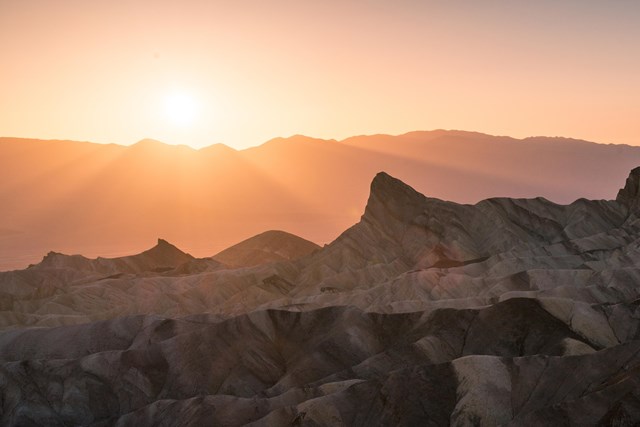
Over the last ~570,000 years, water has transformed the Upper Las Vegas Valley. Tule Springs Fossil Beds National Monument is an urban park that preserves the unique story of this ever-changing environment.
About under an hour from Las Vegas by car.
Alerts
- ClosureSouth Unit temporarily closed south of Grand Teton Drive; Trailheads remain open.
The South Unit of Tule Springs Fossil Beds is temporarily closed to visitor access south of Grand Teton Drive, between Tule Springs Parkway and North Fifth Street in North Las Vegas for visitor safety during construction activities.
Fees & passes
Free. No entrance fee here.
Hours
| Tule Springs Operating Hours | Daily · Sunrise to Sunset |
When to go
November draws the most visits here and July the fewest, averaged over 2021 to 2025.
Explore
Trails and hikes
These are the walks the Park Service lists for Tule Springs Fossil Beds. Each one opens on the Park Service site.
- Hiking at Tule Springs Fossil Beds National Monument
The Aliante Loop temporary trail offers year-round scenic views of Mojave Desert scrub habitat and the Las Vegas Range, wildflower blooms in spring and summer are a sight to see.
These are named Forest Service trails on National Forest land within 15 miles of Tule Springs Fossil Beds. Each one opens on Trailhead Atlas.
Distance is measured to the nearer end of the trail. Every named Forest Service trail on Trailhead Atlas.
Events
- 09:30 AM · freeThe event will be held in the parking area at N. Durango Drive & W. Moccasin Rd.
- 09:00 AM · freeNevada State Museum Las Vegas at the Springs Preserve 309 S Valley Blvd Las Vegas, NV
Map
Interactive map by the National Park Service
Public land nearby
Distances are approximate. Wilderness Atlas publishes a center point and an acreage for each area rather than a boundary, so each area is treated here as a circle of the same size and the figure is the gap to that circle.
Guidebooks for Nevada's national parks and the Southwest
We earn a small commission if you buy through these links. It does not change what we list.
Titles come from Open Library's catalog, matched by subject.
Reference
Wildlife
Seen this monthGreater Roadrunner 6× · Western Meadowlark 1× · Great Horned Owl 1×Research-grade observations within 25 km, last 30 days, via iNaturalist
Full checklist: 226 birds, 25 mammalsHide
Raptors & owlsAmerican Kestrel · American harrier · Bald Eagle · Barn Owl · Broad-winged Hawk · Common Black Hawk · Cooper's Hawk · Ferruginous Hawk · Golden Eagle · Harris's Hawk · Merlin · Mississippi Kite · Northern Saw-whet Owl · Osprey · Peregrine Falcon · Prairie Falcon · Red-shouldered Hawk · Sharp-shinned Hawk · Short-eared Owl · Swainson's Hawk · Turkey Vulture · Zone-tailed Hawk
Waterfowl & wadersAmerican Bittern · American Coot · American White Pelican · American Wigeon · Black-crowned Night Heron · Black-necked Grebe · Blue Goose · Blue-winged Teal · Bufflehead · Cackling Goose · Canada Goose · Cinnamon Teal · Clark's Grebe · Common Goldeneye · Common Merganser · Double-crested Cormorant · Great Blue Heron · Great Egret · Greater Scaup · Greater White-fronted Goose · Green-winged Teal · Hooded Merganser · Horned Grebe · Lesser Scaup · Mexican Duck · Neotropic Cormorant · Northern Pintail · Pied-billed Grebe · Red-breasted Merganser · Ruddy Duck · Sandhill Crane · Snowy Egret · Tundra Swan · Virginia Rail · Western Grebe · White-faced Ibis · Wood Duck
Shorebirds & seabirdsAmerican Avocet · Arctic Tern · California Gull · Dunlin · European Herring Gull · Forster's Tern · Greater Yellowlegs · Killdeer · Least Sandpiper · Least Tern · Lesser Yellowlegs · Long-billed Dowitcher · Mountain Plover · Red-necked Phalarope · Ring-billed Gull · Snowy Plover · Solitary Sandpiper · Spotted Sandpiper · Western Sandpiper · Willet · Wilson's Phalarope · Wilson's Snipe
Gamebirds & dovesBand-tailed Pigeon · Common Pigeon · Eurasian Collared Dove · Gambel's Quail · Inca Dove · Mourning Dove · White-winged Dove
WoodpeckersGilded Flicker · Hairy Woodpecker · Ladder-backed Woodpecker · Red-breasted Sapsucker · Red-naped Sapsucker · Yellow-bellied Sapsucker · red-shafted flicker
Hummingbirds & swiftsAmerican Black Swift · Anna's Hummingbird · Black-chinned Hummingbird · Broad-tailed Hummingbird · Costa's Hummingbird · Rufous Hummingbird · Vaux's Swift
Also on the checklistAbert's Towhee · Ae'o · American Bushtit · American Cliff Swallow · American Crow · American Dusky Flycatcher · American Goldfinch · American Grey Flycatcher · American Pipit · American Robin · Arizona Bell's vireo · Audubon's Warbler · Barn Swallow · Bell's Sparrow · Bell's Vireo · Belted Kingfisher · Bewick's Wren · Black Phoebe · Black-tailed Gnatcatcher · Black-throated Sparrow · Blue-gray Gnatcatcher · Bohemian Waxwing · Brewer's Blackbird · Brewer's Sparrow · Brown Creeper · Brown Thrasher · Brown-headed Cowbird · Cactus Wren · Canyon Wren · Cassin's Finch · Cassin's Kingbird · Cassin's Vireo · Cedar Waxwing · Chukar · Clark's Nutcracker · Common Gallinule · Common Peafowl · Common Poorwill · Common Starling · Common Yellowthroat · Crissal Thrasher · Dark-eyed Junco · Eastern Kingbird · Eastern Phoebe · Evening Grosbeak · Fox Sparrow · Gadwall · Golden-crowned Kinglet · Golden-crowned Sparrow · Great-tailed Grackle · Greater Roadrunner · Green-tailed Towhee · Grey-headed Junco · Hammond's Flycatcher · Hermit Thrush · Horned Lark · House Finch · House Sparrow · House Wren · Juniper Titmouse · Lark Bunting · LeConte's Thrasher · Lesser Goldfinch · Lesser Nighthawk · Lincoln's Sparrow · Loggerhead Shrike · Mallard · Marsh Wren · Mountain Bluebird · Mountain Chickadee · Northern Mockingbird · Northern Raven · Northern Rough-winged Swallow · Northern Shoveler · Olive-sided Flycatcher · Orange-crowned Warbler · Phainopepla · Philadelphia Vireo · Pine Siskin · Plumbeous Vireo · Purple Martin · Pygmy Nuthatch · Red Crossbill · Red-breasted Nuthatch · Red-eyed Vireo · Red-winged Blackbird · Rock Wren · Roughleg · Ruby-crowned Kinglet · Sage Thrasher · Sagebrush Sparrow · Saltbush Sparrow · Sand Martin · Savannah Sparrow · Say's Phoebe · Scarlet Flycatcher · Scissor-tailed Flycatcher · Slate-colored Junco · Song Sparrow · Sora · Spotted Towhee · Steller's Jay · Tecolote occidental · Thick-billed Kingbird · Townsend's Solitaire · Tree Swallow · Tropical Kingbird · Veery · Verdin · Vesper Sparrow · Violet-green Swallow · Warbling Vireo · Western Bluebird · Western Kingbird · Western Meadowlark · Western Wood Pewee · White-breasted Nuthatch · White-crowned Sparrow · White-eyed Vireo · White-throated Sparrow · Willow Flycatcher · Woodhouse's Scrub-Jay · Yellow-billed Cuckoo · Yellow-green Vireo
Small mammalsAudubon's Cottontail · Black Rat · Black-tailed Jack Rabbit · Botta's Pocket Gopher · Cactus Deermouse · Desert Woodrat · House Mouse · Little Pocket Mouse · Long-tailed Pocket Mouse · Merriam's Kangaroo Rat · Round-tailed Ground Squirrel · Southern Grasshopper Mouse · White-tailed Antelope Squirrel
PredatorsAmerican Badger · Bobcat · Coyote · desert kit fox
BatsBig Brown Bat · Black Bat · Brazilian Free-tailed Bat · California Myotis · Hoary Bat · Pallid Bat · Western Pipistrelle · Yuma Myotis
Activities
Activity guides for this park Birdwatching in the national parks · Hiking in the national parks · Horseback riding in the national parks · Stargazing in the national parks · Wildlife watching in the national parks
All 13 activitiesHide
Weather & climate
The Tule Springs Fossil Beds is located within the Mojave Desert, with summer temperatures often exceeding 110° F (43.3° C). There are no sources of water or shade at Tule Springs, so it is recommended that you plan your summer visit (May - September) to Tule Springs before the hottest part of the day and exercise caution. Winter temperatures range, on average, from the low 30's F to low 70's F.
Questions people ask
Does Tule Springs Fossil Beds charge an entrance fee?
No. Tule Springs Fossil Beds is free to enter.
Source: National Park Service
What are the hours at Tule Springs Fossil Beds?
Standard hours are Sunrise to Sunset, every day.
Source: National Park Service
Is anything closed at Tule Springs Fossil Beds right now?
1 active alert as of October 14, 2026: South Unit temporarily closed south of Grand Teton Drive; Trailheads remain open.
Source: Alerts
How busy is Tule Springs Fossil Beds?
51,964 recreation visits in 2025, number 261 of 387 units that report visitation.
Source: Most visited parks
Is there cell service at Tule Springs Fossil Beds?
At the park's reference point, FCC coverage maps show Verizon 5G, AT&T 5G, and T-Mobile 5G. Coverage inside the park varies by location.
Source: FCC Broadband Map
What is the weather like at Tule Springs Fossil Beds?
The Tule Springs Fossil Beds is located within the Mojave Desert, with summer temperatures often exceeding 110° F (43.3° C). There are no sources of water or shade at Tule Springs, so it is recommended that you plan your summer visit (May - September) to Tule Springs before the hottest part of the day and exercise caut
Source: Weather & climate
Follow this park
- Alerts feed (RSS)
- Every active Park Service alert for this unit, one item each, rebuilt with the nightly data refresh.
- Add dates to your calendar (.ics file)
- Fee-free entrance days that apply here and each published hours exception, as all-day events.
More in Nevada