Dry Tortugas National Park
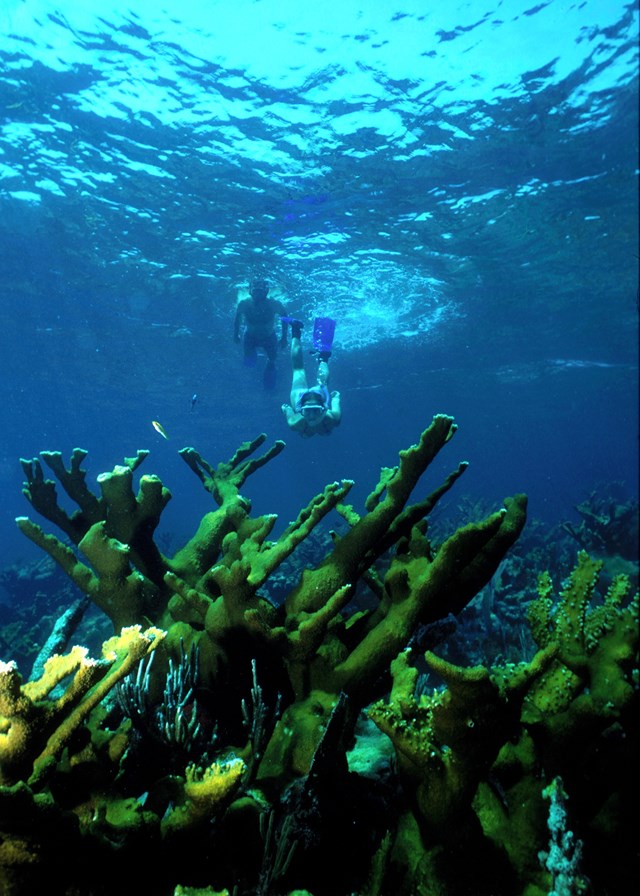
Almost 70 miles (113 km) west of Key West lies the remote Dry Tortugas National Park. This 100-square mile park is mostly open water with seven small islands. Accessible only by boat or seaplane, the park is known the world over as the home of magnificent Fort Jefferson, picturesque blue waters, superlative coral reefs and marine life, and the vast assortment of bird life that frequents the area.
Located approximately 70 miles west of Key West it is accessible only by a daily concession ferry, private boats, charter boats, or seaplane. Directions from the Park Service ↗
Alerts
- ClosureSeasonal Closure: Bush Key
Most of Bush Key is now open to the public. To protect nesting frigatebirds, a small area on the north side of Bush Key, all of Long Key, and all vegetation remains closed until further notice.
- ClosureSections of moat wall closed until Winter 2026
Sections of the moat wall that were damaged by Hurricanes Helene and Milton (2024) are undergoing repair and reinforcement. For your safety, please follow posted signage and do not cross any barricades.
- ClosureCurrent Alerts and Conditions
Be sure to review the Alerts and Conditions below before and during your visit for additional, up-to-date information on closures, cautions, and other current park conditions.
- CautionGarden Key Harbor Light
Vessel operators - the Garden Key Harbor Light is undergoing repairs and is extinguished. At this time it is unknown when the light will again be illuminated.
- InformationMigrant Notice
Like elsewhere in the Florida Keys, we have seen an increase in Cuban migrants arriving by boat from Cuba and landing on the islands of Dry Tortugas National Park. You may observe migrant landings at the park and visitor areas may be impacted.
Fees & passes
| Type | Cost |
|---|---|
| Per PersonThe entrance fee for Dry Tortugas National Park is $15.00 per person and is good for 7 consecutive days. Any person 15 years old and under is exempt from paying an entrance fees (including international visitors). Ferry tickets include the cost of entrance to the park, but NOT camping fees. Seaplane will charge the entrance fee upon arrival. | $15 |
The entrance fee for Dry Tortugas National Park is $15.00 per person and is good for 7 consecutive days. Any person 15 years old and under is exempt from paying an entrance fee.
Hours
| Dry Tortugas | Daily · All Day |
When to go
May draws the most visits here and October the fewest, averaged over 2021 to 2025.
Campgrounds
| Garden Key Campground | 8 sites | |
| $15 a night · Campgrounds are open 24/7 all year round including holidays. · 8 first-come | ||
Every campground here has its own page on Campsite Atlas, with site counts, hookups, rig limits and booking windows. All of them on one page → How park camping works
Visitor centers
- Florida Keys Eco-Discovery Center ↗
Enter Florida Keys Eco-Discovery Center and take a journey into the world of the native plants and animals of the Keys, both on land and underwater. Leave with an increased awareness and appreciation of the need to protect and conserve ecosystems of South Florida.
- Garden Key Visitor Center ↗Passport stamp
Garden Key Visitor Center is located inside Fort Jefferson. At the visitor center you will find artifacts, an informational movie, the bookstore, and souvenirs.
Explore
Things to do
- Viewing Wildlife in Dry Tortugas
Viewing wildlife in Dry Tortugas
Opens on the Park Service site - Fishing at Dry Tortugas National Park
Fishing at Dry Tortugas
Opens on the Park Service site - Paddle to Loggerhead Key
Paddle to Loggerhead Key
Opens on the Park Service site - Snorkel Little Africa
Snorkel Little Africa
Opens on the Park Service site
Films
National Park Service productions, public domain.
Map
Interactive map by the National Park Service
On the National Register nearby
- Dry Tortugas National ParkSite · Key West · 0 mi
Guidebooks for Dry Tortugas National Park and the South
We earn a small commission if you buy through these links. It does not change what we list.

Local history books for Dry Tortugas National Park
Titles come from Open Library's catalog, matched by subject.
Reference
Wildlife
Seen this monthBelted Kingfisher 1× · Peregrine Falcon 1× · Osprey 1×Research-grade observations within 25 km, last 30 days, via iNaturalist
Full checklist: 260 birds, 6 mammalsHide
Raptors & owlsAmerican Kestrel · Barn Owl · Barred Owl · Broad-winged Hawk · Burrowing Owl · Caribbean Short-eared Owl · Cooper's Hawk · Eastern Screech-Owl · Hen Harrier · Long-eared Owl · Merlin · Osprey · Peregrine Falcon · Red-shouldered Hawk · Red-tailed Hawk · Sharp-shinned Hawk · Swainson's Hawk · Swallow-tailed Kite · Turkey Vulture
Waterfowl & wadersAmerican Bittern · American Coot · American White Ibis · American White Pelican · Black Rail · Black-crowned Night Heron · Blue-winged Teal · Brown Pelican · Canada Goose · Cattle Egret · Common Loon · Double-crested Cormorant · Fulvous Whistling Duck · Glossy Ibis · Great Egret · Great White Heron · Green Heron · Green-winged Teal · Hooded Merganser · King Rail · Lesser Scaup · Little Blue Heron · Mangrove Rail · Northern Pintail · Pied-billed Grebe · Red-breasted Merganser · Reddish Egret · Ring-necked Duck · Sandhill Crane · Snow Goose · Snowy Egret · Tricolored Heron · Virginia Rail · Yellow-crowned Night-Heron
Shorebirds & seabirdsAmerican Avocet · American Golden-Plover · American Oystercatcher · American Woodcock · Audobon's Shearwater · Baird's Sandpiper · Black Skimmer · Black Tern · Black-bellied Plover · Bonaparte's Gull · Bridled Tern · Brown Booby · Buff-breasted Sandpiper · Caspian Tern · Common Snipe · Common Tern · Dunlin · European Herring Gull · Forster's Tern · Glaucous Gull · Great Black-backed Gull · Greater Yellowlegs · Gull-billed Tern · Killdeer · Laughing Gull · Least Sandpiper · Least Tern · Lesser Black-backed Gull · Lesser Yellowlegs · Long-billed Curlew · Long-billed Dowitcher · Magnificent Frigatebird · Masked Booby · Pectoral Sandpiper · Piping Plover · Pomarine Jaeger · Red-footed Booby · Ring-billed Gull · Roseate Tern · Royal Tern · Ruddy Turnstone · Sabine's Gull · Sanderling · Sandwich Tern · Semipalmated Plover · Semipalmated Sandpiper · Short-billed Dowitcher · Solitary Sandpiper · Sooty Tern · Spotted Sandpiper · Stilt Sandpiper · Upland Sandpiper · Western Sandpiper · White-rumped Sandpiper · Willet · Wilson's Phalarope · Wilson's Plover · Wilson's Storm-Petrel
Gamebirds & dovesCommon Ground Dove · Common Pigeon · Eurasian Collared Dove · Mourning Dove · Ruddy Quail-Dove · White-crowned Pigeon · White-tipped Dove · White-winged Dove · Zenaida Dove
WoodpeckersHairy Woodpecker · Northern Flicker · Red-headed Woodpecker · Yellow-bellied Sapsucker
Hummingbirds & swiftsBlack-chinned Hummingbird · Chimney Swift · Ruby-throated Hummingbird
Also on the checklistAcadian Flycatcher · Ae'o · American Crow · American Flamingo · American Goldfinch · American Pipit · American Redstart · American Robin · Anhinga · Antillean Nighthawk · Arctic Skua · Bahama Mockingbird · Bahama Swallow · Baltimore Oriole · Bananaquit · Barn Swallow · Belted Kingfisher · Black Noddy · Black Phoebe · Black-and-white Warbler · Black-billed Cuckoo · Black-whiskered Vireo · Blue Grosbeak · Blue-gray Gnatcatcher · Blue-headed Vireo · Bobolink · Brown Noddy · Brown Thrasher · Brown-headed Cowbird · Cave Swallow · Cedar Waxwing · Chipping Sparrow · Chuck-will's-widow · Clay-colored Sparrow · Cliff Swallow · Common Eider · Common Grackle · Common Moorhen · Common Nighthawk · Common Starling · Common Yellowthroat · Connecticut Warbler · Cuban Pewee · Dark-eyed Junco · Dickcissel · Dovekie · Eastern Bluebird · Eastern Kingbird · Eastern Meadowlark · Eastern Phoebe · Eastern Towhee · Eastern Wood Pewee · Eurasian Whimbrel · Field Sparrow · Fox Sparrow · Gadwall · Golden-winged Warbler · Grasshopper Sparrow · Gray Catbird · Gray Kingbird · Gray-cheeked Thrush · Great Crested Flycatcher · Hermit Thrush · House Sparrow · House Wren · Indigo Bunting · La Sagra's Flycatcher · Lark Sparrow · Least Flycatcher · Lesser Nighthawk · Limpkin · Lincoln's Sparrow · Loggerhead Shrike · Mallard · Mangrove Cuckoo · Nashville Warbler · Northern Cardinal · Northern Gannet · Northern Mockingbird · Northern Rough-winged Swallow · Northern Shoveler · Olive-sided Flycatcher · Orchard Oriole · Ovenbird · Pacific Diver · Painted Bunting · Philadelphia Vireo · Prothonotary Warbler · Purple Gallinule · Purple Martin · Red Knot · Red-eyed Vireo · Red-winged Blackbird · Reeve · Rose-breasted Grosbeak · Roseate Spoonbill · Ruby-crowned Kinglet · Sand Martin · Savannah Sparrow · Scarlet Tanager · Scissor-tailed Flycatcher · Seaside Sparrow · Sedge Wren · Shiny Cowbird · Smooth-billed Ani · Song Sparrow · Sora · Stripe-headed Tanager · Summer Tanager · Swainson's Thrush · Swainson's Warbler · Swamp Sparrow · Thick-billed Vireo · Townsend's Warbler · Tree Swallow · Tufted Titmouse · Veery · Vesper Sparrow · Warbling Vireo · Western Kingbird · Whip-poor-will · White-crowned Sparrow · White-eyed Vireo · White-tailed Tropicbird · White-throated Sparrow · Willow Flycatcher · Wood Thrush · Yellow-bellied Flycatcher · Yellow-billed Cuckoo · Yellow-breasted Chat · Yellow-faced Grassquit · Yellow-headed Blackbird · Yellow-throated Vireo
Small mammalsBlack Rat
Marine mammalsBottlenose Dolphin · False Killer Whale · Fraser's Dolphin · Short-finned Pilot Whale · West Indian manatee
Activities
Activity guides for this park Birdwatching in the national parks · Camping in the national parks · Canoeing and kayaking in the national parks · Diving and snorkeling in the national parks · Fishing in the national parks · Stargazing in the national parks · Wildlife watching in the national parks
All 16 activitiesHide
Weather & climate
The climate in the Dry Tortugas is subtropical, which basically means that it has warm and tropical weather in the range of 60°F to 90°F. The two main seasons are the winter stormy season from December through March which is windier and sees rougher seas, and the summertime tropical storm season from June through November where there is a higher chance of isolated storms. During the summers it is hot and humid. During the winter the temperature is milder and drier.
Questions people ask
How much does it cost to enter Dry Tortugas?
Entrance is $15 per person on foot or bike. The entrance fee for Dry Tortugas National Park is $15.00 per person and is good for 7 consecutive days.
Source: National Park Service
Which passes work at Dry Tortugas?
The $80 America the Beautiful pass covers the entrance fee here.
Source: Is the pass worth it
Can I pay the entrance fee in cash?
No. Dry Tortugas takes cards only at the entrance.
Source: National Park Service
When is entrance to Dry Tortugas free?
Next on October 27, Theodore Roosevelt's birthday. 2 fee-free days are left this year, for US residents only.
Source: Free entrance days
Do I need a reservation to enter Dry Tortugas?
No. There is no timed-entry or entrance reservation at Dry Tortugas. Camping and some tours have their own reservations.
Source: National Park Service
Is Dry Tortugas open year-round?
Yes. The grounds are open 24 hours a day, year-round.
Source: National Park Service
Can I camp in Dry Tortugas?
Yes. The Park Service lists 1 campground in Dry Tortugas: Garden Key.
Do any Dry Tortugas campgrounds have hookups or showers?
No. None of the 1 listed campgrounds report showers, electric hookups, or a dump station.
Source: Campgrounds
Do camping fees at Dry Tortugas include the entrance fee?
No. Camping is charged per night on top of the entrance fee or a pass; Garden Key is $15 a night.
Source: Campgrounds
Is anything closed at Dry Tortugas right now?
5 active alerts as of October 14, 2026: Seasonal Closure: Bush Key; Sections of moat wall closed until Winter 2026; and more.
Source: Alerts
How busy is Dry Tortugas?
89,355 recreation visits in 2025, number 228 of 387 units that report visitation.
Source: Most visited parks
What is the weather like at Dry Tortugas?
The climate in the Dry Tortugas is subtropical, which basically means that it has warm and tropical weather in the range of 60°F to 90°F. The two main seasons are the winter stormy season from December through March which is windier and sees rougher seas, and the summertime tropical storm season from June through Novem
Source: Weather & climate
Follow this park
- Alerts feed (RSS)
- Every active Park Service alert for this unit, one item each, rebuilt with the nightly data refresh.
- Add dates to your calendar (.ics file)
- Fee-free entrance days that apply here and each published hours exception, as all-day events.