A group campsite is not a standard campsite with extra chairs. The reservation may demand a minimum headcount, limit you to tents, allow only a few vehicles and offer no water. The Park Service lists 68 units with group camping, and the range is enormous: a $38 tent clearing in the Smokies and a $475 Yellowstone group loop are the same activity on paper and entirely different trips in practice.
Start with your real numbers: people, tents, vehicles and equipment. Then find a facility that accepts all of them, on your dates, with rules your group can actually live with. The nine below show the main models, from walk-to beach sites to a concessioner-booked Yellowstone loop. One rule outranks every other: never split a party across individual sites to dodge a group limit. Rangers have seen it, and it ends badly for the organizer.
The nine best parks for group camping
01Great Smoky Mountains: seven group areas, tents only
Great Smoky Mountains fees, hours and alertsGreat Smoky Mountains runs seven group-camping areas, including Big Creek, Cades Cove, Cataloochee, Cosby, Deep Creek, Elkmont and Smokemont, with recent capacities of 15 to 30 people and fees from $38 to $94 depending on area and site, per the NPS group-camp page. Reservations are required, the minimum party is seven campers and stays cap at 14 nights.
The trade-offs are plain: tents only, no generators, no hookups, no showers. A mixed tent-and-RV caravan needs a different plan, not an RV wedged into a tent site. Choose between areas on access and the trip your group wants; Cades Cove puts you in the famous valley, Big Creek on the quieter northeast side. Either way, confirm the named area is open before asking a dozen people to drive.
02Yosemite: 13 to 30 people, five cars, no exceptions
Yosemite fees, hours and alertsYosemite offers group sites at Wawona year-round and seasonally at Hodgdon Meadow, Bridalveil Creek and Tuolumne Meadows, subject to actual openings. The NPS campground page sets the terms: 13 to 30 people, tents only, up to five vehicles parked nearby, reservations required. A group of 12 misses the minimum; a group of 31 does not fit by adding one more tent at the edge. Coordinate carpools before you pay.
Check the exact opening, too: in 2026 Bridalveil Creek closed early after a lightning strike damaged its water and restroom systems, a reminder that even a booked Yosemite group site needs a conditions check near the date. No Yosemite campsite has RV hookups, so a group seeking powered sites should look outside the park. The reservation difficulty is real, but a standard site's availability is not a loophole around the group rules.
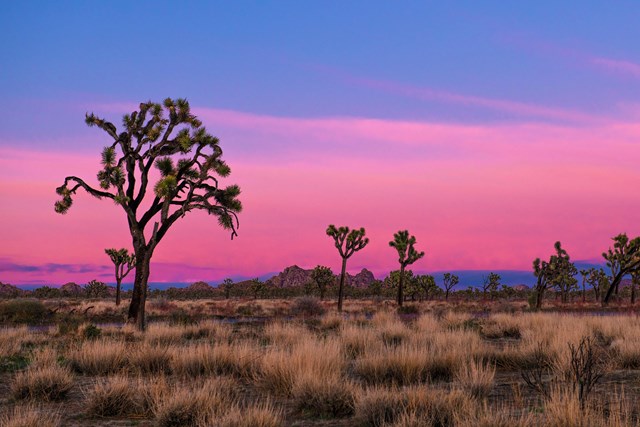
03Joshua Tree: Sheep Pass has rocks, not a water tap
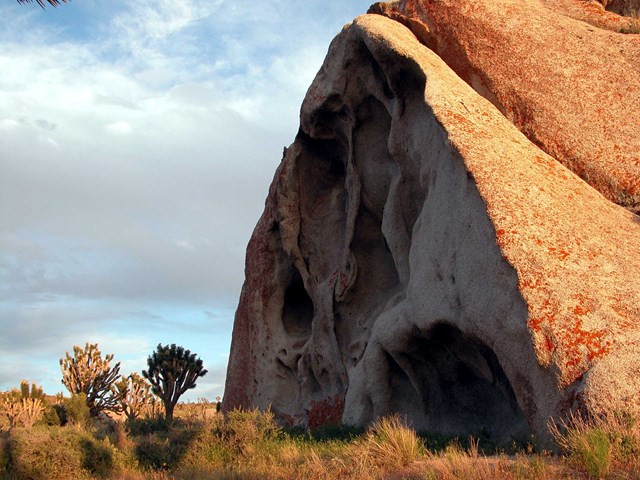
Joshua Tree fees, hours and alertsJoshua Tree offers group camping at Sheep Pass, Cottonwood and Indian Cove. Sheep Pass is the pick for most groups: six reservation-only sites among the rock formations, walking distance to climbing and hiking, with capacity varying by site. Check the current reservation listing for the group size each site permits. Its NPS facility page states the terms that matter: no water, no cell service, no store.
That single fact shapes the whole trip. Bring drinking and cooking water for the entire party, with extra for heat, and assign each vehicle its load before anyone leaves pavement. Reservations are required year-round and open six months ahead on Recreation.gov, whose individual site listing is the authority for exact capacity, vehicles and fee. Review summer heat and fire notices before picking a date; a desert group camp in August is a commitment, not a backdrop.
04Rocky Mountain: Glacier Basin, with a timed-entry bonus
Rocky Mountain fees, hours and alertsRocky Mountain runs group sites at Glacier Basin Campground on the Bear Lake side, in small, medium and large tiers recently priced at $50, $60 and $70 per night, per the NPS camping page. The sites book on Recreation.gov up to six months out, and a Glacier Basin reservation includes the park's timed-entry access for your stay, including the Bear Lake Road corridor, which solves the hardest logistics problem in the park.
The sites are tent-friendly with parking pads and the usual Rocky Mountain rules: two-vehicle limits, food storage in bear country, summer-only season at 8,500 feet. For a reunion that wants the classic Colorado itinerary of lakes, Trail Ridge Road and elk at dawn, this is the most complete group setup on the list.
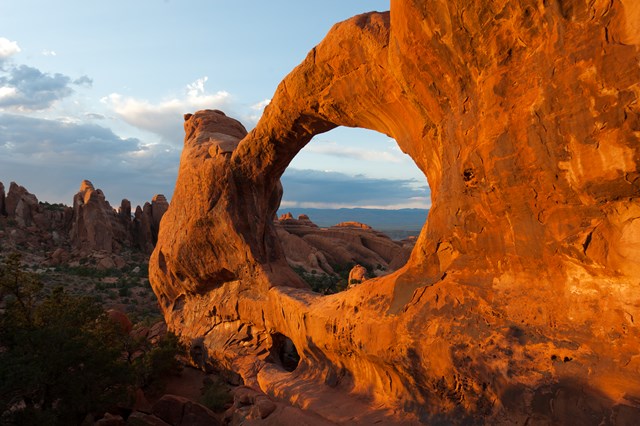
05Arches: Canyon Wren under the fins
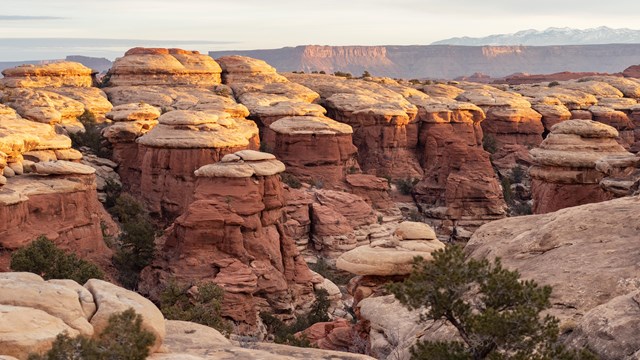
Arches fees, hours and alertsArches keeps two group sites at Devils Garden Campground, the only campground in the park, at the end of the 18-mile scenic drive among the fins. The Canyon Wren Group Site takes 11 to 35 campers across four price tiers, $75 to $160 per night, according to the reservation listing. The season runs March through October, and during it the campground fills every night.
The location is the argument: Devils Garden Trailhead, with Landscape Arch and the primitive loop, starts at the campground, so your group walks to one of the park's best hikes before the day-use lots fill. Book the moment the six-month window opens, bring your own water jugs for cooking cleanup, and plan spring or fall if August heat will flatten your crew.
06Yellowstone: group loops through the concessioner
Yellowstone fees, hours and alertsYellowstone does group camping differently: group sites at Bridge Bay, Grant Village and Madison book through the park's lodging concessioner, not Recreation.gov, with fees recently running $165 to $475 per night depending on group size, per the NPS campgrounds page. The sites are built for large groups with a designated leader, the classic scout troop or school trip.
The price buys location and infrastructure: big loops, central villages, and a base inside the world's first national park instead of an hour outside it. Contact Yellowstone National Park Lodges for current pricing and availability, book far ahead for summer, and brief your group on bear-country food rules before arrival. The animals here do not care that it is someone's first camping trip.
07Assateague: group tents behind the dunes
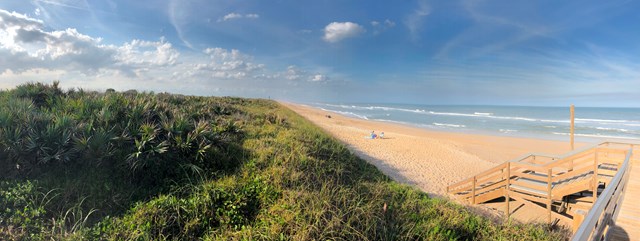
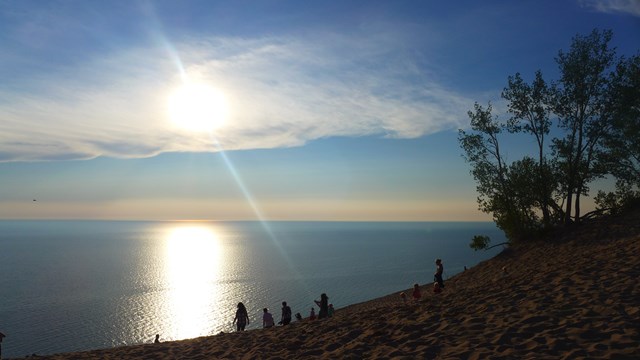
Assateague fees, hours and alertsAssateague runs oceanside group sites on the Maryland side: tent-only clearings 100 to 200 feet from a central parking area, for 7 to 25 campers at $80 per night, per the NPS camping page. The season runs March 15 through November 15, reservations open six months out, and weekend dates sell out the first day.
The setting does the work: your group falls asleep to surf and wakes to wild horses walking the camp road. The rules match the place: everything carries in from the parking area, shade is scarce, and the horses get 50 feet of room no matter how photogenic they look at the fire ring. For a scout troop or friend group on the East Coast, this is the beach camping trip that ruins other beach camping trips.
08Acadia: Schoodic Woods and the 90/10 release
Acadia fees, hours and alertsAcadia puts its group tent sites at Schoodic Woods Campground on the quiet Schoodic Peninsula, away from Mount Desert Island's traffic, with group sites recently listed at $60, per the NPS campground page. All reservations are online, and the park uses a 90/10 release: 90 percent of sites six months out on the first of the month at 10 a.m. Eastern, the last 10 percent 14 days ahead.
That second window is your friend if the first slipped by. Schoodic suits a group that wants the quieter Acadia: peninsula trails, rocky shoreline and a modern campground, with the understanding that Bar Harbor and the Park Loop Road are a drive away. Brief the group on the geography before booking; "Acadia campsite" can mean two very different peninsulas.
09Shenandoah: Big Meadows, small and simple
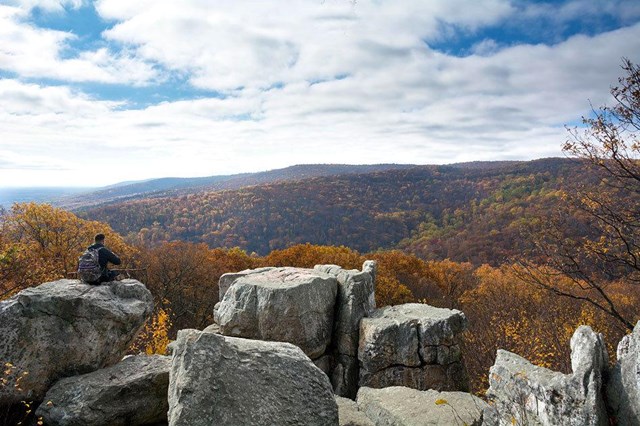
Shenandoah fees, hours and alertsShenandoah keeps two group sites at Big Meadows Campground, mile 51 on Skyline Drive, each taking 7 to 15 people for $75 per night, per the NPS campground page. The sites are nonelectric and generator-free, with the campground's store, showers and amphitheater a short walk away.
The scale is the point: this is the group site for a single extended family or a small club, not a jamboree, planted in the middle of the park's best waterfall and meadow country. Big Meadows books by reservation only, and Dark Hollow Falls and the Byrd Visitor Center are close enough that the group barely needs a plan beyond walking out the camp road.




When to go
Book before you pack, six months before. Nearly every park on this list releases group sites six months out, and the popular ones sell through on release day. Put the release date on the calendar, be online at the opening minute, and have a second-choice date ready.
Summer is peak everywhere, and priced like it. The big parks run full from late June through August. If your group can travel in the shoulder season, May and September deliver the same sites with thinner crowds and kinder weather in the desert parks.
Winter flips the map. Northern group camps close or go primitive, but the desert and southern parks come into their own: Joshua Tree, the Smokies' lower areas and Assateague's shoulder months are all better in the off-season than in the crush. A group that camps together in November has the park mostly to itself.
How to book a group campsite
- 1
Count first: people, tents, vehicles, gear. Every group site has a minimum, a maximum and a vehicle cap, and the right site is the one that fits all three.
- 2
Match the equipment rules. Many group sites are tents-only even in parks with RV loops elsewhere. Check before the cousin with the trailer commits.
- 3
Learn the release window and the seller. Most book on Recreation.gov six months out; Yellowstone books through its concessioner; Acadia splits its release 90/10. The calendar invite matters more than enthusiasm.
- 4
Brief the whole group. Arrival instructions, quiet hours, food storage, fire rules and the water plan go to everyone, not just the drivers.
- 5
Recheck conditions near the date. Campgrounds close for storms, lightning damage and repairs. A booked site still needs a week-out conditions check.
How group camping got organized
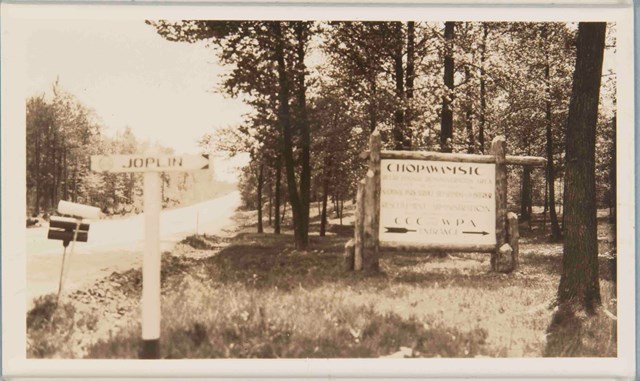
Group camping in the parks is as old as the auto camp. In the 1910s and 1920s, early motorists camped rough along park roads, and the Park Service responded by building formal campgrounds, free at first, with communal fire circles where rangers gave evening talks. The campfire circle was the original group site: strangers became an audience, then a community, then friends.
The CCC built much of the infrastructure in the 1930s, and Mission 66 expanded it again in the 1950s and 60s as visitation boomed. Somewhere in that growth the parks noticed a pattern: scout troops, school groups and church outings did not fit neatly into single-family sites, and cramming them in damaged both the resource and everyone else's weekend. The designated group site was the answer, with minimums, maximums and a leader's name on the reservation.
The last big change was the booking itself. The first-come line at the ranger station gave way to central online reservations, and with it a new campground skill: being at your computer at the release minute, six months out, with a headcount and a credit card. The fire circle is still there. Getting to it just takes more planning than it used to.
All 68 parks with group camping
Below is every Park Service unit that lists group camping. Click through for each park's fees, hours and alerts. The cards are not live group-site inventory: check the exact facility and date before inviting the full party or collecting money.
Free to enter Charges an entrance feePoints are the Park Service reference point for each unit, not a boundary.