.jpg/1280px-Grand_Canyon_National_Park_Guided_Mule_Trip_Starting_into_the_Canyon_3530_(12760817593).jpg)
A horse changes the speed of a park. At Bryce Canyon, a wrangler takes you down among the hoodoos instead of leaving you to photograph them from the rim. At Assateague, the destination is a strip of Atlantic beach you can reach with your own horse, provided you know which district allows riding that season. Those trips call for completely different plans. One starts with a stable reservation; the other starts with a trailer, paperwork and a permitted route.
The Park Service lists 88 units with horseback riding, from short guided loops to long wilderness trails. The best park depends on whether you need a horse supplied, have one of your own or want to commit to an overnight pack trip. These ten favor an experience worth the preparation. Check the park's stock rules and the operator's current schedule before you travel, especially when weather or trail damage changes access.
The ten best national parks for horseback riding
01Grand Canyon
Grand Canyon fees, hours and alertsGrand Canyon mule trips are the famous ride for good reason: the trail looks different when you trust an animal with the switchbacks. The booking and the route are separate questions, though. South Rim rides normally open well ahead and the overnight Phantom Ranch trip uses a lottery. After the Bright Angel Canyon flood in August 2026, Phantom Ranch and the North Kaibab Trail were closed with no estimated reopening as of late September. A future booking window does not mean that a particular trip can run. Check the park's current mule-trip and closure pages before trying to plan an overnight ride.
The park sets trip-specific rider limits for age, height and fully dressed weight; read the rules for the exact ride before promising a child a saddle. A day-before cancellation list is a slim possibility, not a travel plan. If you want a shorter ride near the canyon, the operator in Tusayan offers rides in the Kaibab National Forest outside the park when operating. That is a different landscape and a different booking, not a substitute for the inner canyon.
02Bryce Canyon
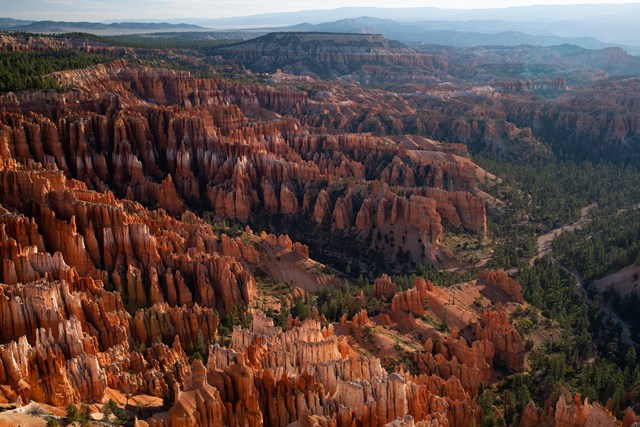
Bryce Canyon fees, hours and alertsThe best reason to ride at Bryce Canyon is the descent. Canyon Trail Rides takes guided parties below the rim into the Bryce Amphitheater, with a longer option reaching the Peekaboo Loop. The formations that look like a crowded skyline from an overlook become a succession of walls and passages at horse pace. The operator offers shorter and longer rides in the fair-weather season; book with the concessioner, not by assuming a park entry ticket holds a saddle.
Bringing your own horse or mule is possible, but private riders must reserve a date and time before entering. There are designated routes and no walk-in private rides. The park does not authorize overnight stock camping on those trails. This is the pick for someone who wants hoodoos from the saddle, especially if they need the horse supplied. It is a poor place to arrive with a trailer and improvise.
03Great Smoky Mountains
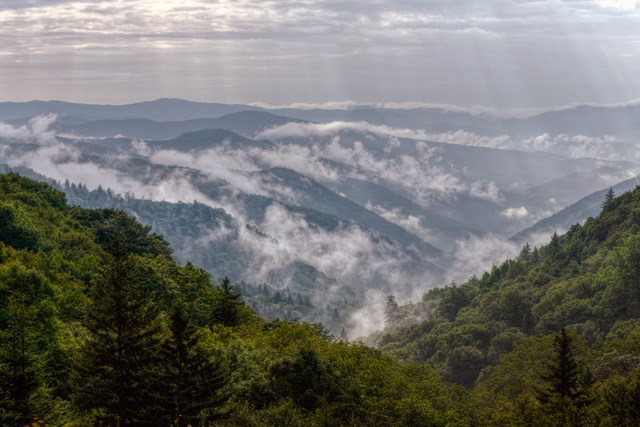
Great Smoky Mountains fees, hours and alertsThree concession stables, at Cades Cove, Smokemont and Sugarlands, make Great Smoky Mountains an unusually forgiving first park ride. You can book a guided outing rather than solve the logistics of hauling a horse, and the routes offer a quieter measure of the forest than a drive between overlooks. Cades Cove also has hayrides if someone in the group wants the horse part without sitting on one.
Owners have a different trip here: about 550 miles of designated trails open to horses, plus drive-in horse camps for a longer visit. The routes are not an invitation to ride cross-country. Read the park horse map and trail conditions before trailering in. The park warns against backcountry riding through much of the wet winter and early spring, when fallen trees, swollen crossings and stopped trail maintenance change the ride. The easy stable day and the self-supported backcountry day share a park, not a level of difficulty.
04Yellowstone
Yellowstone fees, hours and alertsYellowstone is for riders who want the backcountry more than a photo with a horse. You can choose a guided horseback outing or bring trained stock, but even a private day ride requires a free permit. The park's stock rules cover weed-free feed, equine health documents, bear-country food storage and where a horse may travel. Check backcountry conditions before picking a trail; a line on a map says little about mud, snow or a wildlife-related restriction.
An overnight ride is a bigger undertaking, with a backcountry permit and stock-capable campsites. The park limits when overnight stock use begins to protect trails and range, so a campground or road opening elsewhere in Yellowstone tells you nothing about your intended route. For a first visit, choose a licensed outfitter and ask where the actual ride goes. For owners, solve the permit and campsite first. The geysers can wait for the second day.
05Zion
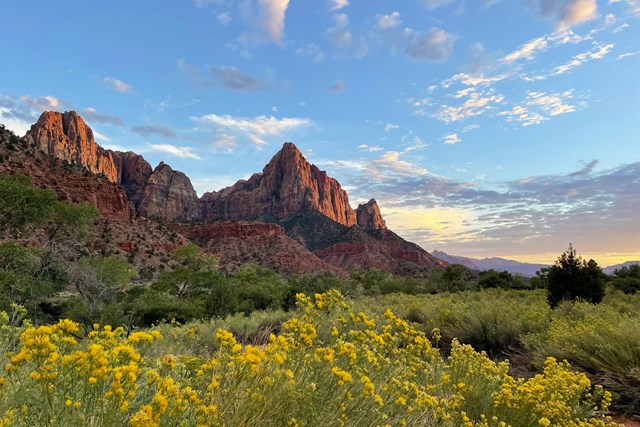
Zion fees, hours and alertsThe concession ride at Zion follows the Virgin River and Sand Bench Trail, with shorter and longer options. The appeal is straightforward: you get the canyon floor and its sandstone walls at a pace the shuttle cannot give you. Guided rides follow a seasonal schedule and weather can cut into it, so reserve with the operator and confirm the meeting point before you get into the canyon.
Private riders can use designated stock trails too, but the rules are different from the concession route. Zion lists the trails open to horses and pack animals, closes stock use when wet conditions would damage trails, and requires a wilderness permit for its limited overnight stock camp. Sand Bench has a narrower private-use window than its name on a map suggests. If you have your own horse, check the specific route rather than following a guided-rides description into a rule meant for the concessioner.
06Acadia
Acadia fees, hours and alertsAt Acadia, the way through is as much the attraction as the destination. John D. Rockefeller Jr. and his family helped create a network of rustic carriage roads around the island's mountains and ponds. Many of those roads allow horseback travel, whether you bring your own horse or arrange a ride through Wildwood Stables. Gravel under hoof makes for a very different day from a steep single-track trail, and the roads were designed to keep the slow journey interesting.
Do not assume every carriage-road loop welcomes horses. Acadia identifies exceptions and tells riders to carry its carriage-road user map. Walkers, cyclists and carriages also use the system, so speed and passing etiquette matter. Pick a route from the horse-permitted roads, then check stable availability and any road closures. This is the best choice for riders who want a measured landscape day rather than a test of mountain stock skills.
07Assateague Island
Assateague Island fees, hours and alertsThe horses most people come to see at Assateague Island are wild. You do not ride those. To ride the beach, bring your own horse: the national seashore does not rent horses or operate riding tours. The permitted ground is the ocean side of the beach in designated over-sand vehicle zones, with district-specific access and seasonal limits. Dunes, boardwalks and ordinary walking trails are off limits. Check the district map and current OSV status before towing a trailer across the bridge.
Riders need proof of a negative Coggins test, and the park warns that wild horses can behave aggressively toward domestic animals. Keep far more space than you would as a pedestrian. The park suggests riding around low tide so your horse is not working through deep sand; it is practical animal care, not a scenic preference. Assateague rewards the owner who prepares. Without your own horse, come to watch instead.
08Shenandoah
Shenandoah fees, hours and alertsA guided ride from Skyland gives Shenandoah a relatively simple introduction for someone without a horse. The concession operates in the warmer months. If you bring your own, the park has more than 180 miles of horse-open trails, including broad gravel routes and narrow, rocky tracks that ask far more of horse and rider. You can choose the day by ability, not just scenery.
The park marks horse routes in yellow and gives winter advice that deserves attention even in a mild-looking forecast. Wet soil holds hoofprints and erodes on a hillside; a gravel route may be appropriate when dirt trails are not. Trail crews also work to a seasonal schedule, so a fallen tree can turn a ride around. Check a route and trailer parking before setting off, and turn back rather than make a new way around a blocked trail. Skyline Drive is the approach, not the ride.
09Mammoth Cave
Mammoth Cave fees, hours and alertsThe cave is not where you ride. North of the Green River, Mammoth Cave has about 60 miles of backcountry trails open to horses and several day-use trailer trailheads. It is a strong bring-your-own trip for riders who want woods, fields and room to travel rather than an underground tour. The catch is the river crossing: the Green River Ferry has an eight-ton load limit, and a long trailer may be unable to board even if its weight fits. Plan the county-road alternate before towing toward the ferry.
Without a horse, look for an authorized commercial operator rather than assuming the park has a concession stable waiting at the visitor center. That distinction matters because the best trailhead, the available guide and the cave-tour schedule may be on three different clocks. Choose the riding day first if you are trailering in; make the cave a separate reservation.
10Yosemite
Yosemite fees, hours and alertsYosemite offers guided mule and saddle trips in the riding season, but its deeper appeal for experienced owners is the web of stock-open trails beyond the valley floor. The park signs bridle paths in Yosemite Valley and generally permits stock on designated trails unless an exception is posted. High-country crossings, polished rock and elevation make that generous rule less simple than it sounds. Ask about trail conditions before taking an animal into terrain neither of you knows.
The frontcountry stock sites are at designated campgrounds, not in Yosemite Valley, and reservations are required. Weed-free feed, limits on where stock can graze, and closures to protect fragile ground all shape a longer trip. If you only want an introductory ride, start with the concession and confirm that the outing you want is operating. If you are packing into the wilderness, the stock map matters more than the postcard view.






When to go: a riding year
Spring is for checking the ground. Concession rides at parks such as Zion, Bryce and Shenandoah often return with the fair-weather season. The date on an operator calendar is only half the story if rain has softened a stock trail or a high route still holds snow. Before reserving a private ride, read the trail and stock conditions for the route, not just the park's entrance hours.
Summer gives you the broadest choice and the most competition. Stable reservations, stock camps and wilderness permits can require separate bookings. The Grand Canyon is the extreme case: its mule trips can have long lead times, while a closure can still take a booked route off the table. Yellowstone's backcountry requires its own permit planning, and high routes may open later than a nearby road. Keep a second, non-riding plan for weather or animal welfare.
Fall favors some routes and closes others. Cooler weather can make an eastern woodland ride or an Assateague beach ride easier on horse and rider, but concession stables wind down on their own calendars. At Assateague the two districts have different riding windows. A park staying open year-round does not mean the stable, horse camp or beach access does.
Winter is an owner-led proposition in many places. Shenandoah points riders to gravel routes when soft ground would take hoof damage; Great Smoky Mountains warns against much backcountry riding through the wet season. If a route is icy, muddy or blocked, turning back protects both the animal and the trail. The right winter ride is the one the park actually permits that day.
How to plan a park ride
- 1
Decide whose horse it is. A concession booking supplies an animal and a guide. A private ride can require permits, a health certificate or test, weed-free feed, trailer parking and a stock-approved route. Bryce requires a timed reservation for private riding; Yellowstone requires a day-ride permit. Do not treat a park horseback-riding page as a single set of rules for both kinds of rider.
- 2
Book the bottleneck first. At the Grand Canyon that may be the mule trip or lottery; at Assateague it is legal beach access and your own horse, not a rental. A cave ticket, park entrance reservation or campsite does not reserve a saddle. Use the stable's own booking route for guided rides and the park's permit instructions for private stock.
- 3
Match the animal and rider to the route. A first-time rider can enjoy a concession loop at the Smokies or Zion. A rocky Shenandoah trail or a Yosemite high-country crossing calls for different experience. Check age, height and weight rules for guided trips and the distance, elevation, water and footing for your own horse. Grand Canyon's mule limits are trip-specific, not national standards.
- 4
Read the current stock map. Some roads at Acadia exclude horses; some Zion trails close to stock when wet; Assateague restricts riding to parts of the beach. Follow the park's marked route, not a hiking itinerary with a horse added. Check permits and current closures again just before travel.
- 5
Plan the return as carefully as the start. Trailer access, water, feed, manure removal and the last ferry matter after a good ride. Mammoth Cave's Green River Ferry can turn away a long rig. Bring a route home that does not rely on a crossing your trailer cannot make.
How horses shaped the park visit
Before the modern road trip, saddle and pack animals carried travelers into landscapes that later became national parks. The Grand Canyon mule trip keeps that older rhythm in public view: a descent measured in hoofsteps rather than shuttle stops. Its allure has survived, but the right to make the trip still depends on a usable trail and a safe route, as the 2026 flood closures make plain.
At Bryce Canyon, horse travel shaped the trail itself. The Park Service says it completed miles of foot-and-horse trails in 1931; guided and private rides still use the amphitheater routes. At Acadia, the Rockefeller family's carriage-road system built a different answer to the same question of access: a winding, graded way to move through a landscape slowly. Neither park treats a horse as permission to go everywhere. The trail is part of the inheritance.
Today a guided ride can put a beginner in the saddle for an afternoon, while a self-supported trip still asks for old-fashioned work: feed, water, navigation and care of the animal. Parks keep those routes available by limiting where hooves go and when fragile ground can take them. The view is the reward. The rules are what make another ride possible.
All 88 parks with horseback riding
Below are Park Service units that list horseback riding. Open the park's current stock-use page to find out whether it offers guided rides, allows private horses or both; a listing alone is not a promise that a stable operates every day.
Free to enter Charges an entrance feePoints are the Park Service reference point for each unit, not a boundary.




















.jpg)
Keep planning
- Horse campingFind an overnight plan for your own animal.
- Camping in the parksStay near the morning trailhead.
- Guided toursSee a park with someone who knows the route.
- Hiking in the parksRoutes to take when you leave the saddle behind.
- The best time to visit a national parkChoose a season before you book.