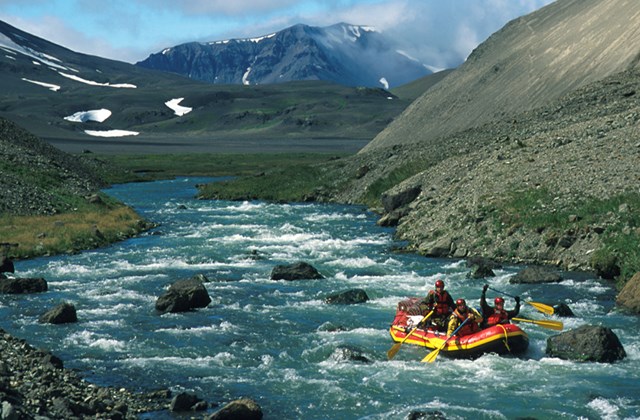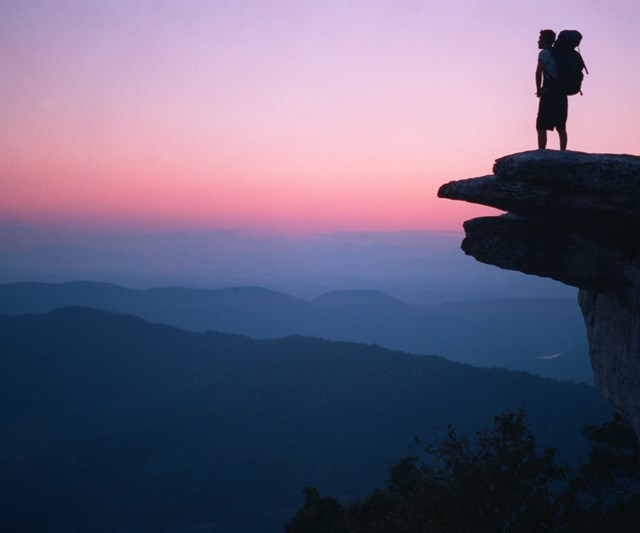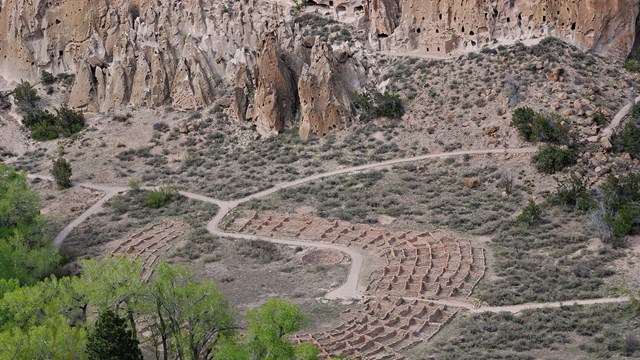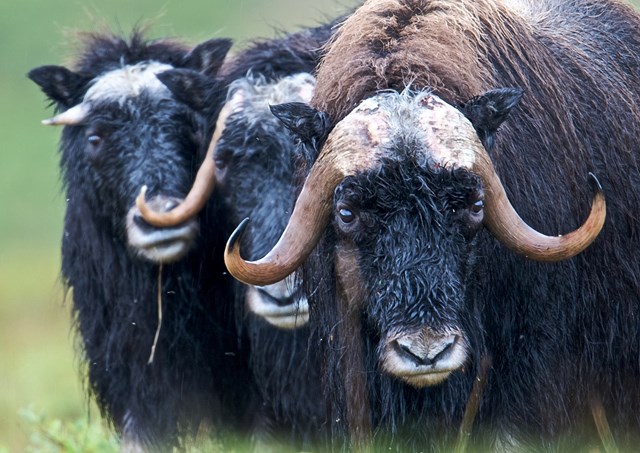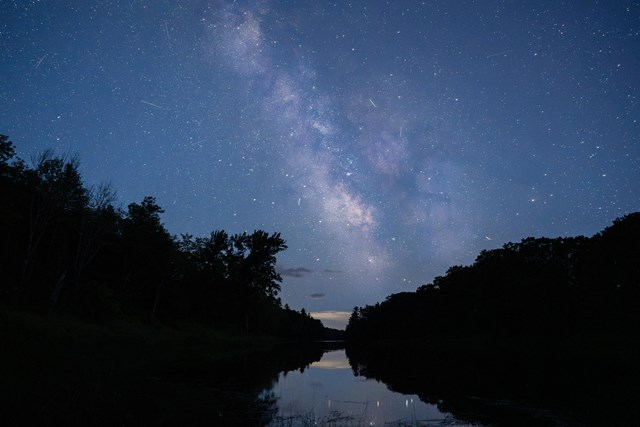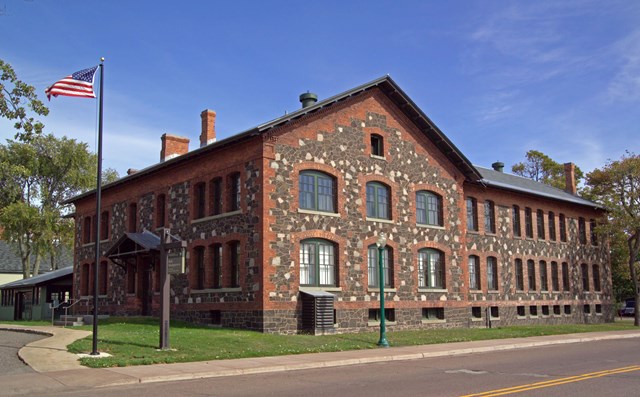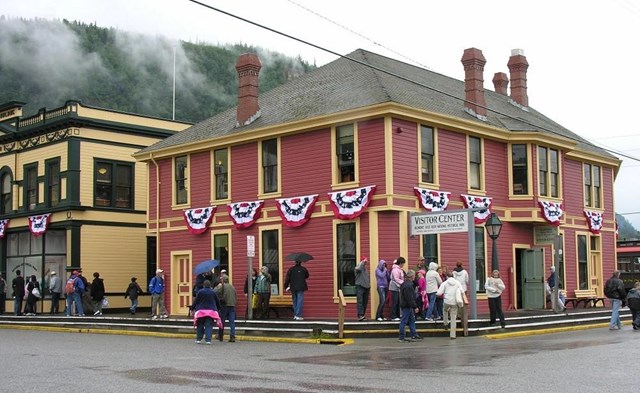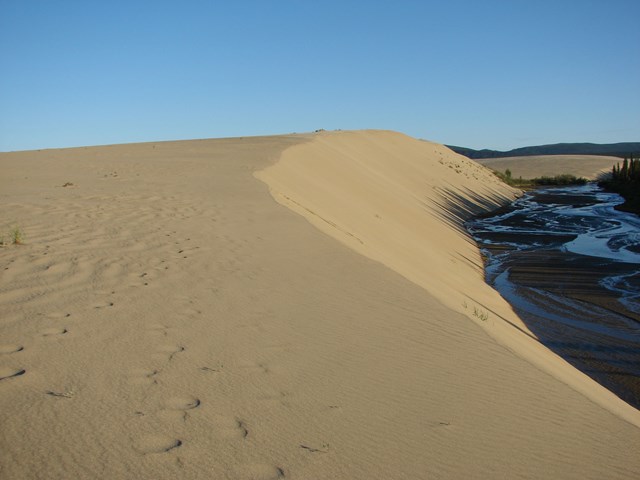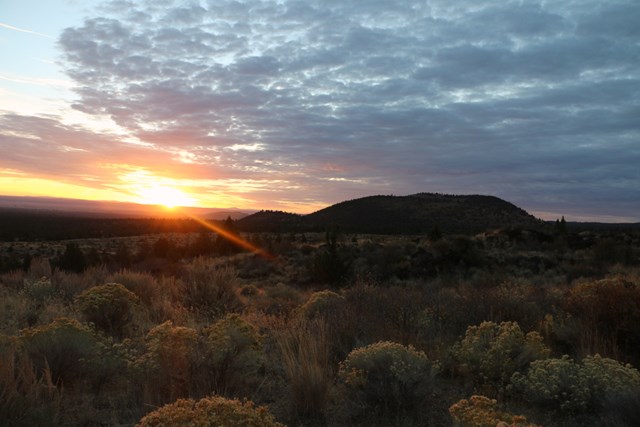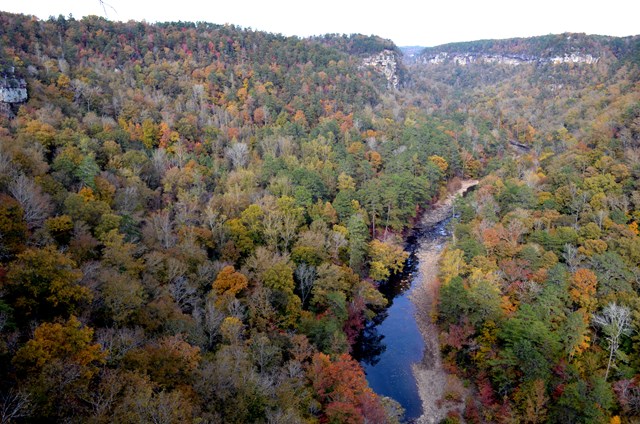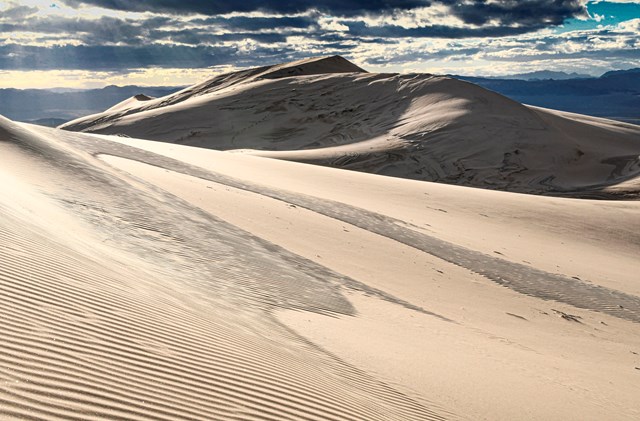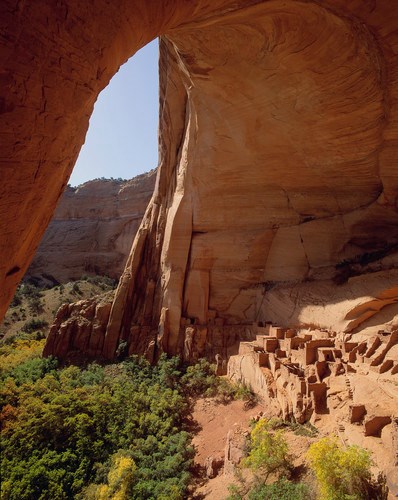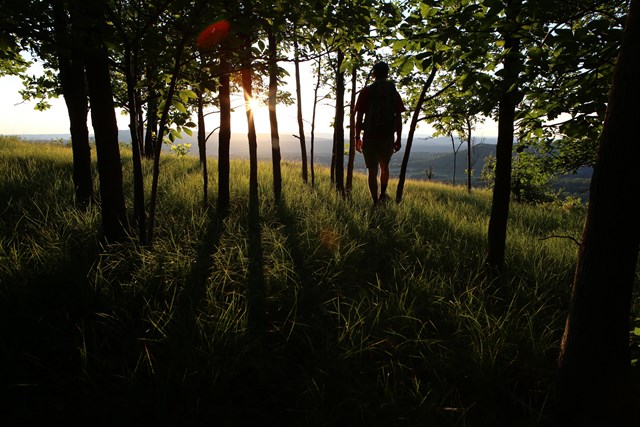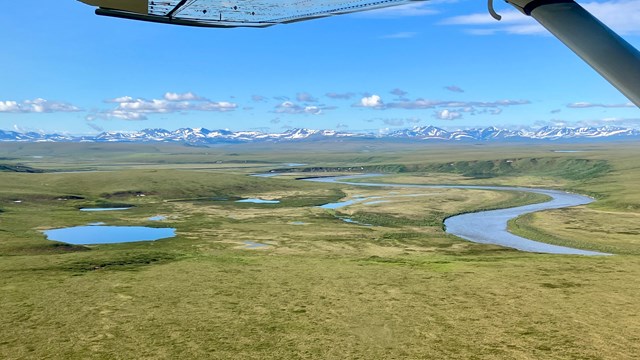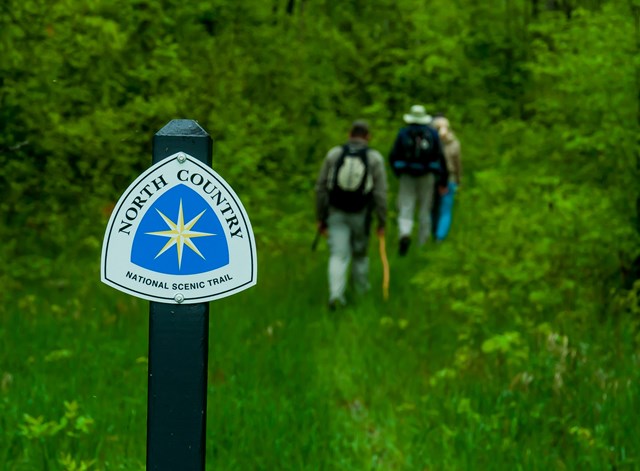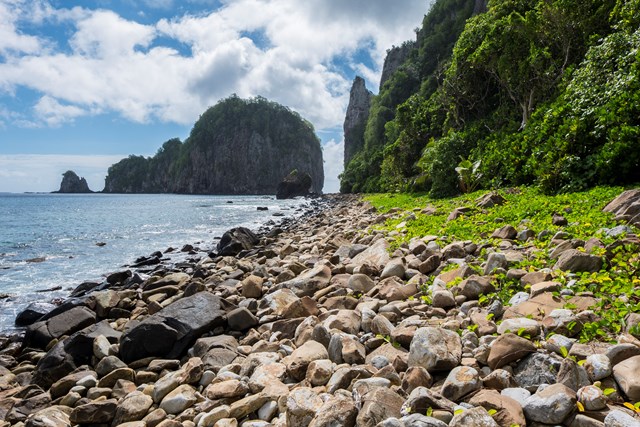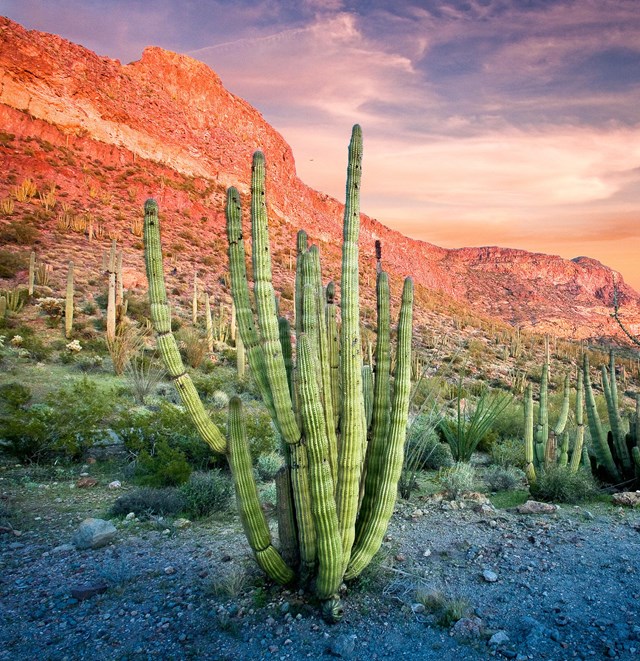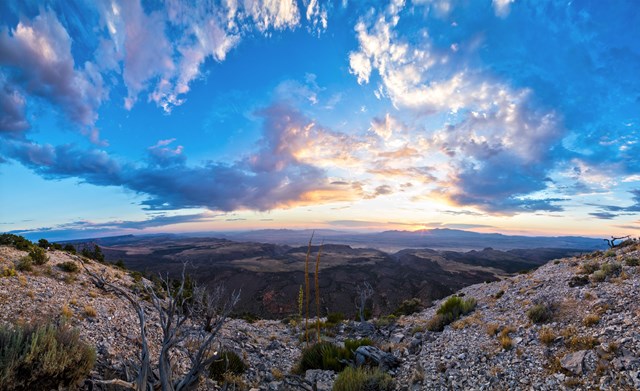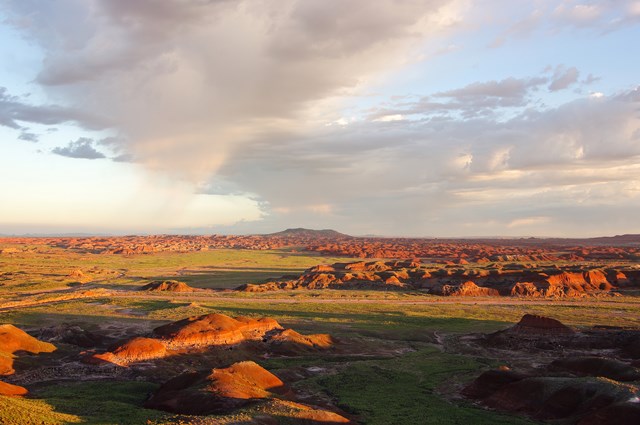
The frontcountry is where the parks meet the public; the backcountry is where the parks actually live. The Park Service lists 84 units with backcountry hiking, from the most permitted mile in America - the Grand Canyon's corridor - to Denali’s quota-controlled, trackless tundra where the entire trail network is hypothetical. What changed in the last few years is access: the famous backcountry has gone the way of the famous campground, onto Recreation.gov, into lotteries and release windows. Knowing the system is now half the hike.
The ten best backcountry parks
01Grand Canyon
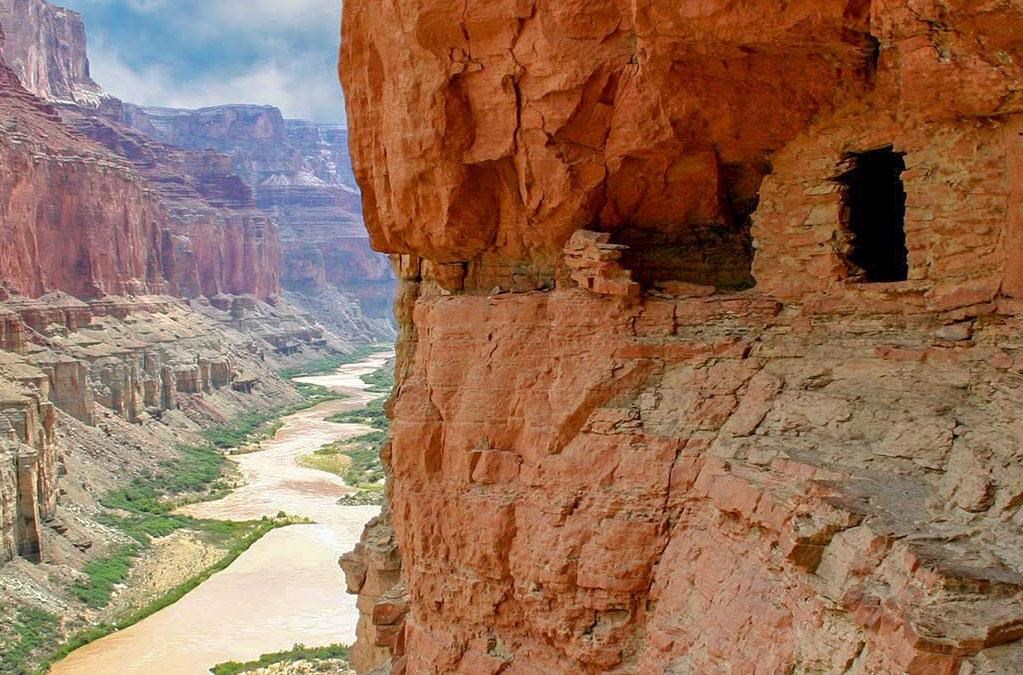
Grand Canyon fees, hours and alertsThe canyon below the rim is the country's most sought-after overnight hiking, and its permit system is a study in demand management. Permits run through Recreation.gov: a $10 charge per permit, plus nightly fees of $15 per person (or stock animal) below the rim and $4 above it, refundable until 30 days before your start date. The Early Access Lottery works like this, exactly: applications open on the 16th, five months before your start month, and close at 5 p.m. Mountain on the 1st, four months out. The lottery runs on the 2nd, and the top 750 applicants get early-access timeslots spread across weekdays between the 4th and the 17th; the $10 lottery charge doubles as your permit charge if you reserve during early access. Lottery applicants who miss the 750 still get in ahead of the public on a date the park sets month by month - it has fallen on the 18th, 19th or 20th depending on the month, so check the park's backcountry permit FAQ table rather than circling an approximate day. Everyone else begins reserving on the 1st of the month three months before the start month - for a May trip, that's February 1. The last online reservation is five days out; inside four days, it's in-person at the Backcountry Information Center only, and you carry a printed paper permit on the trail. A classic three-nighter - South Kaibab to Bright Angel Campground, out the Bright Angel Trail - puts you at Phantom Ranch, where a lemonade at the bottom of the canyon is the traditional reward.
02Yosemite
Yosemite fees, hours and alertsThe granite backcountry is the park beyond the Valley: 750 miles of trail, the high country camps at Tuolumne and Glen Aulin, the John Muir Trail's southern stretch, and Half Dome, where the cables go up each summer and a separate permit lottery decides who climbs them. Wilderness permits are required for any overnight, reservable on Recreation.gov, with a daily quota per trailhead that turns July Saturdays into competitive events. The shoulder-season truth: September in the high country can be a fine backpacking month, and the crowds have gone home.
03Denali
Denali fees, hours and alertsThe anti-trail park, and proud of it. Denali maintains almost no backcountry trails; instead the park divides its road-accessed wilds into eighty-seven backcountry units, with nightly camping quotas in forty-two of them, and hands you a free permit and a bear-canister checkout at the Backcountry Information Center. You hike the tundra by compass and creek bed, camp where the day ends, and learn what the word wilderness means when there is no cairn to follow. The units along the park road - especially the Polychrome and Eielson country - book out on summer weekends; flexibility is the skill.
04Mount Rainier: the Wonderland
Mount Rainier fees, hours and alertsThe Wonderland Trail is the famous circuit: 93 miles around the mountain, through every life zone from lowland forest to moraine, usually nine to thirteen days of the best backpacking in the Lower 48. Permits for its eighteen camps are among the most competitive in the system - the annual early-access lottery and the general release both sell through fast, and the summer window is short, typically mid-July through September once the snowpack lets go. Day hikers can sample the Wonderland anywhere it crosses the road; through-hikers should plan the lottery like a concert drop.
05Glacier
Glacier fees, hours and alertsThe backpacker's park in the American Rockies: 700 miles of trail, sixty-five backcountry campgrounds strung along them, and itineraries that walk you through the heart of grizzly country past chalets left from the Great Northern Railway era. Backcountry sites are reserved through Recreation.gov with advance reservations each season - the famous routes, the Highline-to-Granite-Park traverse and the Belly River valley, go early - with a share of sites held for walk-up at the permit offices. The bear rules (carry spray, cook away from camp, hang or canister food) are the real curriculum.
06Isle Royale
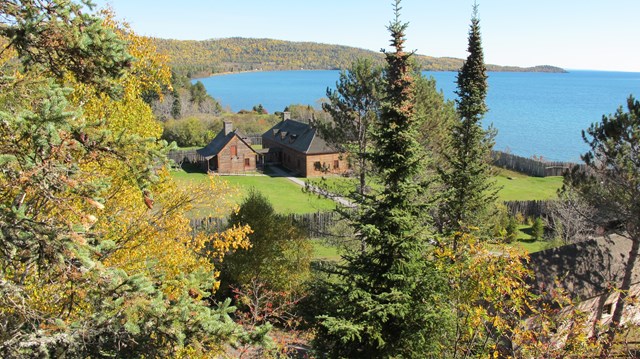
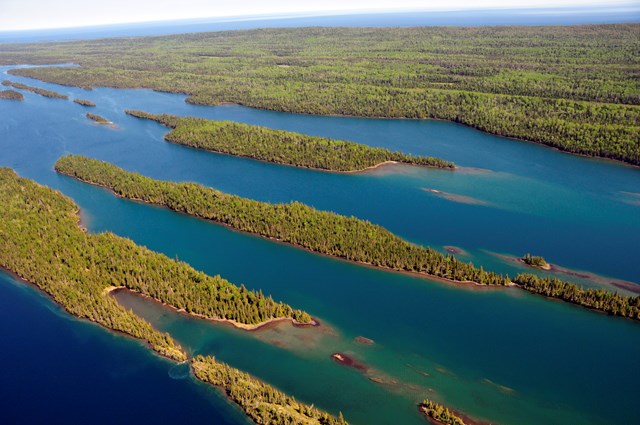
Isle Royale fees, hours and alertsThe island backpack: a wilderness in Lake Superior reachable only by boat or seaplane, where the Greenstone Ridge Trail runs forty miles end to end and the moose and wolves have been studied for sixty years. No permit fee, just the park entrance fee; you register on the ferry. The logistics are the trip - ferry schedules from Michigan and Minnesota decide your itinerary, the season runs roughly May to October, and the campgrounds along the ridge and the shore are first-come. The trip offers time away from the mainland bustle.
07Big Bend
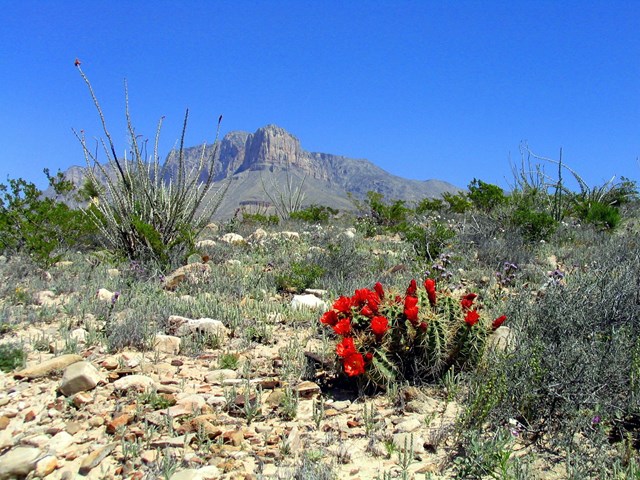
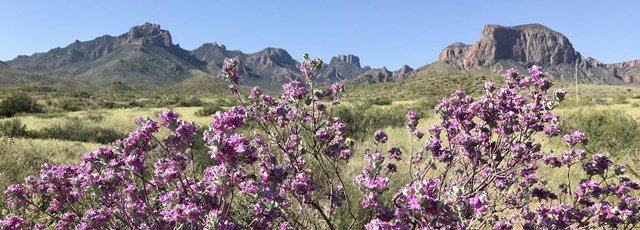
Big Bend fees, hours and alertsThe desert backpacker's park, where the Chisos Mountains rise a mile above the Rio Grande and the Outer Mountain Loop links thirty miles of mountain and desert into one of the great circuit hikes of the Southwest. Permits are required and the water is the planning: springs are unreliable, the park maintains cached-water bear boxes on the desert segments, and November through March is the season - summer will hurt you. The South Rim of the Chisos at dawn, Mexico a hundred miles out, is the payoff.
08Olympic
Olympic fees, hours and alertsThree backcountries in one park: the alpine (the Bailey Range, the Seven Lakes Basin loop), the rain forest valleys (the Hoh, the Quinault), and the wild coast, where the Ozette Triangle and the seventeen-mile South Coast route run along headlands, tide pools and the roughest beach walking in the system. Wilderness permits run through Recreation.gov, bear canisters are required in the popular zones, and the coast adds its own rulebook: tide tables are mandatory reading, and headland crossings have hard cutoffs.
09Great Smoky Mountains
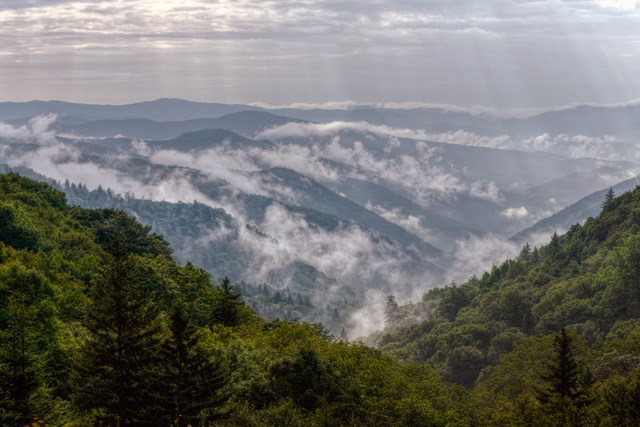
Great Smoky Mountains fees, hours and alertsThe walkingest park in the East: 800 miles of trail, including seventy miles of the Appalachian Trail along the crest, a dozen backcountry shelters, and Mount LeConte - the mountain with a lodge you can only reach on foot, where the bunkhouse books out the day reservations open. Backcountry camping requires a reservation and a per-night fee at designated sites; the famous ones (LeConte's shelter, the AT shelters) fill months out. Spring wildflowers and October color are the peak seasons; the parking lots tell you when.
10Joshua Tree
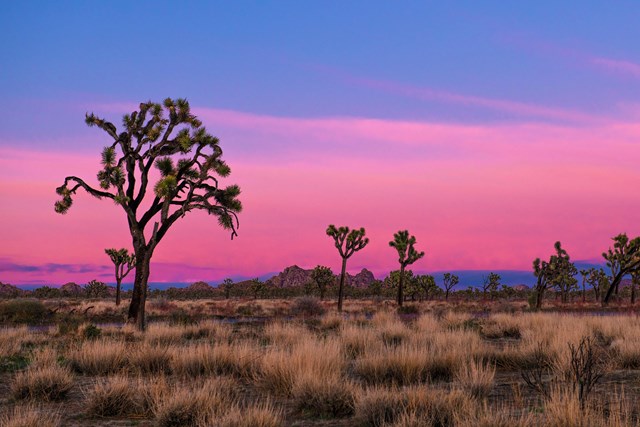
Joshua Tree fees, hours and alertsCheck the current backpacking registration process before setting out; a desert overnight still needs careful planning. The catch is the desert itself: no water anywhere, a season that runs October to May, and navigation by landmark among the boulder piles. It is the best low-commitment backcountry in the West, and the Boy Scout Trail (sixteen miles through the Wonderland of Rocks to Indian Cove) is the classic.






How backcountry permits actually work
- 1
Three systems. Reservation lotteries and windows on Recreation.gov (Grand Canyon, Yosemite, Rainier, Glacier, Olympic, the Smokies), free walk-up quotas (Denali, Isle Royale's register-on-arrival), and self-registration (Joshua Tree). The park's backcountry page names the system and the date that matters.
- 1
Learn the calendar arithmetic. Popular permits can open months ahead. Check Grand Canyon’s current lottery table for its application and general-release windows; the dates matter as much as the route. Our camping reservations playbook covers the release-window game in detail.
- 1
Have a flexible plan. Quotas fill by trailhead and by campground; the second-choice itinerary is what you actually hike. Denali's rangers will happily route you into a unit you have never heard of - those are the best ones.
- 1
Budget for permits and fees. Grand Canyon has charged $15 per person per night below the rim. Check each park’s current charges before applying and budget for them.
A short history of park backpacking
Backpacking as a mass recreation is younger than the parks. Through the 1950s, the backcountry belonged to outfitters, scouts and a few thousand eccentrics; then the postwar gear revolution - aluminum frames, nylon, freeze-dried food - put a generation on the trail, and by the 1970s the famous corridors were being loved to death. The parks' answer was the quota: Yosemite began rationing trailheads in the 1970s, the Grand Canyon formalized its corridor campgrounds, and the permit became the instrument that kept the backcountry wild by keeping it a little bit empty. Recreation.gov moved the whole system online in the 2010s and 2020s - same quotas, faster fingers. The deal is unchanged: the parks will keep the country empty if you will do the paperwork.
All 84 parks with backcountry hiking
The full list is below. Click through for each park's fees, hours, alerts and campgrounds - the alerts page is where trail closures live.
Free to enter Charges an entrance feePoints are the Park Service reference point for each unit, not a boundary.