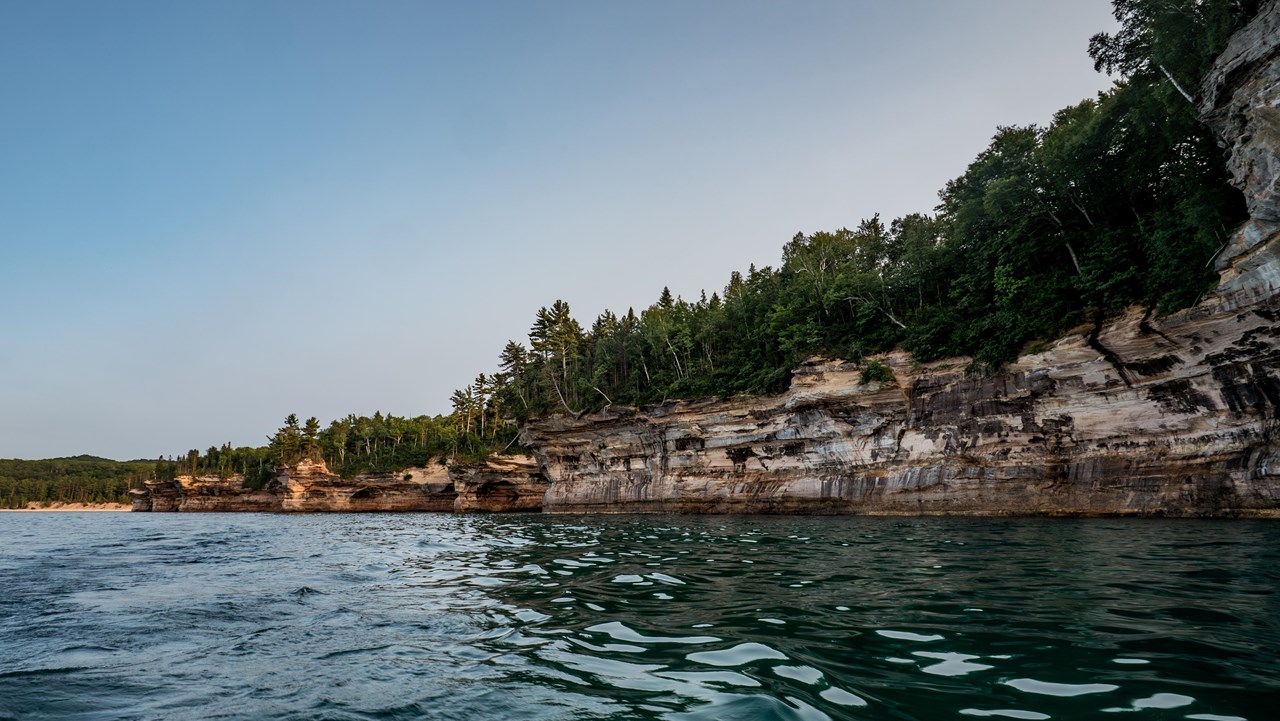
Ice climbing is the rarest entry in the Park Service's activity list. Four hundred-plus units, and exactly four list ice climbing on the books. That is not a data error: real, climbable ice needs cold that lasts, water that keeps moving, and rock steep enough to show it off, and most parks are short one of the three. The four that qualify split into two honest experiences. One is the best ice-climbing venue in the country hiding inside a lakeshore in Michigan's Upper Peninsula. The other three are winter mountains and winter canyons where ice is a season, not an attraction.
Here are all four, with the one that matters most first.
The four national parks for ice climbing
01Pictured Rocks: the ice park
Pictured Rocks fees, hours and alertsEvery winter, the sandstone escarpment above Munising, Michigan, grows some of the best climbable ice in North America, and the National Park Service looks after it. The recipe is lake effect: cold air over Lake Superior, porous cliffs, and groundwater that keeps seeping out of the rock layers and freezing into curtains and columns. Snow and ice are generally in place by the second or third week of December and hold until early April, which is a long, reliable season by ice-climbing standards.
The main venue is the inland cliff band between Munising Falls and Sand Point Beach, where columns and blue curtains run 20 to 50 feet and the approach is a quarter-mile walk from the Sand Point Beach parking lot along a plowed road. Miners Falls adds a 40-foot column when the cold really sets in, reached by a three-mile ski or snowshoe from the end of the plowed road. Two rules matter. The famous painted cliffs directly above Lake Superior stay off-limits in practice - the park does not recommend climbing them because the exposure over the lake is genuinely hazardous - and parking is banned along Sand Point Road itself, so climbers walk in from the lot. The vault toilet at Sand Point Beach stays open all winter, which tells you the park expects you.
Munising leans in. Each February the town hosts the Michigan Ice Fest, one of the oldest ice-climbing festivals in the country, and the curtains above Sand Point fill with climbers from across the Midwest. You do not need a permit to climb; you need warm boots and a realistic read on the ice.
02Kenai Fjords: the glacier, with a calendar
Kenai Fjords fees, hours and alertsThe only national park where the ice climbs back. At Exit Glacier, the one road-accessible corner of the Harding Icefield, technical ice climbing is permitted on the glacier's terminus from November through March. The rest of the year the rule changes: climbers must stay at least a half mile above the terminus, where the ice is more stable than the rotting summer snout. The park is blunt about the limits - it calls ice-climbing opportunities very limited due to unstable ice conditions - and that honesty is the guidance. This is not a crag. It is a glacier in maritime Alaska, with crevasses, calving seracs and weather off the Gulf. The people who climb it treat it as mountaineering, which it is. Winter access to the Exit Glacier area is by ski, snowshoe or snowmachine once the road closes.
03Grand Teton: the serious one
Grand Teton fees, hours and alertsThe Tetons are a mountaineering park that happens to freeze, and winter here is a climbing season in its own right. The draws are the frozen waterfalls and couloirs in the big canyons, plus the full winter ascents of the range's famous peaks, and the park's climbing rangers - the Jenny Lake Rangers, one of the oldest climbing rescue teams in the country - stay on duty through it. No climbing permit is required in the park; overnight winter trips need a backcountry camping permit, picked up in winter at the Craig Thomas Discovery & Visitor Center. Conditions information runs on two phone lines: summer through one number, winter (307-739-3309) through another, which tells you how seriously the park takes the cold half of the year. Two authorized guide services, including Exum Mountain Guides - a concession since 1931 and the reason American mountaineering grew up here - run winter ice and mountaineering programs for those who'd rather learn the range with a rope partner who already knows it.
04City of Rocks: the quiet one
City of Rocks fees, hours and alertsThe granite reserve in Idaho's Albion Mountains is famous for rock - some of the best traditional climbing in the West - and the reserve's own ice-climbing page explains what winter does to it: snow accumulates on the granite, melts by day, flows down the faces, and refreezes at night until the runoff builds into climbable ice routes over the famous rock lines. The park is direct about who this is for: experienced climbers with crampons, ice tools and the rest of the special gear. There is no managed ice venue like Pictured Rocks and no groomed season - the ice exists when the melt-freeze cycle cooperates - so the park's two standing recommendations are the whole plan: contact the City of Rocks Visitor Center (208-824-5901) for current ice conditions, and ask the same office for its list of professional guides and outfitters permitted to operate in the reserve.




How to ice climb in a national park
Go in the real window. The Upper Peninsula season runs roughly mid-December to early April; Exit Glacier's terminus is open to climbers only November through March; the Tetons and City of Rocks are midwinter propositions. Shoulder-season ice is the most dangerous ice.
Match the park to your level. Pictured Rocks is the place to learn: short approaches, moderate columns, a festival culture, and local guide services in Munising. Exit Glacier and the winter Tetons are expert terrain where the objective hazards - avalanche, crevasse, cold injury - are the climb.
Ask the rangers first. Ice conditions change weekly and the parks track them. Grand Teton posts current conditions and staffs climbing rangers; Pictured Rocks updates winter access and road status through the season. A two-minute check beats a two-hour drive to rotten ice.
Bring the whole winter kit. Every one of these venues is an avalanche environment or next to one. Beacon, shovel and probe are standard on approaches; helmets are not optional under frozen waterfalls, which shed.
All 4 parks with ice climbing
The complete list is below - and it is genuinely complete, four parks out of more than 470. Click through for each park's fees, hours, alerts and campgrounds. For everything else on snow and rock, the related pages are at the bottom.
Free to enter Charges an entrance feePoints are the Park Service reference point for each unit, not a boundary.