The Park Service lists 13 units with mountain climbing, and the list has more range than any other activity page in this directory. At one end: Denali, the highest point in North America, where a climbing permit costs $450 and the Park Service runs ranger camps at 14,000 feet. At the other: a dune field in Colorado where the "mountain" is a dune of sand and the only gear required is water. In between sit two celebrated glaciated peaks in the Lower 48 and a handful of Alaska ranges so remote that the approach flight is the expedition.
Here is what these places offer, starting with the summits people plan lives around.
Mountain climbing destinations, ranked
01Denali
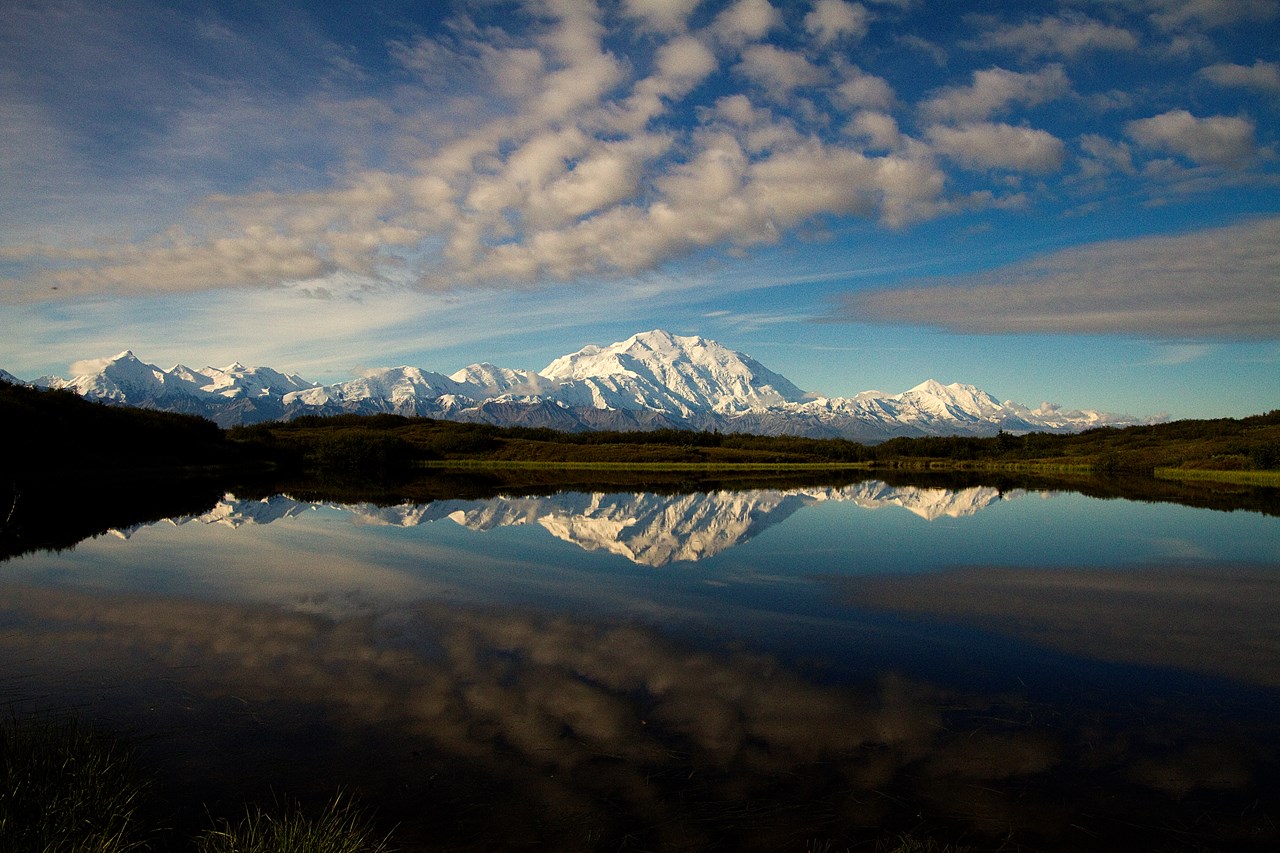
Denali fees, hours and alertsThe roof of the continent at 20,310 feet, and a mountaineering operation unlike anything else in the system. The Park Service treats it that way. Every climber attempting Denali or Mount Foraker pays a special use fee - $450 for the 2026 season, $350 for climbers 24 and younger - on top of the $15 park entrance fee, with the money funding the high-altitude ranger camps, patrols and clean mountain program. Registration opens January 1 for that year's season, runs through Pay.gov plus a signed special use permit application due at least 60 days before departure, and ends with a mandatory orientation at the Walter Harper Talkeetna Ranger Station, where the seven authorized guide concessions and the independent teams alike get their briefing. The season runs late April into July, roughly a thousand climbers a year, and the West Buttress is the standard route: two to three weeks, glacier travel, fixed lines on the headwall, weather that decides everything. First summited in 1913 by Hudson Stuck's party - Walter Harper, an Alaska Native, stood on top first - Denali remains the park system's one true expedition.
02Mount Rainier
Mount Rainier fees, hours and alertsThe most climbed glaciated peak in the Lower 48, and the training ground where American mountaineers learn the craft. Thousands of people a year try for the summit of Mount Rainier, most on the two-day route through Camp Muir. The paperwork is simpler than Denali's but just as firm: a climbing fee - $82 per climb for 2026, paid online through Pay.gov before you arrive - plus an in-person registration at a ranger station the day your climb starts or the day before, photo ID in hand. The fee scales with the Consumer Price Index, so check the current number each season. Anyone traveling on glaciers, attempting the summit, or going above the high camps pays; day hikers to Camp Muir do not. Most climbers go guided or go home: three authorized guide services run the bulk of summit trips, and the June-through-early-September season compresses the crowds onto a mountain that kills the unprepared every few years. First climbed in 1870 by Hazard Stevens and P.B. Van Trump, Rainier is where the Pacific Northwest learned to rope up.
03Grand Teton
Grand Teton fees, hours and alertsThe Tetons are the country's mountaineering clubhouse: a compact range, rock that rewards technique, and a century of climbing culture anchored by the Jenny Lake Rangers, one of the oldest climbing rescue teams in the national parks. The Grand Teton itself, 13,775 feet, is the famous objective - usually two days with a night at the Garnet Canyon camps - and the park keeps the bureaucracy light: no climbing permit required, though overnight trips need a backcountry camping permit, and anything involving technical climbing picks that permit up at the Jenny Lake Ranger Station or the Craig Thomas Discovery & Visitor Center from June through September. Exum Mountain Guides has been teaching people up these peaks since 1929, and a guided two-day Grand remains the classic first mountaineering experience in America. Snow can linger on the routes until mid-July; afternoon storms are the rule, not the exception.



The wilderness ranges
Six more listings are Alaska being Alaska. Wrangell-St. Elias is the largest national park in the country and holds most of its highest peaks - Mount St. Elias at 18,008 feet, Mount Blackburn at 16,390 - reached by bush plane and attempted by a handful of expeditions a year. Gates of the Arctic is Brooks Range mountaineering with no trails, no services and no permits, just the Arrigetch Peaks and their granite spires. Lake Clark hides the Neacola Mountains, among the least explored alpine terrain in North America. Glacier Bay guards the Fairweather Range, where Mount Fairweather rises 15,325 feet almost straight out of the ocean and wears the weather to prove it. Kenai Fjords is the Harding Icefield, 700 square miles of ice with nunataks for summits. And Aniakchak, a six-mile-wide volcanic caldera on the Alaska Peninsula, is the most remote climbing objective on the list: no maintained access, no rescue on call, and weather that grounds the planes. All of them assume you are on your own.
The Lower 48 sleepers
Glacier is a scrambler's park: sedimentary peaks with famous routes - Mount Gould, Mount Siyeh, Mount Cleveland, the park's high point at 10,466 feet - on rock that demands respect and route-finding. No climbing permit, backcountry permit for overnights, and a season that runs July to September once the snow lets go. Olympic centers on Mount Olympus, 7,980 feet and buried under the Blue Glacier: a three-day round trip through rain forest to a short rock summit, with wilderness permits required and bear canisters standard. Neither mountain is technically hard by Tetons standards. Both are long, wet and serious.
Other climbs and routes
Great Sand Dunes lists mountain climbing for Star Dune and High Dune - 741 and 692 feet of sand, respectively, with Hidden Dune at 742 feet. No ropes are required, and the summits look toward the Sangre de Cristos. Klondike Gold Rush offers alpine backcountry travel along the historic stampeders' routes; its mountains are real, but it is not a mountaineering park in the permit-and-rope sense, and we say so rather than pretend otherwise.
How to plan a park climb
- 1
Pay the fee where one exists. Two parks on this list run dedicated climbing-fee programs: Denali (2026: $450, or $350 for climbers 24 and under) and Mount Rainier (2026: $82 per climb), both paid through Pay.gov in advance; confirm each current fee with the park. For every other park here, check its own page before you go - fee programs change - but the costs to budget for are the flight, the guide or the backcountry permit.
- 1
Use the ranger infrastructure. Denali's Talkeetna orientations, Rainier's in-person registration, the Tetons' climbing rangers - these are the best condition reports in mountaineering, and they are free.
- 1
Know the guide rules. Parks limit who can guide on their land. Denali authorizes seven concessions, Rainier three, the Tetons two. If a company is guiding a summit trip in a park, it is on one of these lists.
- 1
Respect the season. Denali runs late April to July. Rainier's window is June to early September. The Tetons shed their snow by mid-July in a normal year. The Alaska wilderness parks have no season at all, only weather.
A short history of climbing in the parks
American mountaineering grew up on federal land. The first recorded ascent of Mount Rainier came in 1870, two years before Yellowstone became the first national park. Denali fell in 1913, when Hudson Stuck and Harry Karstens - later the park's first superintendent - put Walter Harper and Robert Tatum on the summit. The Tetons made it a culture: the founding of Exum Mountain Guides in 1929, the birth of the Jenny Lake Rangers, and eventually the first American ascent of Everest in 1963, which included Jim Whittaker. The Park Service's role has been consistent since: it does not promote the climbs, but it staffs the rescues, funds the ranger camps, and charges the fees that keep the mountains clean.
All 13 parks with mountain climbing
Below is every Park Service unit that lists mountain climbing. Click through for fees, hours and alerts, and read the current climbing conditions before leaving.
Free to enter Charges an entrance feePoints are the Park Service reference point for each unit, not a boundary.