The kayak is the boat that lets a national park keep its secrets a little longer. It draws inches, carries a week's gear, and goes where the tour boats cannot: into sea caves, under tidewater glaciers, across lakes with no road to them. Ninety-two Park Service units list kayaking, which makes it one of the most common ways onto park water, and the modern boat is forgiving enough that a first-timer can be paddling inside an hour.
The catch is temperature. Most of the best park kayaking is on water cold enough to kill an unprotected swimmer in minutes, so the parks that made this list reward the paddler who respects the lake more than the view. The ten below, saltwater and freshwater, are worth planning a trip around. The full directory follows.
The ten best national parks for kayaking
01Apostle Islands
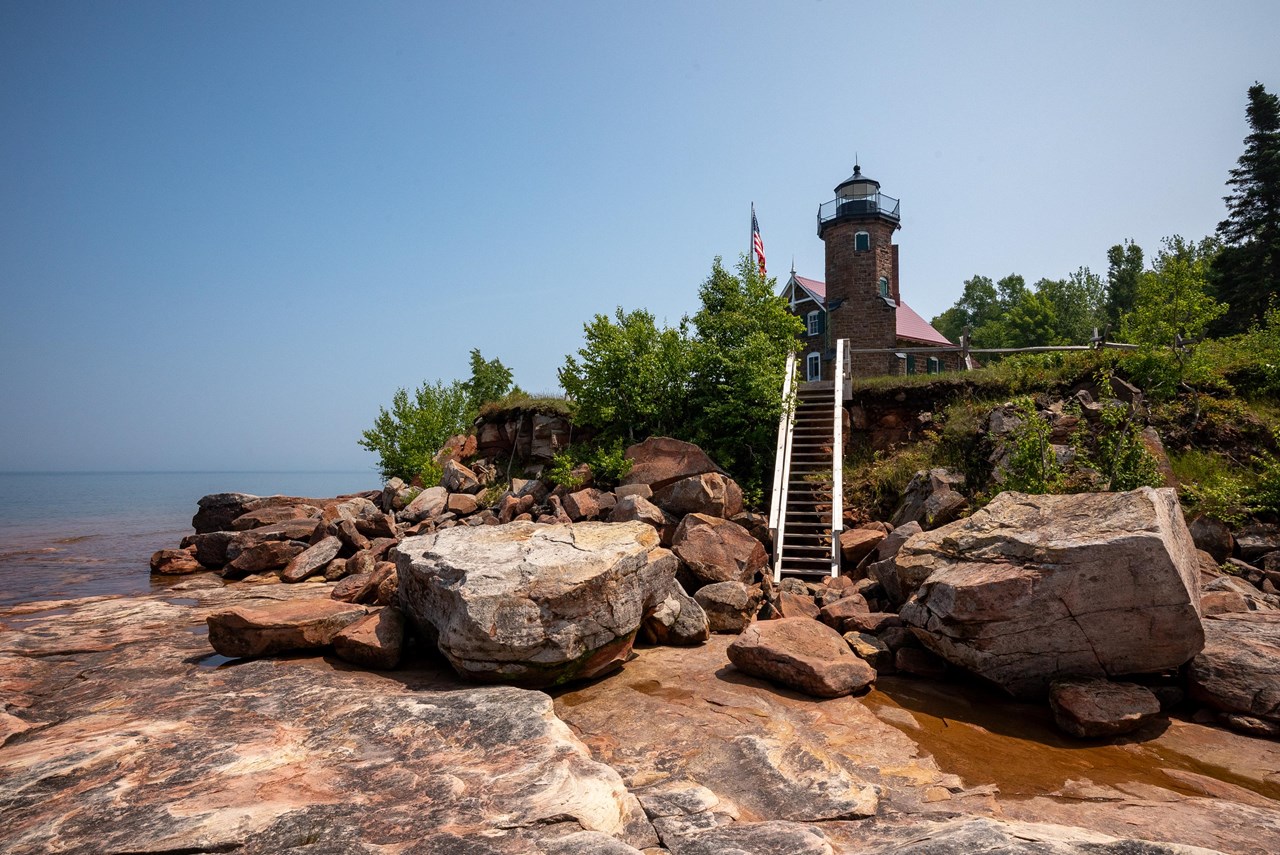
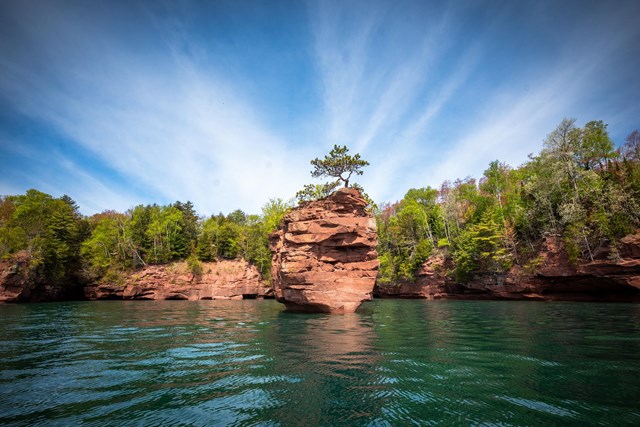
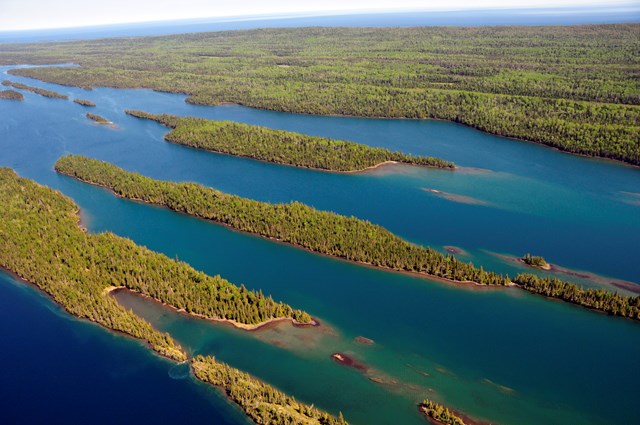
Apostle Islands fees, hours and alertsTwenty-one islands and a mainland shoreline carved into sea caves, arches and stacked red sandstone, all of it on Lake Superior. The famous caves sit a short paddle off Meyers Beach, close enough that fit beginners reach them on calm mornings - and the Park Service is blunt that calm is the condition, not the default. Superior is 40-degree water that generates its own weather, so the standard advice applies: wetsuit, spray skirt if you have one, and a hard look at the marine forecast. The full island chain, with its lighthouse stations and island campsites, belongs to experienced sea kayakers. Everyone else should book one of the guided trips out of Bayfield and let a professional read the lake.
02Channel Islands
Channel Islands fees, hours and alertsSanta Cruz Island's Scorpion Anchorage is the finest beginner sea-kayaking venue in the system: a sheltered landing, rental kayaks waiting on the beach, guides on site, and a shoreline riddled with sea caves you can nose into within ten minutes of launching. Farther along the coast sits Painted Cave, one of the largest sea caves in the world, big enough that commercial boats motor inside. The kelp beds hold garibaldi, seals and the island fox's marine neighbors, and the water clears to genuine visibility by late summer. The catch is the crossing: the park boat from Ventura takes about an hour, so a kayak trip here is always also a boat trip, which is half the fun.
03Glacier Bay
Glacier Bay fees, hours and alertsThe only park on this list where the soundscape includes calving ice. Kayakers base out of Bartlett Cove and, in summer, can arrange a drop-off from the Glacier Bay Lodge day boat, which carries you and your boat up-bay into the West Arm, where the tidewater glaciers are. From there it is wilderness camping on beaches that were under a glacier within living memory, with harbor seals on the floes and the occasional bear on the tide line. The park requires a free orientation and permit for overnight backcountry trips, and it earns them: this is cold, tidal, bear-country paddling that punishes improvisation. Guided day trips from the lodge serve everyone else.
04Kenai Fjords
Kenai Fjords fees, hours and alertsThe Alaska park built for kayaks. Out of Seward, day trips and water taxis run into Aialik Bay and Northwestern Fjord, where the water goes milky with glacial flour and the ice at the head of the bay is still doing the work that made the fjord. Paddling here is the rare case where the famous thing - a tidewater glacier, close - is also the quiet thing, because the cruise ships cannot get you into the shallows where the bergs roll. Sea otters treat kayaks as furniture. Beginners go with the guided operations out of Seward; experienced paddlers book the water taxi and disappear for days.
05Pictured Rocks
Pictured Rocks fees, hours and alertsForty miles of Lake Superior shoreline where the cliffs are the attraction and the kayak is the front row: mineral-streaked walls, arches, waterfalls that drop straight into the lake, and beaches between them that only small boats can use. The classic run follows the cliff stretch between Munising and Grand Marais, and the lakeshore's own guidance treats Superior with the respect it deserves - this is open-water paddling along a cliff with few exits, in water that stays cold in August. The tour boats show you the cliffs; the kayak puts your hand on them. Go guided unless you have real sea-kayaking skills, and watch the wind like it owes you money.
06Yellowstone
Yellowstone fees, hours and alertsShoshone Lake covers 8,050 acres, sits behind a ridge with no road to it, and the U.S. Fish and Wildlife Service believes it may be the largest lake in the lower 48 you cannot drive to. Motorboats are banned outright. The standard route paddles up the Lewis River channel from Lewis Lake - a few slow miles that filter out exactly the crowds you came to avoid - and lands at backcountry campsites on a wilderness shore with the geyser basins over the hill. Two cautions from the park's own backcountry report: it flagged low water levels at Lewis Channel in late August 2026, so expect a shallow, scrapey transit late in the season, and southwest winds build through the morning on both lakes and can get formidable - launch early. Permits are required for overnight sites, and every watercraft needs a Yellowstone boat permit and AIS inspection (Lewis Lake has an inspection station). The water stays cold all summer, so mornings belong to the paddler.
07Grand Teton
Grand Teton fees, hours and alertsThe Tetons from water level is a different photograph, and the park makes it simple: Jenny, String and Leigh lakes sit at the base of the range with launches, rentals and a string of easy linked paddles, while Jackson Lake to the north runs big-water touring under the whole skyline. String Lake, shallow and warm by Teton standards, is the family choice; Leigh Lake's paddle-in campsites are the connoisseur's. Every vessel needs a park boat permit, and anything that floats gets an aquatic-invasive-species inspection, which is the modern tax on boating in the West. Mornings are glass; afternoons are whitecaps. Plan accordingly.
08San Juan Island
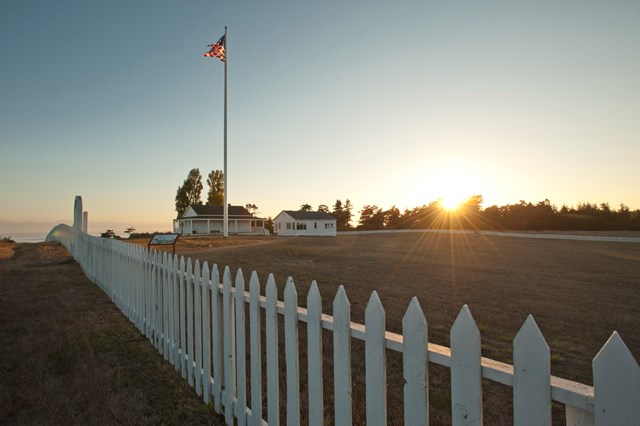
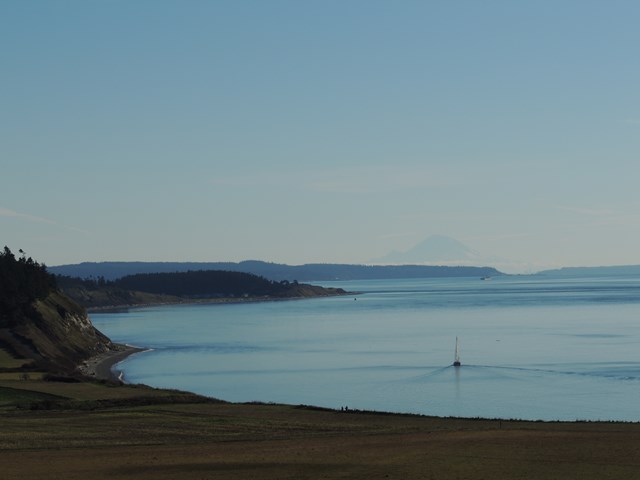
San Juan Island fees, hours and alertsSan Juan Island's park water is the Salish Sea at its most sheltered: Garrison Bay at English Camp, where you carry your kayak from the parking lot to the dinghy dock (beach launching is prohibited to protect the shoreline), and Fourth of July Beach and South Beach at American Camp, where boats launch straight from shore. Bring a sea kayak - the park specifically recommends against small open boats, canoes, sit-on-tops and paddleboards out here - plus a PFD, whistle and wetsuit, because the water is cold and cell service is spotty; the park's advice is to be able to self-rescue. One thing a kayak is not here: a whale-watching platform. Since January 1, 2025, Washington law requires all vessels, kayaks and paddleboards included, to stay 1,000 yards - ten football fields - from Southern Resident killer whales, and to stop, group up and wait if one closes within 400. Watch the orcas from shore at Lime Kiln Point instead, and give your paddle the island's quieter rewards: kelp beds, harbor seals and eagles over Garrison Bay.
09Acadia
Acadia fees, hours and alertsThe only national park on the Atlantic with this much island in it, and the sea kayak is how you reach the parts the Park Loop Road skips. Mount Desert Island's Somes Sound is the sheltered start - a fjard cutting five miles into the island with the mountains on both sides - while the offshore islands, the quieter west side and the Schoolic Peninsula beyond belong to paddlers who read tides. The water is Maine-cold all year, the fog is a genuine navigational event, and the lobster boats have the right of way by custom and tonnage. Guided half-days run out of Bar Harbor and Southwest Harbor all summer; fall trades the crowds for the color.
10Virgin Islands
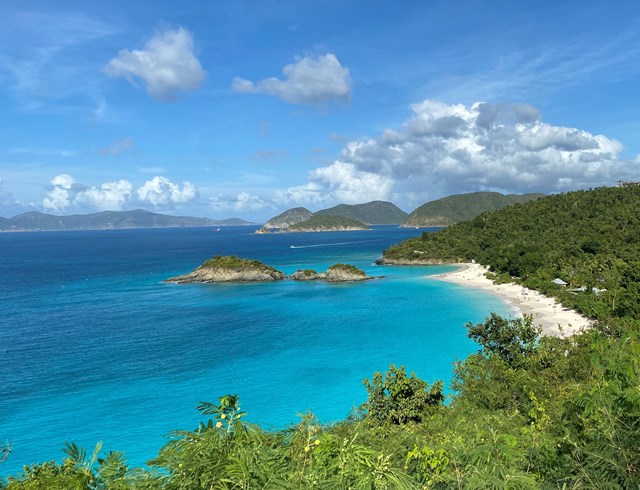
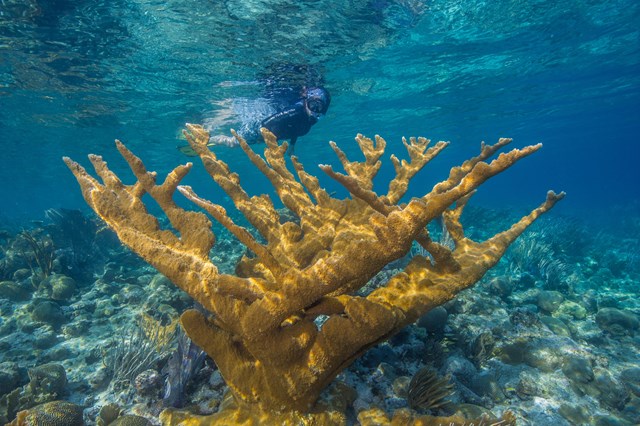
Virgin Islands fees, hours and alertsThe warm-water counterargument to everything above. Virgin Islands National Park wraps most of St. John in protected bays lined with coral, and the kayaking is the Caribbean version of easy: clear water, short crossings between beaches, sea turtles in the seagrass, and no wetsuit conversation at all. Maho and Francis bays are the classic paddles, calm enough for first-timers and shallow enough to watch the reef pass under the hull. It is the rare national park kayak trip you can fold into a beach day, which makes it the easiest sell in the system for the non-paddlers you brought along.







How to kayak a national park
Respect cold water before weather. Most signature park paddling - Superior, Alaska, Maine, the Tetons - is on water under 60 degrees, where an unplanned swim is a medical emergency, not an inconvenience. Dress for the water temperature, not the air: wetsuit or drysuit on the cold stuff, and always the life jacket, on your body rather than under the hatch.
Use the guides the first time. Almost every park on this list has an authorized outfitter running guided trips with the boats, the safety gear and the local read on wind and tide. A guided half-day is not a compromise; it is how you learn what the lake does at 2 p.m. without finding out personally.
Get the permits straight. Day paddling usually needs nothing but the boat. The exceptions matter: Grand Teton and Yellowstone require boat permits and invasive-species inspections for every vessel, Glacier Bay requires an orientation for overnight trips, and backcountry campsites at parks like Yellowstone and Glacier Bay book ahead. Check the park's page - the park alerts guide explains which closures are real and which are noise.
Paddle early. On every big lake in the system, morning is calm and afternoon is wind. The rule has no exceptions worth testing.
A short history of the kayak
The kayak is an invention of the Arctic, where the Inuit and Aleut built decked hunting boats from driftwood, bone and sealskin, each fitted to its owner, and used them to hunt everything from fish to whales in water that killed the unskilled. The word itself means hunter's boat. Europeans met the design with admiration and no use for it, until a Scottish barrister named John MacGregor had a cedar version built in the 1860s, named it Rob Roy, and paddled it through the rivers and lakes of Europe and the Middle East, writing bestselling books that accidentally created recreational paddling.
Folding kayaks carried the sport through the early 1900s, fiberglass arrived in the 1950s, and rotomolded plastic in the 1980s made the boats cheap and tough enough to live on every rental beach in America. The sea caves at Apostle Islands and the fjords at Kenai are paddled in boats the Arctic hunters would recognize at a glance. The design was finished a thousand years ago; the parks just gave it somewhere to go.
All 92 parks with kayaking
Every Park Service unit with kayaking in the official record is below, from tidewater glaciers to a reservoir outside Atlanta. Cold water is the common denominator - check the alerts, check the marine forecast, and pick the morning.
Free to enter Charges an entrance feePoints are the Park Service reference point for each unit, not a boundary.

























Keep planning
- Canoeing in the parksThe same water with a single blade.
- Paddling in the parksThe whole human-powered fleet, including whitewater.
- Stand-up paddleboarding in the parksThe newest way to fall in.
- SCUBA diving in the parksWhat is under the kelp you just paddled over.
- How to read park alerts before you goThe 48-hour check that saves the trip.