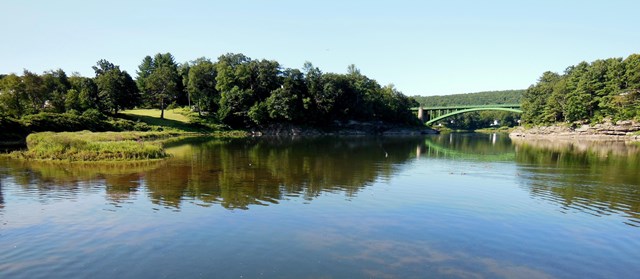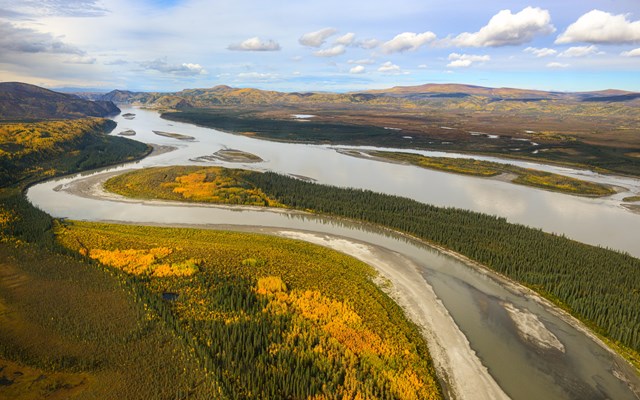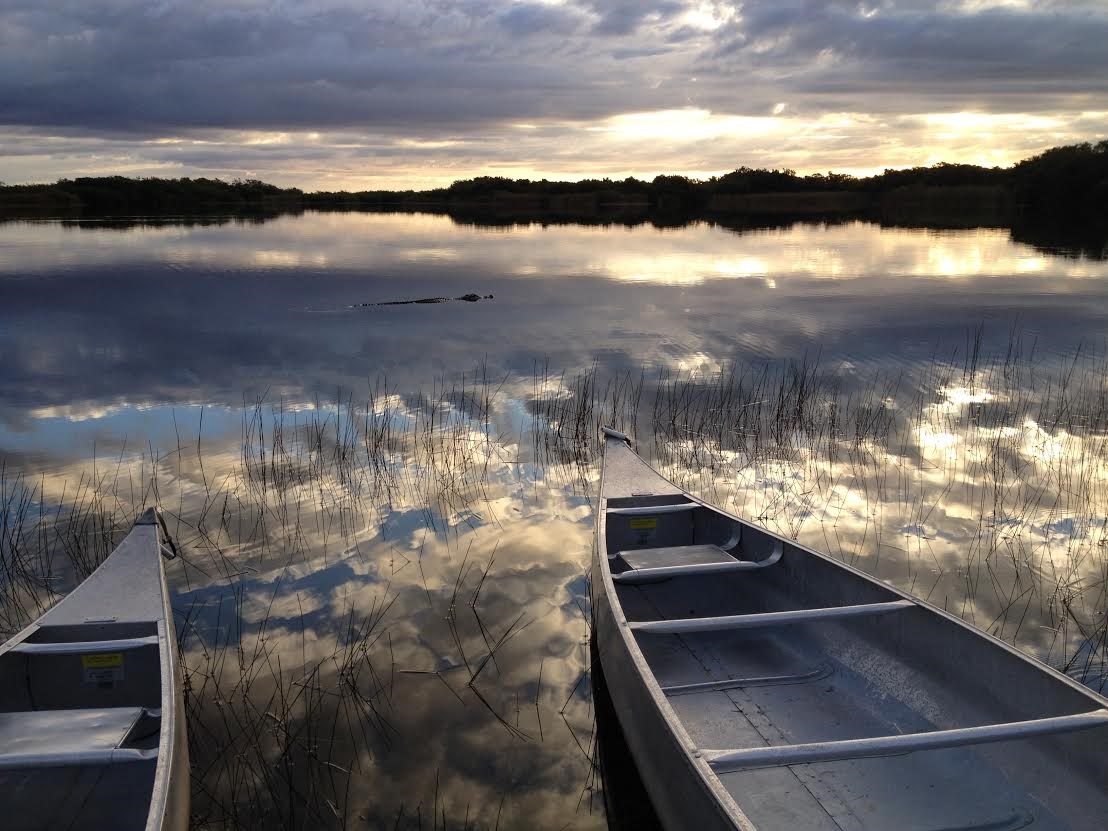
Paddle-in camping is the park system's quiet superpower. The Park Service lists 50 units with canoe or kayak camping, places where you load a boat, push off and sleep somewhere no road goes: a wooden platform over the Everglades' black water, a Lake Superior island, a free gravel bar in the Ozarks. The permits run from free and walk-up to a November reservation morning that sets your whole summer. These are the trips worth planning around.
The ten best paddle-in camping trips
01Everglades: the chickees
Everglades fees, hours and alertsThe strangest and best campsites in the system: wooden platforms standing in open water, roofed, with a porta-toilet and nothing else but sky, dolphins and mosquitoes. The Everglades' Wilderness Waterway strings chickees, ground sites and beach sites through 99 miles of mangrove backcountry between Flamingo and Everglades City. Every overnight needs a wilderness permit, a $21 administrative fee plus $2 per person per night, bookable on Recreation.gov on a rolling three-month window, and most sites are reachable only by water. Winter is the season: cool, dry and relatively bug-light. First-timers start with a two-night loop out of Flamingo; the full waterway is the week-long classic.
02Voyageurs: the boat-in park
Voyageurs fees, hours and alertsA national park with no drive-up campgrounds worth the name. Voyageurs' hundreds of campsites dot the islands and shorelines of four big border lakes, and every one is boat-in. All sites require reservations, and the whole summer opens at once: November 15 at 9 a.m. Central for the following season. Mark the date; the prime island sites go early. You do not need a kayak: most campers come by motorboat or houseboat, and local outfitters run water taxis. But the paddle version, a kayak, a loon and a campsite of your own on Kabetogama or Rainy, is the purest park camping left in the Midwest.
03Apostle Islands: the sea-cave circuit
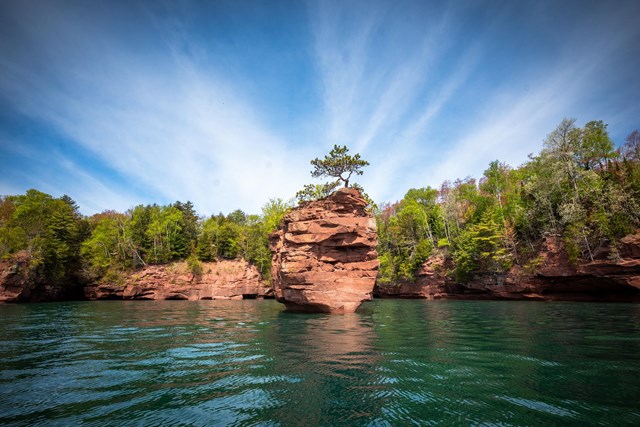
Apostle Islands fees, hours and alertsLake Superior's archipelago is the country's great sea-kayaking destination: 21 islands with designated campsites, sandstone sea caves to paddle into, lighthouses to beach under. Permits run through Recreation.gov with a $10 reservation fee and a 30-day booking window; print the actual permit up to seven days before the trip or pick it up in Bayfield, and group sites move through a March lottery. The lake sets the terms: cold water, fast weather and a real skill floor. Stockton and Sand islands are the forgiving first trips; the outer islands are the graduates.
04Ozark National Scenic Riverways: the free float-camp
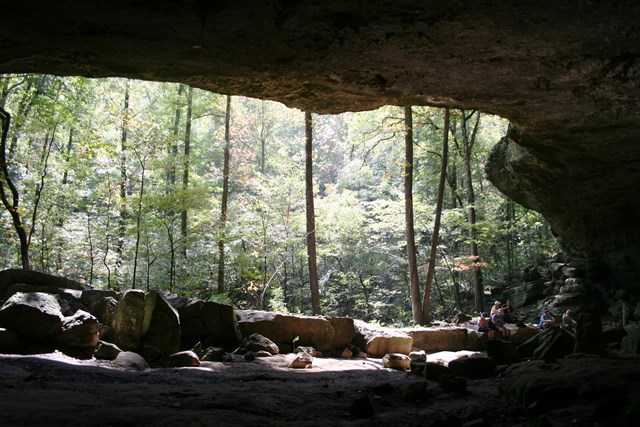
Ozark fees, hours and alertsThe anti-reservation. On the Current and Jacks Fork rivers you camp free on the gravel bars, no permit, no fee, first come. The float-camp weekend, canoe or kayak by day and gravel bar and campfire by night, with a spring branch for a refrigerator, is the Ozark tradition the park was created to protect, and it still works exactly the same way. Pick a stretch, book an outfitter shuttle, and the only reservation involved is the boat.
05Buffalo National River: the other free one
Buffalo fees, hours and alertsArkansas' answer: 135 miles of bluff-lined river where camping on the gravel bars is free and unpermitted, and the spring float season on the upper river is one of the best easy canoe trips in America. The upper Buffalo moves; the lower Buffalo ambles. Either way the drill is Ozark-simple: shuttle with a local outfitter, camp on a bar, watch for elk along the bank in the Boxley valley.
06Yellowstone: Shoshone Lake
Yellowstone fees, hours and alertsThe best backcountry lake in the park system is reserved for people who paddle. Shoshone Lake, the largest backcountry lake in the Lower 48 with its own shoreline geyser basin, bans motors: canoe, kayak or nothing. The paddle in is four easy miles up the Lewis River channel, and the shore campsites are some of the most competitive in the park. Permits run through the backcountry system: a March 1-20 early-access lottery with a $10 application fee, general reservations opening April 26, and walk-ups in person up to two days out. One rule before you pack the swimsuit: bathing or soaking in any water entirely of thermal origin is prohibited, and Shoshone's geyser basin is for looking, not soaking.
07Congaree: the floodplain
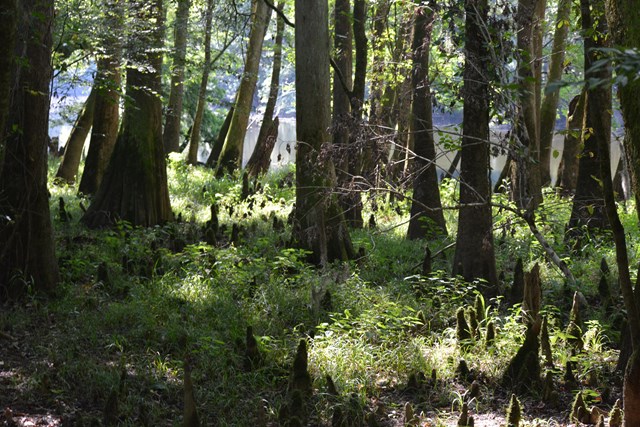
Congaree fees, hours and alertsThe dark-water trip an hour from Columbia, South Carolina. Cedar Creek slides under the tallest deciduous forest canopy in America, past champion bald cypress and tupelo, and the park's backcountry camping is free with a permit. Water levels decide everything: the creek can be a placid ribbon or a flooded forest, so call the visitor center for gauge readings before loading the boat. Fireflies in late May, owls all year.
08Glacier Bay: the big leagues
Glacier Bay fees, hours and alertsThe sea-kayaking trip of a lifetime. Water taxis from Bartlett Cove drop you and your boat among the tidewater glaciers, and you paddle back through a week of whale backs, sea otters and calving ice, camping on beaches the tide rules. The park runs a mandatory camper orientation, and kayaks rent through Glacier Bay Sea Kayaks, the local outfitter, not the lodge. Guided versions exist for the sane. It is cold, wet, expensive to reach and completely worth it.
09Isle Royale: the inland-sea crossing
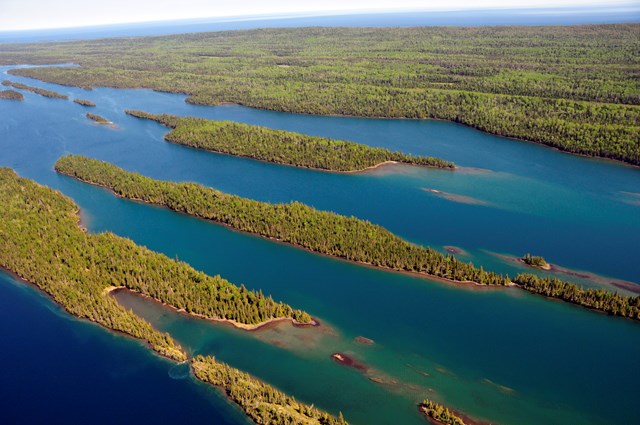
Isle Royale fees, hours and alertsGlacier Bay's freshwater counterpart: a 45-mile wilderness island in Lake Superior where the signature paddle trip is the full circumnavigation, weeks' worth of campsites on a wild ring of rock, or shorter hops along the protected northeast shore. Getting there is half the commitment: ferries from Michigan and Minnesota drop paddlers and boats all summer, and the park's campgrounds double as paddle campsites. Superior's cold water and fast weather apply here with full force; this is a trip for paddlers who already own the skills, and it repays them completely.
10Big Thicket: the free bayou float
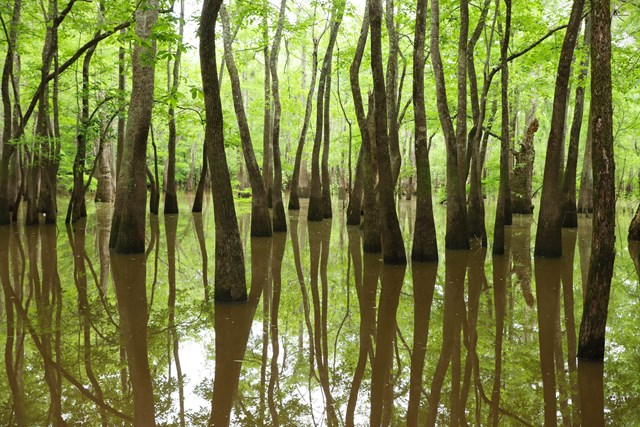
Big Thicket fees, hours and alertsTexas' biological crossroads hides one of the easiest paddle-camp entries in the system: free backcountry permits, no reservation battle, and Village Creek sliding past white sandbars made for tents. The thicket itself is the show, a tangle of bayou, slough and forest where the Southeast meets the Southwest, best seen at paddle speed with a sandbar camp between miles. Water levels make or break the sandbars, so check conditions with the park before loading up.





Also worth paddling to
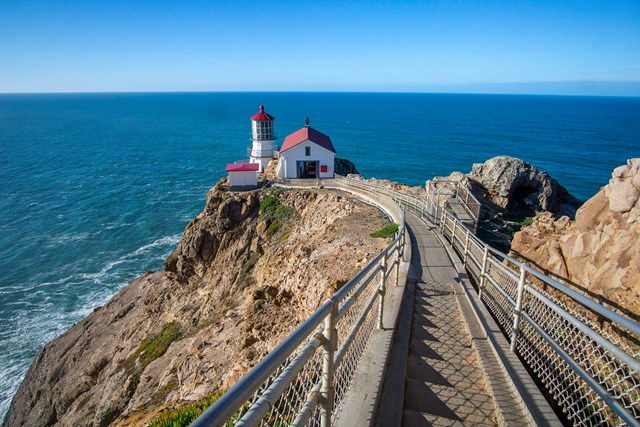
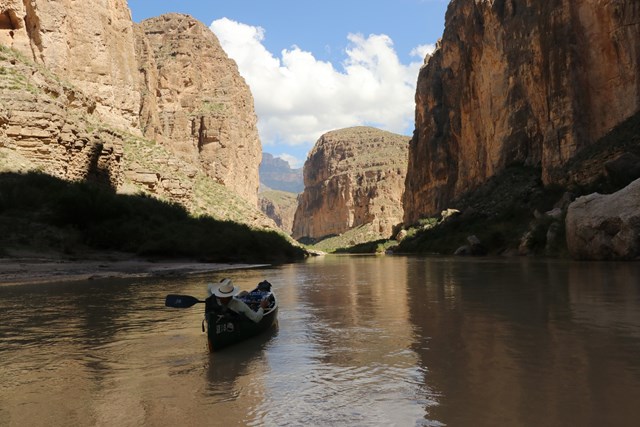
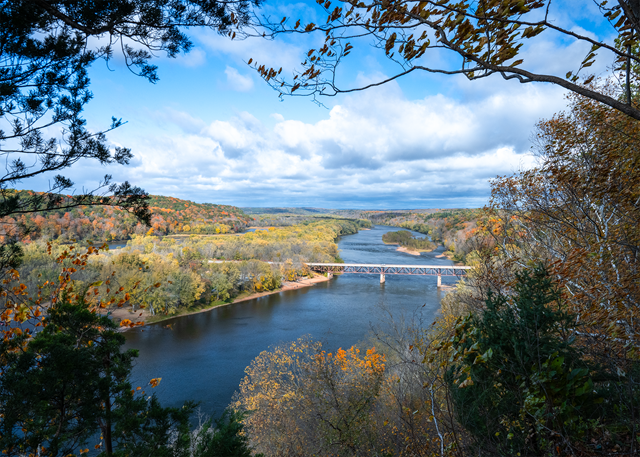
Big Bend's Rio Grande canyon floats, Boquillas and the lower canyons, are winter canoe camping at its finest. Canyonlands' flatwater Stillwater Canyon and Point Reyes' Tomales Bay boat-in sites are the western options, and the Saint Croix and Upper Delaware round out the river list.
When to go
Spring belongs to the rivers. The Buffalo's upper runs come up with the rains from March through June, the Ozarks run clear and cool, and Congaree's floodplain is at its moody best. River trips are water-level trips: watch the gauges, not the calendar.
Summer belongs to the north. Voyageurs, Apostle Islands, Isle Royale and Glacier Bay run their short, glorious seasons, and the booking battles were decided months earlier. This is also when the southern trips turn buggy and brutal; the Everglades in August is for locals and masochists.
Winter belongs to the south. The Everglades, Big Thicket and Big Bend are at their best from November through March, cool, dry and nearly bug-free. A Christmas-week chickee is one of the park system's great off-season gifts.
How to paddle-camp the parks
- 1
Learn the three permit styles. Reservation systems (Everglades' three-month window, Voyageurs' November 15 opening, the Apostles' 30-day window), free backcountry permits (Congaree, Big Thicket), and no permit at all (Ozark and Buffalo gravel bars). The park's camping page says which world you are in.
- 2
Match the boat to the water. Sea kayaks for Superior and Glacier Bay, canoes for the Ozarks and the Everglades. Renting from the gateway outfitter is the norm, not the exception.
- 3
Respect cold water. Superior, the Alaska parks and even the Ozark springs run cold enough to matter year-round. Dress for immersion, file a float plan, and take the park's orientation where one is offered; Glacier Bay requires it.
- 4
Treat bear storage as campcraft. Bear lockers at Apostle Islands sites, canisters or hangs everywhere else in bear country. The permits spell it out.
- 5
Check the water level. Rivers run high and dry, and a gravel bar that was a campsite in May is a channel in March. The park or the local outfitter has the current word.
A short history of the paddle camp
Canoe camping is the oldest recreation on this site. Indigenous peoples traveled every waterway in this guide for millennia, and the voyageurs turned the northern routes into a freight system: Voyageurs National Park preserves the very lakes where brigades paddled trade goods between Montreal and the Northwest. The recreational version arrived in the 1880s, when the American Canoe Association, founded in 1880, turned lightweight canoes into a national craze and "cruising" a river with a tent became the era's signature escape.
The parks caught up in the 20th century. Everglades protected its mangrove wilderness in 1947, Ozark National Scenic Riverways in 1964 became the first federally protected riverway, and the Buffalo followed in 1972 as the first national river, each created explicitly around the float trip. The gravel-bar camp, the chickee and the boat-in site are all answers to the same idea: some country should be traveled the way it was made to be traveled.
The last change was the crowd. As paddle camping boomed, the popular destinations moved from show-up-and-go to lotteries, release mornings and rolling reservation windows, while the quiet rivers kept the old rules. Both traditions survive on this list. The November morning that sets a Voyageurs summer and the unmarked Ozark gravel bar are the same sport at different volumes.
All 50 parks with canoe or kayak camping
Below is every Park Service unit that lists canoe or kayak camping. Click through for each park's fees, hours and alerts, then read the park's camping page for the permit style before you plan.
Free to enter Charges an entrance feePoints are the Park Service reference point for each unit, not a boundary.