Snowshoeing is the national parks' best-kept season. The crowds leave, the roads close, the snow buries the parking lots under six feet of quiet - and the Park Service lists 50 units with snowshoeing. The barrier to entry is roughly zero: if you can walk, you can snowshoe, and the parks' signature programs hand you the snowshoes and a ranger for free. The walks below book out for a reason. After them, the backcountry is waiting.
The best snowshoe parks
01Crater Lake
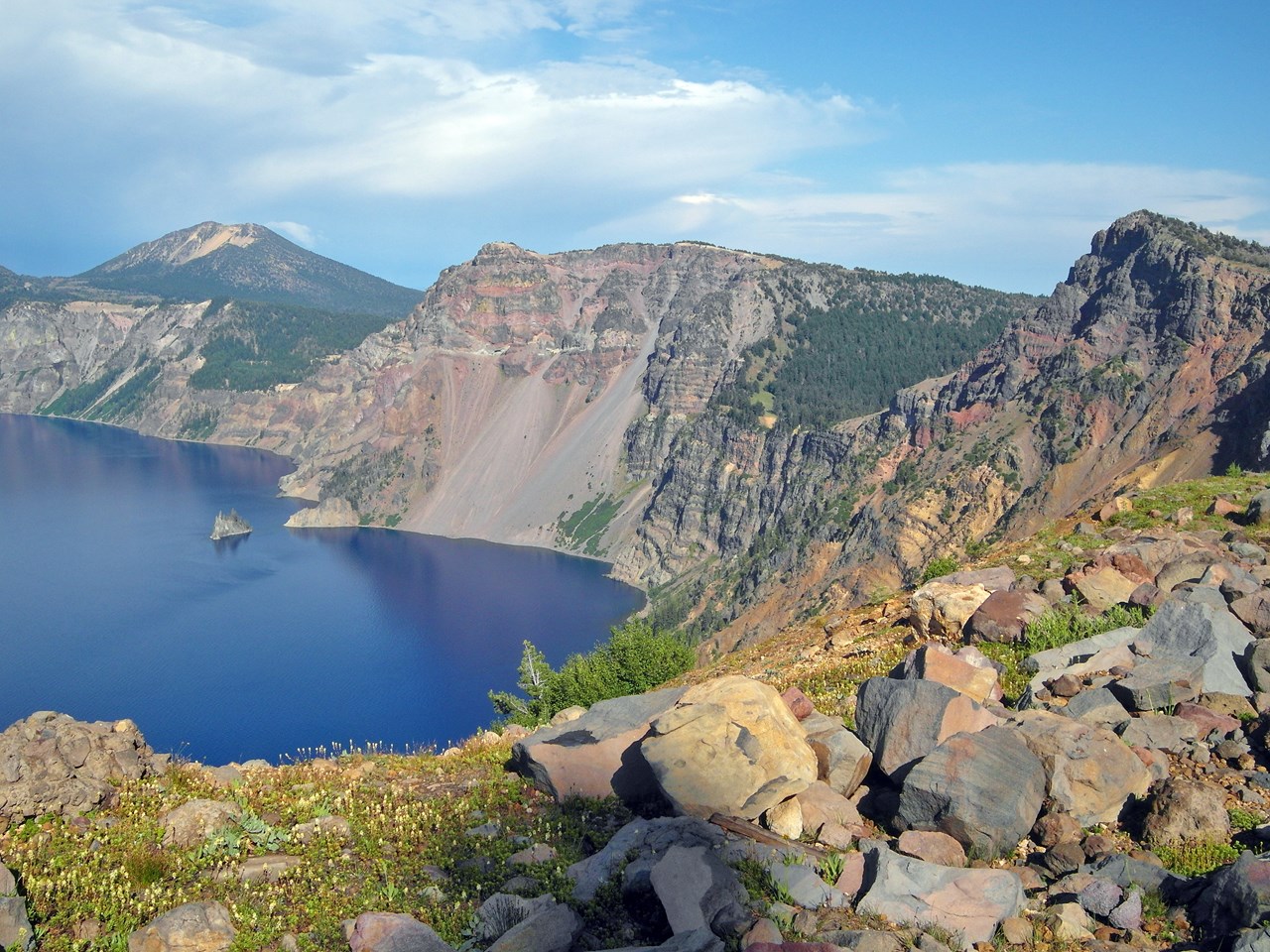
Crater Lake fees, hours and alertsThe snowiest national park in the Lower 48 runs the system's best-known snowshoe program. Park headquarters averages 41 feet of snow annually, and in season - typically late November into April, staffing permitting - rangers lead free two-hour walks through the forests and meadows along the rim. The standing facts, per the park's winter page as of September 27, 2026: walks cover one to two miles of moderate-to-strenuous terrain, most begin at Rim Village, the ranger sets the route, snowshoes are provided free, participants must be eight or older, and advance reservations are required. What the park does not promise is a fixed weekly schedule - days and times are posted season by season on the ranger-programs page, so check it before driving up. Check the current park entrance fee before you go. The payoff is the lake itself: impossibly blue, seen across snow-covered rim country.
02Mount Rainier
Mount Rainier fees, hours and alertsParadise earns its name in winter: the snowiest spot in the range, and home to the park's ranger-guided snowshoe walks. The mechanics, per the park's winter page as of September 27, 2026: a gentle 1.5 miles in about two hours, capped at 25 people aged eight and up, first-come, with a sign-up sheet at the Jackson Visitor Center desk one hour before each walk - everyone in your party must be present to sign up. The park lends snowshoes for the walk itself; for independent exploring, the concessioner rents pairs at the Longmire General Store. Days and times are set season by season with staffing, so check the current winter schedule before planning around one. One dated caution: the Paradise sledding area was closed for the whole 2025-2026 season (the park announced it November 21, 2025, citing avalanche zones and unstable snow bridges), and sledding has never been allowed anywhere else in the park. Whether it reopens for 2026-2027 will be posted in the fall; as of this writing, snowshoes, not sleds.
03Yellowstone
Yellowstone fees, hours and alertsThe winter park. When the interior roads close to cars in November, the geyser basins go quiet, the bison grow frost beards, and the whole park becomes ski-and-snowshoe country: trails around Old Faithful and the Upper Geyser Basin, the rim of the Grand Canyon of the Yellowstone, the terraces at Mammoth. Access to the interior is by snowcoach or snowmobile, which makes the geyser-basin snowshoe feel like an expedition; Mammoth and the north entrance stay car-accessible all winter. February is prime.
04Lassen Volcanic
Lassen Volcanic fees, hours and alertsCalifornia's snowbound volcano gets 30-plus feet at the pass and closes its highway from fall to late spring, turning the park into one long snowshoe route: the Sulphur Works hydrothermal area steaming under snow at the southwest entrance, Manzanita Lake's easy loops at the northwest. Ranger-led snowshoe walks have run in season, free with snowshoes provided - check the park's current winter schedule - and the park's lesson is the opposite of Crater Lake's: here the snowpack, not the rim, is the story.
05Rocky Mountain
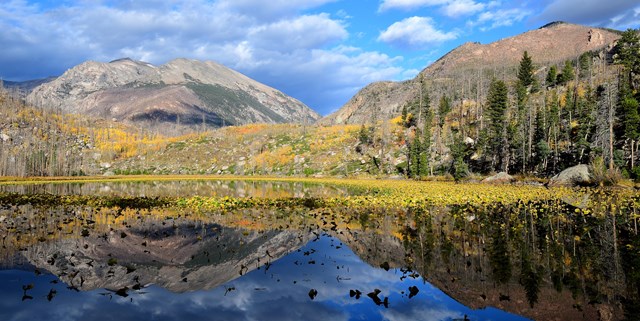
Rocky Mountain fees, hours and alertsThe Front Range's winter back yard. Ranger-led snowshoe walks run from the east side in winter, and the classics are self-serve: Bear Lake's flat loop under the high peaks, Hidden Valley - the park's old ski area - for the steeper legs. Wind is the tax you pay: the park scours in January, and the rangers' advice is to start early and watch the forecast. Trail Ridge Road is closed, so the park you get is the quiet one.
06Yosemite
Yosemite fees, hours and alertsWinter Yosemite is two parks. The Valley floor stays open and mostly bare, but Badger Pass - the oldest ski area in California, operating since 1935 - sits at 7,200 feet with snowshoe rentals, marked trails, and the walk out to the Dewey Point overlook of El Capitan under snow. Ranger snowshoe walks run in season. The Glacier Point Road beyond Badger Pass becomes a groomed ski track to one of the famous views in the world.
07Bryce Canyon
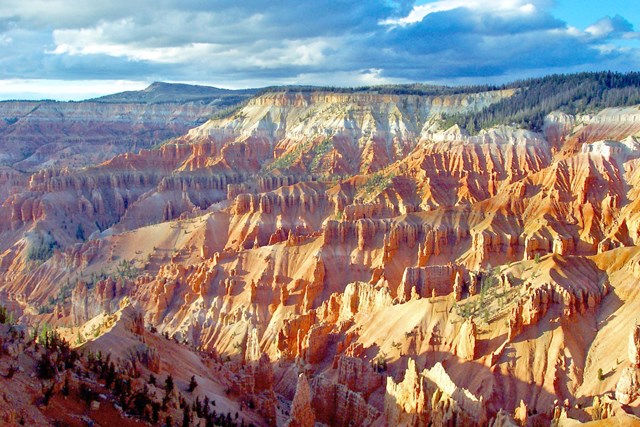
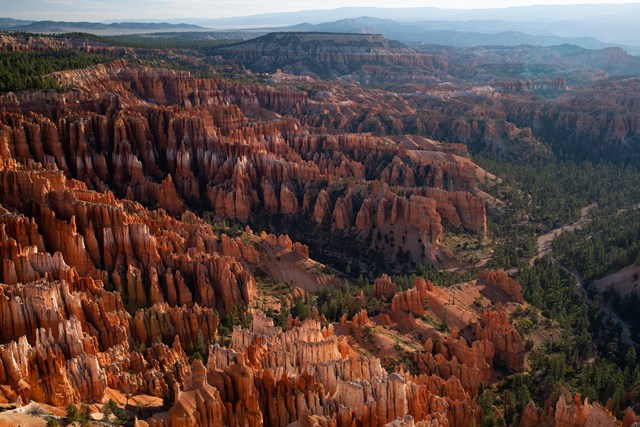
Bryce Canyon fees, hours and alertsThe hoodoos under snow with blue Utah sky is the winter photograph of the Southwest, and snowshoeing is the way out to it: the rim trails above the amphitheater, the Fairyland and Paria viewpoints, and free ranger snowshoe hikes when staffing allows. At 8,000 feet the snow is reliable December through March; the park lends snowshoes for the ranger walks. Full-moon snowshoe hikes, when offered, are the bucket-list version.
08Glacier
Glacier fees, hours and alertsThe park nobody knows: Going-to-the-Sun Road buried, Lake McDonald steaming in the cold, and ranger-led snowshoe walks out of the Apgar area in season - free, snowshoes provided, schedule posted winter by winter - an hour from Whitefish. The unplowed roads and campground loops become the trails. This is prime wildlife-tracking country: the snow keeps a diary of the park's winter residents, and the rangers read it aloud.
09Olympic: Hurricane Ridge
Olympic fees, hours and alertsThe road to Hurricane Ridge follows a changing winter schedule - weather permitting - and delivers you to 5,200 feet with the Olympics on one side and the Strait of Juan de Fuca on the other. Ranger snowshoe walks have run on winter weekends in season, free, and the ridge's open bowls are the best snowshoe terrain in Washington outside Rainier. The Hurricane Ridge road runs on a winter weekend schedule, weather permitting, with chains required to be carried; the park checks.
10Apostle Islands
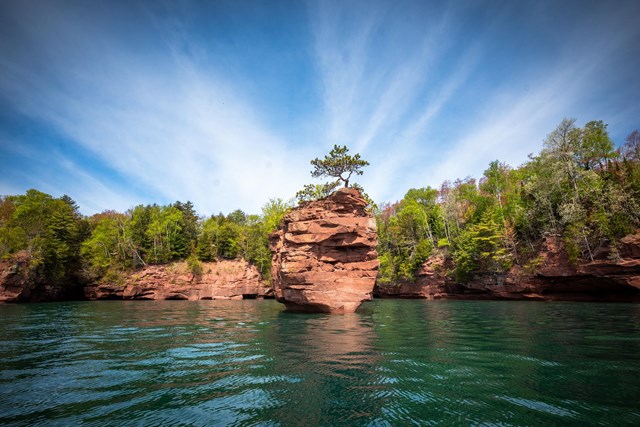
Apostle Islands fees, hours and alertsThe winter shore: when Lake Superior's ice firms up, the park's famous mainland ice caves form along the cliffs near Meyers Beach - reached by walking out on the frozen lake itself, a route that exists only when conditions allow and that the park confirms (or closes) on its current-conditions page and ice-caves watch line. There is no road or vehicle access to the 21 park islands in any season - in summer the access is boats and water taxis, and in deep winter the islands are effectively out of reach for a snowshoe day trip, so plan on the mainland. It is the least-visited entry on this list in winter and, when the ice cooperates, the most beautiful. Superior decides.







How to snowshoe a park
- 1
Take the free ranger walk first. Crater Lake, Rainier, Lassen, Glacier, Bryce, Olympic and more lend the snowshoes and supply the naturalist. It's the best free program in the winter system - reserve where required (Crater Lake needs a phone call).
- 2
Know the road plan. Winter parks run on plowed-road schedules: check Hurricane Ridge’s current operating days, the Sun Road is closed, Lassen's highway is snow. The park's winter page is the map.
- 3
Avalanche terrain is real. The avalanche and snowpack notices at Rainier say it plainly: steep snow in the mountains can kill you. Stick to marked and ranger-recommended routes.
- 4
Rent at the gate if you must. Badger Pass and Longmire rent snowshoes; many gateway towns do. You rarely need to own a pair to try this.
All 50 parks with snowshoeing
The full list is below. Click through for each park's fees, hours, alerts and campgrounds.
Free to enter Charges an entrance feePoints are the Park Service reference point for each unit, not a boundary.