Modern American rock climbing was born in a national park, and the parks still hold most of its sacred ground. Yosemite's Camp 4 is on the National Register of Historic Places for what happened there; Devils Tower has kept a climbing register since 1937; the New River Gorge lists 1,400 routes and counting. The parks are where the sport learned to be itself.
The Park Service lists 39 units with rock climbing, from roadside crags to 3,000-foot walls. These ten are worth planning a trip around, ranked on the quality of the rock, the depth of the route list and the history under your fingers. The ranking is an editorial choice; the closures, seasons and permits that decide whether you actually get on the rock are not. Check both before you drive.
The ten best national parks for rock climbing
01Yosemite
Yosemite fees, hours and alertsThe center of the climbing universe for seventy years running. El Capitan's 3,000 feet of granite, the Nose, Half Dome's northwest face, the cracks of the Valley floor: the routes here are the sport's history written in stone, and the standards set here still define it. Day climbing needs no permit; the culture needs no introduction. Camp 4, the walk-in climbers' camp where the golden age happened, is a National Register site. From mid-April through late November, book it through Recreation.gov one week ahead; in winter, sites are first-come, first-served. The Valley season runs spring and fall; summer belongs to the high country at Tuolumne, where the domes come into their own in July.
02Joshua Tree
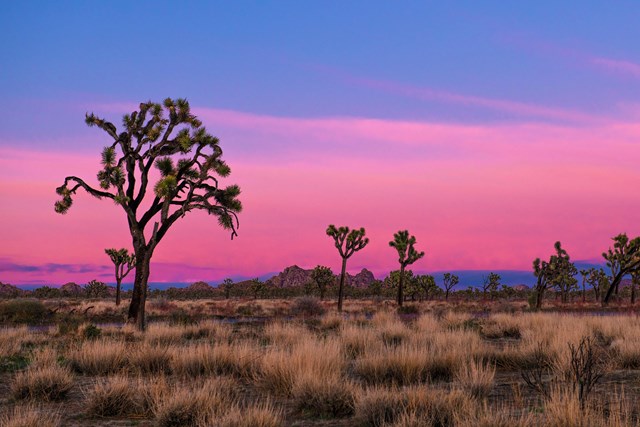
Joshua Tree fees, hours and alertsThe winter capital of American climbing: thousands of routes and boulder problems on rough monzogranite, ten minutes from the car, in t-shirt weather when Yosemite is under snow. The season runs October to May; the style is traditional, so bring gear, expect runouts and learn to trust the friction. Hidden Valley is the famous venue and the famous circus; the Wonderland of Rocks is the antidote. No permits, minimal rules, and a park that has absorbed more climber nights than anywhere else in the system.
03Devils Tower
Devils Tower fees, hours and alertsThe climbing register at the Tower has been running since 1937, and signing it is still mandatory: registration is a legal requirement for anyone climbing above the boulder field, free, at the kiosk by the Tower Trailhead. What you get is a hexagonal-columned monolith of phonolite porphyry, an igneous intrusion rather than the desert sandstone people assume, with 200-plus crack climbs from 5.7 to 5.13 and the park's honest warning that the old routes climb harder than their grades. Two courtesies matter here. June is a voluntary climbing closure out of respect for the tribes who hold the Tower sacred, a practice from the 1995 Climbing Management Plan, observed every June since 1996 and supported by the Access Fund. Spring brings temporary route closures for nesting prairie and peregrine falcons. Check the current closure list when you register.
04New River Gorge
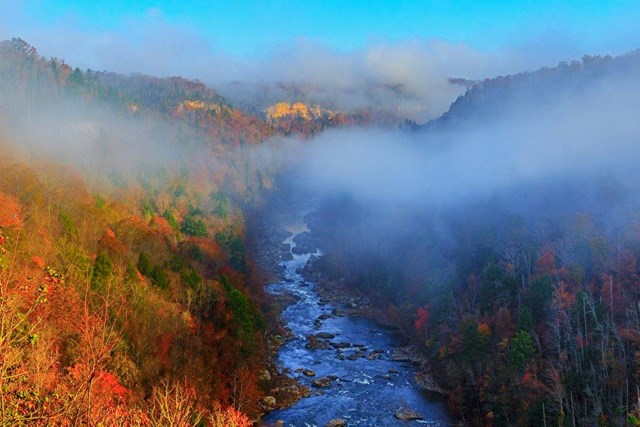
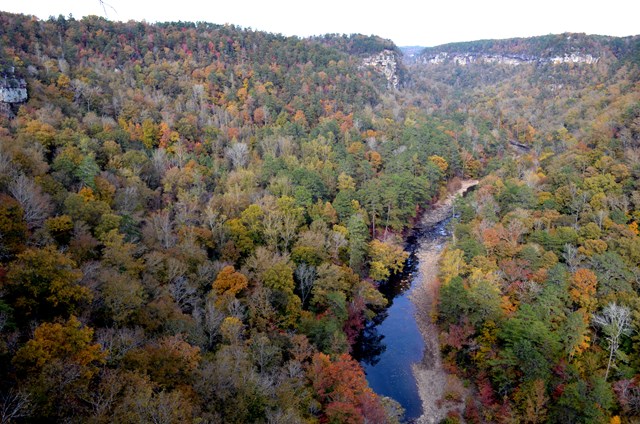
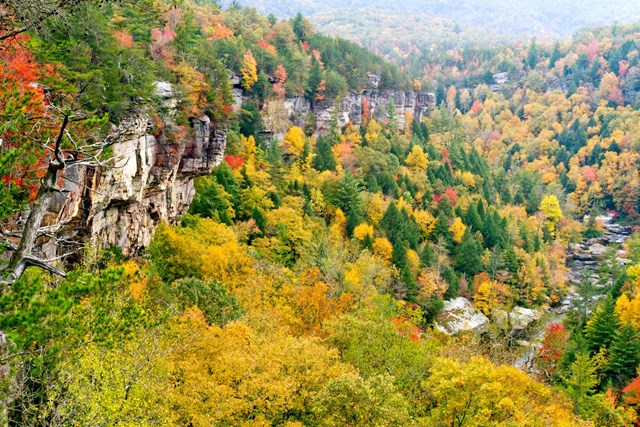
New River Gorge fees, hours and alertsThe East's great hard-sandstone destination: more than 1,400 established routes on cliffs 30 to 120 feet tall, cracks and faces both, with the bulk of the grades at 5.9 and up and the famous sport routes in the 5.10 to 5.12 band. No permits, no fees, cliff-top camping at the Army Camp and Stone Cliff areas, and a town, Fayetteville, built around the scene. The park's own guidance on timing: late April to mid-June, and mid-September to late October. Fall weekends around Bridge Day are the busiest of the year.
05City of Rocks
City of Rocks fees, hours and alertsThe granite playground of Idaho's Albion Mountains, and one of the birthplaces of American sport climbing: the 1980s bolting arguments happened here, on these spires. Hundreds of routes on featured granite, from one-pitch moderates to multi-pitch trad, with a campground scattered right through the rock city. Summer is high season, spring and fall are perfect, and winter ice makes it a year-rounder's secret. Climbing an established route needs no permit; installing a permanent anchor does.
06Grand Teton
Grand Teton fees, hours and alertsWhere American mountaineering learned rock craft. The range packs everything from roadside bouldering to the Grand's Owen-Spalding route into one skyline, and the Jenny Lake Rangers have been pulling climbers out of it for generations. No climbing permit for day routes; backcountry permits for overnights, picked up at the Jenny Lake Ranger Station in summer. Exum Mountain Guides, founded in 1929, remains the classic way in. Snow holds on the high routes until mid-July most years.
07Black Canyon of the Gunnison
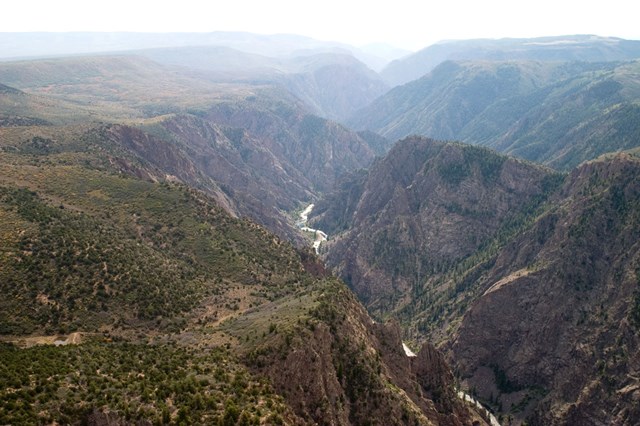
Black Canyon fees, hours and alertsThe anti-Joshua Tree: a deep, dark, vertiginous canyon whose inner walls offer some of the most serious traditional climbing in the country. Long, loose, runout routes on gneiss and schist, poison ivy in the gullies, rappel approaches with no easy escape. The park warns plainly that this is expert terrain, and the rescue list backs it up. A free inner-canyon permit is required; get it from a rim visitor center or use the self-registration kiosk when the centers are closed. Beginners should look elsewhere. For the right climber, it is the most committing cragging in the system.
08Zion
Zion fees, hours and alertsThe big-wall park of the desert Southwest. Two-thousand-foot sandstone walls, Moonlight Buttress, Spaceshot, Touchstone, rise straight off the canyon floor, climbed on aid gear and nerve. Overnight bivies on the wall need a wilderness climbing permit: $20 per permit, non-refundable, plus $7 per person per night. Spring and fall are the seasons; summer heat and monsoon storms rule the walls out, and seasonal closures protect nesting peregrines each spring. The sandstone is soft, and the park's rules on bolting and chalk exist because the rock shows every scar.
09Acadia
Acadia fees, hours and alertsSea-cliff climbing with breakfast in Bar Harbor. Otter Cliff, a 110-foot wall of pink granite dropping straight into the Atlantic, is one of the most spectacular crags in the East, with the Precipice and South Bubble adding variety inland. Seasonal peregrine closures hit the Precipice most springs, so check before you go, and the tide table matters at Otter Cliff, where the ledges go underwater. From the Friday before Memorial Day through Labor Day, organized groups of six to twelve need a reserved permit at Otter Cliff. Guided days are available through local services for first-timers on the rock.
10Pinnacles
Pinnacles fees, hours and alertsCalifornia's other climbing park: volcanic breccia spires above the talus caves, the birthplace of modern bolted face climbing in the 1930s and a winter-season alternative when the Sierra is snowed in. The rock is notoriously friable, so helmets are standard, and so is respecting seasonal raptor closures, which shut whole formations for nesting condors and falcons. Machete Ridge and the Tourist Trap are the classic venues; the high peaks trails let you scout routes between climbs.






When to climb: a rock year in the parks
Spring is desert season, with strings attached. Zion and the sandstone parks climb best before the heat, and Joshua Tree's season is winding down. It is also falcon season: the Tower, Zion and Acadia all post temporary route closures for nesting birds, and the specific closed formation changes year to year. Check the park's closure list the week you go, not the month you booked.
Summer belongs to the high country. Tuolumne's domes come into their own in July, City of Rocks hits high season, and the Tetons shed their snow by mid-July most years. The Valley floor in Yosemite and the desert walls in Zion are for dawn patrols or for waiting.
Fall is the prime everywhere. Yosemite Valley's golden weather, New River Gorge's late-September-to-October window, Zion's walls back in condition: this is when the destination trips happen. Fall weekends at the Gorge, especially around Bridge Day, are the busiest of the year.
Winter flips south. Joshua Tree is in t-shirt season, Pinnacles comes into its own, and everything with real elevation is under snow. The desert sun is honest warmth; the desert shade is not.
How to climb in the parks
- 1
Know the closure calendar. Falcons in spring, condors at Pinnacles, the Tower's June. The parks' climbing closures are posted, seasonal and enforced, and the specific routes change year to year. The current-closures page is part of your rack.
- 2
Register where it is asked. Devils Tower's register is mandatory and free. Zion's overnight wall permits cost $20 plus $7 per person per night. Yosemite and most others ask nothing for a day at the crag. When a park asks for your name, it is for the rescue list and the historical record, not the fee box.
- 3
Respect the rock type, which changes park to park. Desert sandstone is the fragile one: at Zion, wet rock loses strength and holds snap, so wait a day or two after rain. That rule does not transfer to Devils Tower, whose phonolite porphyry does not weaken when wet; rain there means slick friction, not crumbling columns. Pinnacles' volcanic breccia is the opposite problem in any weather: friable, and it sheds holds.
- 4
Treat fixed gear as a question, not an answer. No park certifies a bolt, and some, like Acadia at Otter Cliff, maintain anchors and still tell you to evaluate them. Placing or replacing permanent hardware requires a permit in parks that allow it at all.
- 5
Hire the authorized guide. Parks that permit commercial guiding require the operator to hold current park authorization, not just a personal certificate. Ask the company, then ask about the guide.
A short history of climbing in the parks
The first recorded ascent of Devils Tower was an advertisement. In 1893, ranchers Willard Ripley and William Rogers hammered a 350-foot ladder of wooden stakes into a continuous crack and climbed it, hoping the spectacle would draw a paying crowd. It did, and the stake ladder, partially restored in 1972, still clings to the Tower. The park has kept a climbing register since 1937, one of the oldest continuous records in the sport.
Yosemite made climbing modern. Through the 1950s and 60s, Camp 4 was the laboratory: big-wall techniques, hard free climbing and the rivalries that pushed standards up the Valley's granite. The campground is now on the National Register of Historic Places, which may make it the only place in America where your $10 bed is a monument to the people who could not afford one either.
The parks also taught the sport restraint. The June closure at Devils Tower grew out of the 1995 Climbing Management Plan and has been observed since 1996; raptor closures now rotate across walls from Zion to Acadia; bolting debates at City of Rocks in the 1980s shaped fixed-anchor rules nationwide. The rocks are older than the rules. The rules are why the rocks are still worth climbing.
All 39 parks with rock climbing
Below is every Park Service unit that lists rock climbing. Click through for each park's fees, hours and alerts, and read the park's own climbing page for current closures, permits and anchor rules. A listing is not a route guide or a promise that a specific face is open today.
Free to enter Charges an entrance feePoints are the Park Service reference point for each unit, not a boundary.