
The Park Service lists 24 units with saltwater swimming, running the full thermometer from bathtub-warm Caribbean shallows to the bracing North Atlantic. What the park beaches share is room: these are the least developed oceanfront miles in the country, where the swim comes with dunes, wild horses or a lighthouse instead of a boardwalk. What they do not share is conditions. Lifeguard coverage, water temperature and hazards change by the week, and the honest answer to "can I swim here" lives on the park's conditions page, not in any guide, including this one.
Two rules travel with every entry. Rip currents are the ocean's real killer: swim at guarded beaches when they exist, and if caught, float and swim parallel rather than fighting straight in. And cold water is its own hazard: the northern parks are beautiful, brief swims at best. The park alerts system carries the day's flags.
Eight saltwater swims worth the trip
01Assateague Island
Assateague fees, hours and alertsThe beach where wild horses wander the dunes, with 37 miles of undeveloped barrier island, summer-warm Atlantic water and the famous pony herds. One thing to know before choosing a side: do not assume guarded swimming. Lifeguard coverage here is seasonal, changes by district, and has recently run thin in both the Maryland and Virginia districts, so confirm current coverage on the park's conditions page before promising the kids a guarded beach. Either way, keep 50 feet from the horses, always.
02Cape Cod
Cape Cod fees, hours and alertsForty miles of the Atlantic's best beach architecture: towering dune cliffs, kettle ponds behind the sand, and the ocean's most honest safety briefing. The seashore maintains an official Shark Safety page: white sharks patrol the outer bars after the seal population, and the park's guidance is the current word on how to swim smart. Stay close to shore, avoid seals, heed every closure and flag. This is not a reason to skip the swim; August water is the warmest in New England. It is the reason to take the briefing seriously and swim where the park says to swim.
03Virgin Islands
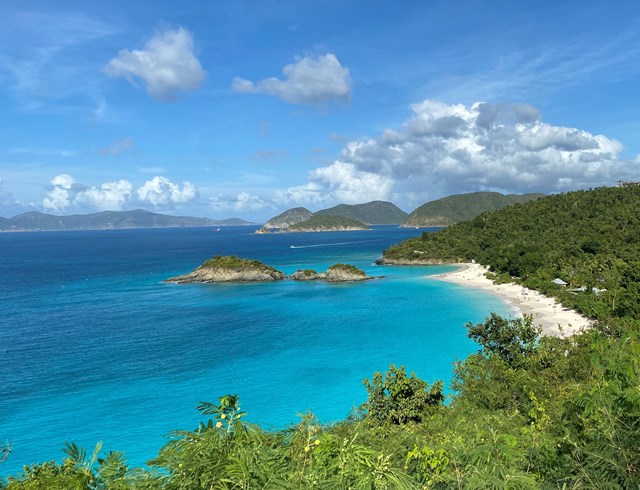
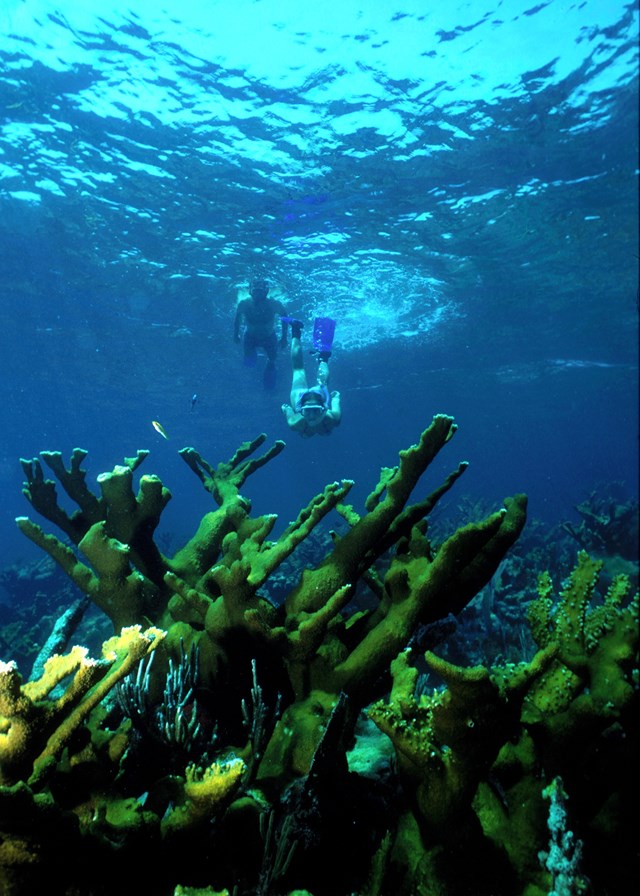
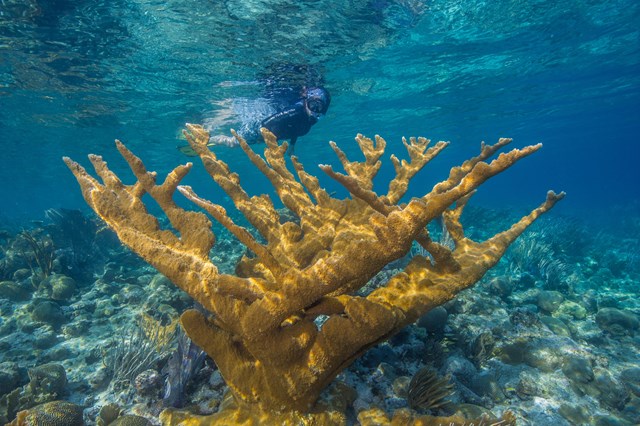
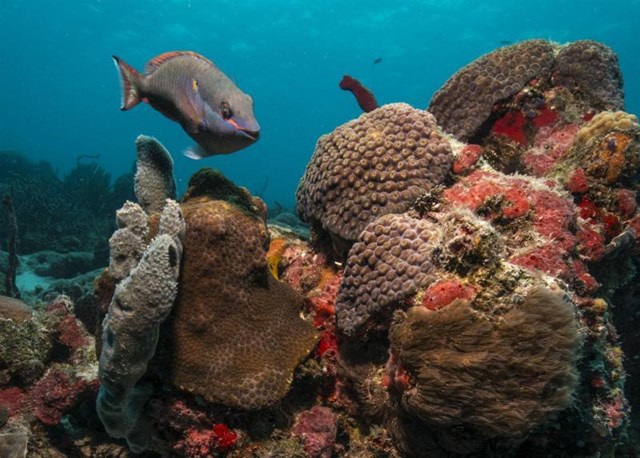
Virgin Islands fees, hours and alertsThe tropical standard. St. John's park beaches, from Trunk Bay's famous crescent to Cinnamon Bay and Maho's shallow turtle-grass flats, offer year-round warm, clear Caribbean water behind reef protection, with jungle instead of development behind the sand. Sea turtles graze the shallows at Maho, and the fringing reefs make every swim a lazy snorkel. Bring reef-safe sunscreen, which the USVI requires by law, and expect every beach afterward to disappoint.
04Padre Island
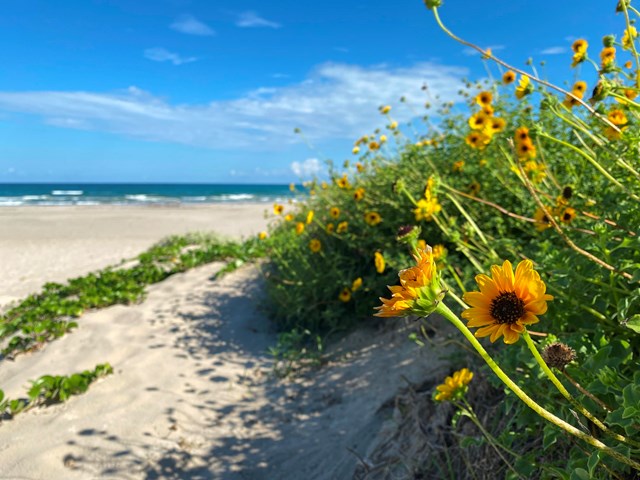
Padre Island fees, hours and alertsThe longest stretch of undeveloped barrier island in the world, which means the swimming comes with solitude measured in miles. Malaquite Beach is the park's developed swim area, with a bathhouse, visitor services and a gentle Gulf slope; south of the pavement the island goes wild for dozens of miles of empty sand. Warm water runs roughly May through October. Check the park's current conditions for lifeguard status and surf before counting on either.
05Acadia: Sand Beach
Acadia fees, hours and alertsThe polar-plunge entry, and proud of it: a pocket of perfect sand between granite headlands on Mount Desert Island, where the water stays bracing even in August and most visitors manage a knee-deep wade and call it character-building. Brave souls do the full swim: in, out, warm on the sand, repeat, with the Beehive rising behind as the frame. Treat it as a dip rather than a swim session and the cold becomes part of the story.
06Gulf Islands: Langdon Beach
Gulf Islands fees, hours and alertsFor a gentler Gulf swim, start at Langdon Beach in the Fort Pickens area of Gulf Islands National Seashore. The water is clear, the sand is pale, and the beach has restrooms and showers. Visit Florida notes that the Gulf can still turn rough with wind and weather, so the easier-looking water does not remove the need to check conditions. This is a good choice for a group that wants a proper beach day rather than a long walk to an empty shore.
Langdon is a developed pocket in a much larger seashore. Bring your own shade and supplies, and check whether guarded swimming is offered on your visit. If your plans include Fort Pickens, leave time for both the fort and the water; they deserve separate hours.
07Cape Hatteras: the Outer Banks surf
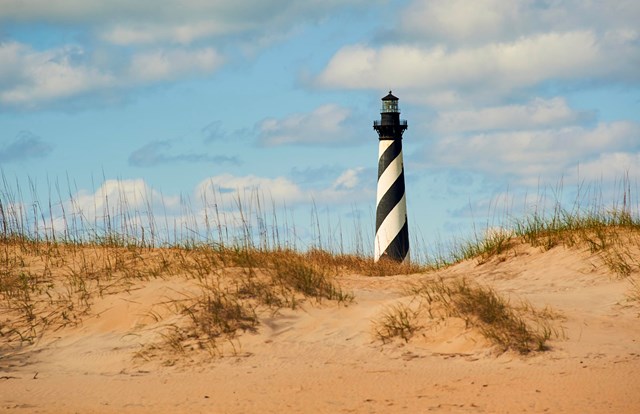
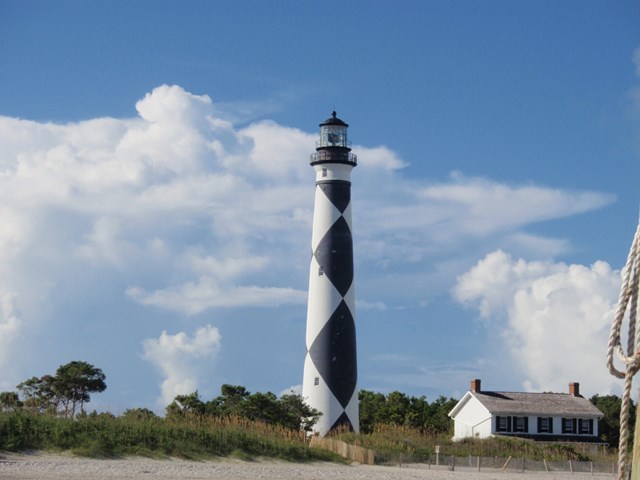
Cape Hatteras fees, hours and alertsAt Cape Hatteras, the beach is long enough to make finding a stretch of sand easy; deciding when to enter the Atlantic is the real work. The Outer Banks' moving barrier islands have miles of surf, with strong shore break and rip currents possible even when the beach looks inviting. Choose a guarded area when available, obey no-swimming flags and take a flotation aid. Never swim alone.
A trip here can center on the water without making the ocean the whole itinerary. Walk the dunes, look for the lighthouses and come back when conditions are better if the flags say no. Cape Hatteras became the first national seashore in 1953, preserving a coast whose shape keeps changing. Treat a beach plan the same way.
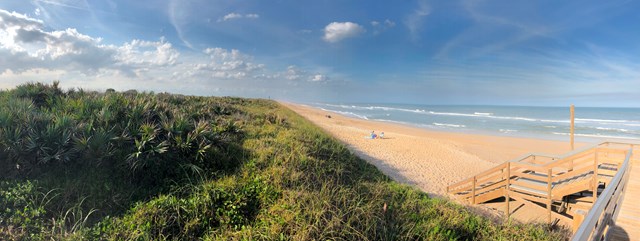
08Canaveral: Playalinda's undeveloped Atlantic beach
Canaveral fees, hours and alertsCanaveral keeps the Space Coast surprisingly spare. Playalinda Beach has sand and surf beside the protected lands around Kennedy Space Center, with boardwalk access from its parking areas. There are restrooms but no concessions or showers, according to Visit Space Coast, so bring what you need for the day. Its open Atlantic beach is a better fit for confident ocean swimmers than for anyone counting on a calm, sheltered cove.
Rocket launches add a complication: the beach may close for major launches, and seeing a launch from the sand is never guaranteed. Check access before driving out, then check the surf before swimming. The launch can wait. The ocean cannot.



The honest outlier: Olympic
Olympic lists saltwater swimming, but its outer coast, from Rialto to Ruby and the wilderness beaches, is cold Pacific water with sneaker-wave and driftwood hazards, and the Park Service's guidance effectively says admire, don't swim. Take the listing as an invitation to world-class wading and tide-pooling, and save actual swimming for the warmer parks above.
When to go
Summer is the swim season almost everywhere, but it means different things by coast. In the Virgin Islands and on the Gulf coast the water is bathwater; in New England it finally turns reasonable in August; at Acadia it never does. Lifeguard programs, where they exist, run their fullest schedules from late June through Labor Day.
The shoulder seasons belong to the warm-water parks. Padre Island and Gulf Islands stay swimmable from roughly May through October, and the Virgin Islands never really close. Crowds drop hard after Labor Day while the water holds its heat, which makes September the connoisseur's month on the southern coasts.
Winter is for wading and walking. Northern beaches turn to boot-and-jacket territory, and even the Gulf parks get brisk. The tropical parks are the exception that makes winter the best time to go: St. John's water stays warm and the island's dry season runs from December into spring.
How to swim a national park beach
- 1
Check the conditions page the morning of. Lifeguard coverage, closures, surf and water quality change weekly; Assateague's district-by-district guard status is the perfect example of why.
- 2
Swim guarded when it exists. Rip currents kill more swimmers than everything else combined. If caught in one: float, signal, swim parallel.
- 3
Use reef-safe sunscreen where reefs live. The USVI requires it by law, and mineral formulas protect you and the coral.
- 4
Match the water, not the brochure. Caribbean in the Virgin Islands, bracing in Maine. Wade first in the north; cold shock is real.
- 5
Read the flags. Park beaches post their day's hazards at the sand. The flag outranks any plan you made at home.
A short history of the American beach
The beach vacation is a 19th-century invention. The railroads built the resorts, and the resorts built the idea that ocean swimming was health rather than madness. By the time the Park Service entered the picture, the coast was being sold off mile by mile, and the seashores became the rescue operation: Cape Hatteras, authorized in 1937 and established in 1953 as the first national seashore, then Cape Cod in 1961, Padre Island, Assateague. Each was a stretch of coast pulled back from development just in time.
The Great Lakes were getting their own protected shores at the same time, but ocean and gulf beaches had a distinct problem: roads and development could turn an open coast into a line of private addresses. Designating a seashore kept the landscape public, even as storms and tides kept remaking it. A beach is never a fixed piece of ground.
The result is accidental but wonderful: the park system ended up owning the best-preserved oceanfront in the country, run by an agency whose idea of beach amenities is a bathhouse and a flag. The boardwalks are elsewhere. What remains is the swim itself: salt water, open sand, and the particular American luxury of a beach with nobody selling anything on it.
All 24 parks with saltwater swimming
Below is every Park Service unit that lists saltwater swimming. Click through for each park's fees, hours and alerts, then check the conditions page for lifeguard status and the day's flags before you commit.
Free to enter Charges an entrance feePoints are the Park Service reference point for each unit, not a boundary.





Keep planning your trip
- Freshwater swimming in the national parksLakes, rivers and swimming holes
- Paddling in the national parksCoastlines best seen from the water
- Surfing in the national parksFor the days the swim becomes a surf session
- Visiting parks with kidsBeach days, park edition
- The best time to visit a national park, by park typeSwim seasons by region