The saltwater parks get the postcards, but the inland swims are where the parks surprise you: spring-fed creeks running a steady 65 degrees through Oklahoma, Lake Michigan beaches that pass for ocean until you taste the water, and mountain lakes so clear you can count the rocks below you. The Park Service lists 23 units with freshwater swimming. Lifeguard coverage varies, and even a familiar beach requires a check of posted hazards and water conditions.
The best freshwater swims
01Chickasaw: the spring-fed swimming holes
Chickasaw fees, hours and alertsOklahoma's little park is built around cold, clear, spring water, and the swims are the reason locals have come for a century. The park is exact about where: Travertine Creek is open to swimming only from Little Niagara downstream - everything upstream (east) of the falls is closed to swimming and wading - while Rock Creek, Veterans Lake and the Lake of the Arbuckles are open everywhere except around boat launches and fishing docks. There are no lifeguards anywhere, and the park monitors bacteria at the popular spots in summer. One honest quirk: the springs that feed Travertine Creek have dried up more than twenty times since 1902, so a dry creekbed is a documented possibility, not a rumor. Summer weekends hit the parking cap by mid-morning; come on a weekday or come early.
02Indiana Dunes: Lake Michigan
Indiana Dunes fees, hours and alertsFifteen miles of Lake Michigan shoreline an hour from Chicago, with beach swimming that behaves like the ocean in every way but one - fresh water, no salt, no sharks. West Beach is the full-service option, with lifeguards on duty from the Friday of Memorial Day weekend through Labor Day Monday, 10 a.m. to 6 p.m.; the other beaches are walk-in and unguarded. The hazard is real and specific: the park calls rip currents the most significant drowning threat on southern Lake Michigan and posts warnings and wave forecasts in season. Check them before the kids go in.
03Sleeping Bear Dunes
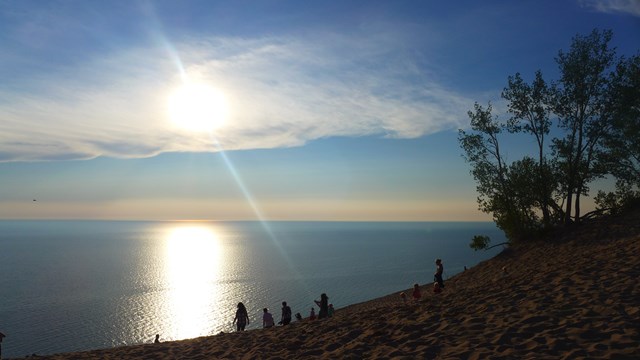
Sleeping Bear Dunes fees, hours and alertsThe freshwater coast at its best: 35 miles of Lake Michigan shoreline under 400-foot dunes, with swim beaches at Platte River Point - where the warm river meets the cold lake and you can stand with a foot in each - and Esch Beach, where the Otter Creek outlet does the same trick. The park's own framing is the honest one: the whole lakeshore is open to swimming and none of it is guarded, with rip currents the named hazard.
04Acadia: Echo Lake
Acadia fees, hours and alertsThe warm-water answer to Maine's ocean. Echo Lake Beach, on the island's quiet western side, is Acadia's freshwater swim: a sandy, shallow lake beach where the water actually warms past the ocean's 50s by midsummer. The park monitors it, Sand Beach and Lake Wood weekly for bacteria June through August - and note that many of the island's other lakes and ponds are public water supplies where swimming is flatly prohibited, Echo Lake being the sanctioned exception. Families split the day - ocean cliffs in the morning, Echo Lake after lunch - and the park's fee pass covers both.
05Olympic: Lake Crescent
Olympic fees, hours and alertsTwelve miles of deep, cold, absurdly blue water at the foot of the Olympics, and the most beautiful freshwater swim in the system. Fairholme and East Beach have the designated swim areas; the Devils Punch Bowl, reached by the Spruce Railroad Trail, is the famous blue swimming hole - unofficial, unguarded, and genuinely cold even in August, with rocks that hurt people every year. Lake Quinault, on the park's southwest corner, is the warmer, calmer alternative with summer swim areas.
06Whiskeytown
Whiskeytown fees, hours and alertsNorthern California's warm-water lake: clear, ringed by mountains, with summer surface temperatures nearing 80 degrees and three designated swim beaches - Brandy Creek, Oak Bottom and East Beach - each roped off and closed to boats. Rangers run kayak tours to the coves; the waterfall hikes (Whiskeytown Falls) make the apres-swim. After the 2018 Carr Fire burned nearly the whole park, the lake's recovery has been the good-news story - the beaches are open and the water is fine.
07Ozark National Scenic Riverways
Ozark fees, hours and alertsThe swimming hole as a way of life. The Current and Jacks Fork rivers are spring-fed, gravel-bottomed and cold enough to be honest, and every take-out and campground has its swim: Big Spring's outflow, Alley Spring below the red mill, the bluff pools on the Jacks Fork. No fees beyond the park pass, no lifeguards, and the local rule that you swim where the outfitter drops you.
08Delaware Water Gap
Delaware Water Gap fees, hours and alertsThe Delaware River's big bend between New Jersey and Pennsylvania has three official swim beaches - Milford and Smithfield on the Pennsylvania side, Turtle Beach in New Jersey - with fees charged April through October and, per the park's page as of September 27, 2026, no lifeguards: all swimming is at your own risk. The park's rules are unusually specific, and they settle some hiker folklore: swimming is banned within 50 feet of boat launches and waterfall tops, and outright at Dingmans Falls, Raymondskill Falls, Van Campens Glen and the Childs Recreation Site - the waterfall pools are not swim holes here. Water toys and flotation aids are prohibited; only Coast Guard-approved life jackets are allowed as swim aids, and the park strongly recommends wearing one: people drown in the Delaware every year, many of them trying to swim across.
09Apostle Islands: a Lake Superior swim with a shore plan
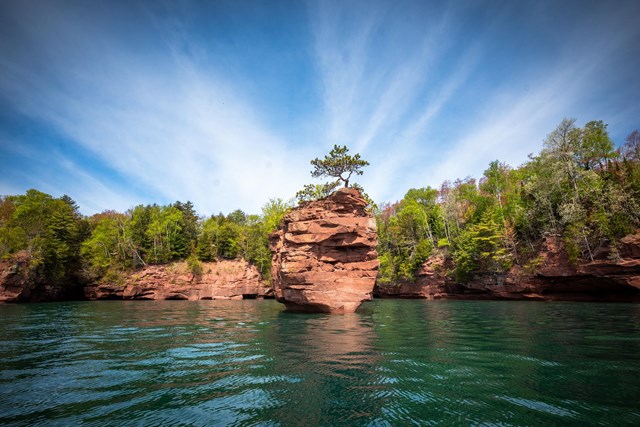
Apostle Islands fees, hours and alertsLittle Sand Bay and Meyers Beach give mainland visitors a way into Lake Superior without first arranging an island boat. The park’s swimming guide also names Julian Bay on Stockton Island, where a swim becomes part of a bigger boat itinerary. Protected shallow bays can be more inviting than the open lake on a calm summer day, but Superior’s cold water and sudden weather changes still matter.
There are no lifeguards. Swimming is restricted near harbors, docks and moored vessels, so pick a lawful entry and check the day’s wind and water before wading in. A beach trip here is worth doing even if the lake says no to swimming.
10Voyageurs: swim from a boat-access day-use site
Voyageurs fees, hours and alertsAt Voyageurs National Park, a freshwater swim can begin at a shoreline day-use site reached by boat. The park’s site guide describes picnic and swimming use at some visitor-destination sites, with beach or dock access. That makes the approach part of the day: decide where you can land and how you will return before jumping in.
Do not swim around a running boat or generator. The park’s regulations warn about exhaust exposure, and boat traffic is a separate hazard from water temperature. Bring a life jacket for the ride and assess the specific site’s water before entering.








How to swim safely in the parks
- 1
Choose the marked beach. Where parks designate swim areas - Chickasaw, Whiskeytown, the Water Gap, Lake Mead - the unmarked water is where the drownings happen.
- 2
Read the lake, not the weather. Great Lakes rip currents and reservoir drop-offs don't care how calm the day looks. Check posted swim-risk forecasts where they exist.
- 3
Cold is the default. Spring-fed and snowmelt water stays in the 50s and 60s all summer. Cold shock, not distance, is what gets people.
- 4
Life jackets for kids, always. It's the single rule every park water-safety page leads with.
When freshwater swimming is best
Late spring: Snowmelt feeds Medano Creek for a short season, but mountain lakes remain cold. Watch creek conditions instead of booking around a fixed date, and choose a shallow place with an easy exit if children are in the group.
Summer: Lake Michigan beaches, inland lakes and spring-fed holes draw the biggest crowds. Arrive early at popular beaches, but never treat a parking spot or sunny sky as a green light to enter. Posted bacteria results, rip-current warnings and water levels can change faster than a trip plan.
Early fall: Warm afternoons can still make a lake swim inviting after summer services wind down. Lifeguards, concessions and access may end on different dates. Check the park’s current conditions and bring warm layers for the walk back; water cools more slowly or more quickly than the air depending on the place.
How freshwater shores became park beaches
The springs around Sulphur, Oklahoma, drew visitors long before they became a federal park. As the town and its resort plans grew, the Chickasaw and Choctaw sought to protect access to the water. A federal purchase created Sulphur Springs Reservation in 1902, and the area became Platt National Park in 1906. Early improvements included swimming pools; in the 1930s, Civilian Conservation Corps crews built dams, paths and picnic areas. Today's Chickasaw National Recreation Area still begins with the same question: which water can you actually enter?
On Lake Michigan, public access took a different fight. Conservationists spent decades trying to protect the Indiana Dunes from industry and development. The national lakeshore was finally established in the 1960s, long before its 2019 national park designation. Farther north, Sleeping Bear Dunes National Lakeshore was created in 1970 amid strong opposition from some local property owners. Its beaches became public, but the cost to people who lost land belongs in that history too.
Those choices left more than a collection of pretty shorelines. They kept a spring-fed creek, a lake beach beside factories and broad stretches of Michigan sand within public reach. A modern swim still depends on water quality, currents and the rules for that particular shore. Public access gets you to the beach. It does not make every stretch safe to swim.
All 23 parks with freshwater swimming
The full list is below. Click through for each park's fees, hours, alerts and campgrounds.
Free to enter Charges an entrance feePoints are the Park Service reference point for each unit, not a boundary.