The word "foraging" covers activities with very different rules: gathering fallen pine nuts, taking an apple from a historic orchard, picking a few berries for lunch, collecting unoccupied seashells, or a resident's subsistence harvest. The Park Service lists 13 units with gathering and foraging. Listing an activity does not give a visitor permission to collect in any one of them.
Some parks allow specific items, by hand, for personal use within exact quantity limits. Other harvests depend on eligibility and place. A park can also close an ordinarily offered activity for a season when the crop fails. The eight examples below show the contrasts. Read the *current* park compendium and seasonal notices for your precise spot and species before collecting anything. The Park Service list is below, but each park has its own rules.
Eight places, eight different boundaries
01Shenandoah: a simple explainer and a more detailed compendium
Shenandoah fees, hours and alertsShenandoah National Park protects its plants, flowers, seeds, leaves, branches and roots from general collection. NPS's public explanation, last updated April 2022, says small amounts of certain fruits may be gathered for personal use, generally up to a quart per person per day. It names blueberries, blackberries, apples and wild grapes as examples and allows small amounts of edible mushrooms, while ruling out inedible woody shelf or medicinal mushrooms.
Its superintendent's compendium, updated June 8, 2026, gives a more specific and different set of limits: one gallon per person per day for listed fruits, berries and nuts, including blueberries, blackberries, hickory nuts and morels; one bushel per person per day for listed apples, pears and peaches; and one quart per person per day in combined volume for other edible fungi. Collection is by hand for personal use, and climbing trees to gather fruit or nuts is prohibited. The general explainer's "one quart" should not be repeated as the legal cap for all listed fruit, nor should the larger compendium number be applied to a species not listed there. Use the current compendium for the exact species and ask a ranger when the pages conflict. NPS also warns that many mushrooms are poisonous; legal collection is not edible identification.
02Great Basin: pine nuts have a household annual limit
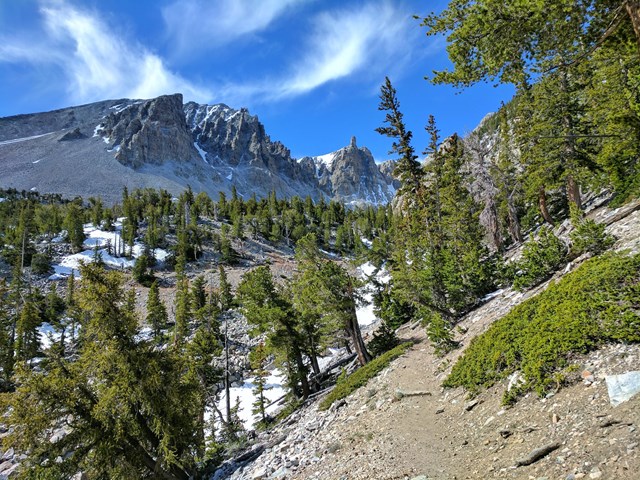
Great Basin fees, hours and alertsGreat Basin National Park has a focused autumn activity: gathering nuts of the singleleaf pinyon pine. NPS's named pine-nut guidance allows fall gathering for personal, noncommercial use with a limit of 25 pounds of nuts per household per year or three gunnysacks of cones per household per year. It specifies the gunnysacks' maximum laid-flat size as two by three feet. Those are not per-person or per-day amounts, and the "or" is not permission to take both maxima.
Gathering must not injure the trees. Do not break branches, shake or climb pines, and do not pull or cut them; NPS allows only freestanding ladders for picking. Park only in gravel or paved areas, never drive off-road to reach a productive stand. The agency explains why nuts are left behind for Clark's nutcrackers, pinyon jays and other animals. The page was last updated in 2021, so confirm the current compendium and this year's conditions before a harvest trip. Seeing cones at roadside is neither a parking exemption nor proof they are ready.
03Hopewell Furnace: an orchard, but no 2026 picking
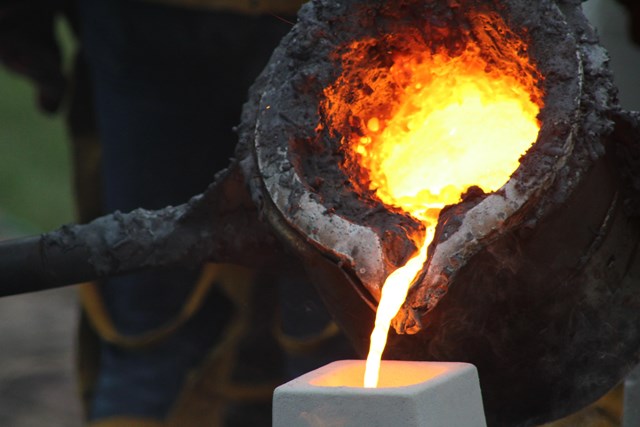
Hopewell Furnace fees, hours and alertsHopewell Furnace National Historic Site has an orchard of roughly 140 trees and more than 20 historic apple varieties. It helps visitors see how orchards fit an eighteenth- and nineteenth-century iron-making landscape. In an ordinary productive year, apple picking can make that history literal. In 2026, however, the NPS's September 17 update says apple picking is not available: very few apples appeared. The orchard remains open to visit, but picking is discouraged and tools are not provided.
That is exactly why a past harvest does not promise one this season. Do not drive to Hopewell expecting to fill a bag this season because an older article praises its orchard. The park says it will continue caring for the trees for future crops. Check its current apple-picking page in a later season. Even when a crop returns, follow the park's stated picking dates, areas and fees rather than assuming all fruit on all trees is offered.
04Fire Island: unoccupied shells, measured in quarts
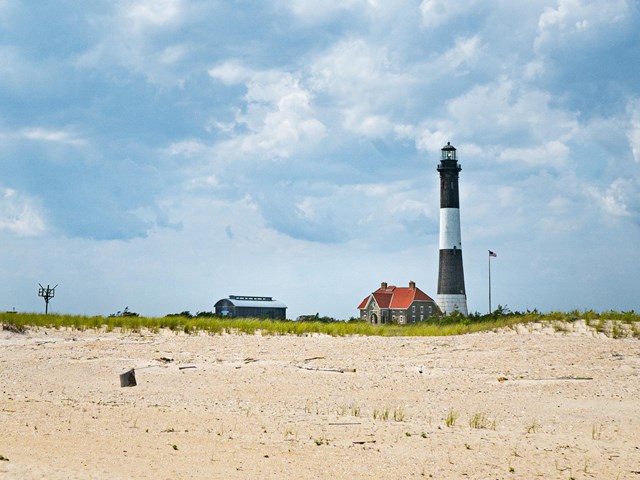
Fire Island fees, hours and alertsAt Fire Island National Seashore, "gathering" can mean beachcombing rather than food. NPS allows visitors to take home up to two quarts of unoccupied seashells per day for personal use. "Unoccupied" matters: a shell with a living animal in it is not a souvenir. The beachcombing page says the activity is possible through the year, with different ferry or road access at different times.
A two-quart shell allowance does not transfer to other shorelines or items. Driftwood, wildlife remains, artifacts and protected habitat follow their own rules. Disturbing a nesting area to collect shells is not made acceptable by a quantity limit. Keep the measure small, identify the beach and check any wildlife closures before walking it. This is an instructive contrast with San Juan Island, where even *unoccupied* shells may not be gathered from NPS lands because they can be part of cultural shell middens.
05San Juan Island: fruit in a historic landscape, no shells
San Juan Island fees, hours and alertsSan Juan Island National Historical Park publishes a seasonal foraging guide. It describes salmonberries in late May and early June; trailing blackberries, currants and thimbleberries around July; heirloom plums near English Camp and Sandwith Orchard in August and September; and pears, apples and Himalayan blackberries in fall. These are illustrative ripening periods, not a guarantee that fruit is ready on a particular weekend.
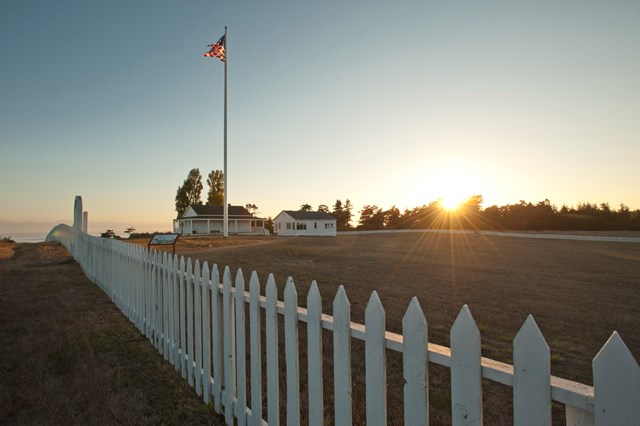
The park's current compendium allows small amounts of fruits, nuts, mushrooms and berries by hand for personal use, up to one shopping bag per family unit per day. Do not climb, bounce on or break fruit-tree limbs, and do not gather commercially. Its compendium prohibits collecting unoccupied seashells on NPS-administered land because shells can be part of culturally important middens. This makes the boundary sharp: a legal apple or berry in one place is not permission to remove a shell from the shore. Stay on designated visitor paths and avoid trampling sensitive ground to reach a tempting branch.
06Denali: qualified subsistence in specified areas
Denali fees, hours and alertsDenali National Park & Preserve illustrates why the *person* and *place* can be part of the rule. NPS says gathering fruit, berries, mushrooms and other plant materials for subsistence use is allowed in ANILCA additions to the park and in the preserve without a permit. That sentence does not extend a subsistence entitlement to every tourist, and it does not open every part of the older park to the same activity.
Subsistence is a separate legal category tied to qualifying residents and uses under Alaska law and federal rules. Confirm your eligibility and the exact land status with the park before relying on this allowance. The broader history of harvesting plants or Indigenous knowledge is important to understanding Denali, but describing it is not granting visitor permission. This guide deliberately does not translate the qualified subsistence rule into an ordinary recreational berry-picking limit.
07Wrangell-St. Elias: a distinct personal-use rule
Wrangell - St Elias National Park & Preserve fees, hours and alertsAt Wrangell-St. Elias National Park & Preserve, NPS has a separate personal-use allowance for berries, mushrooms and plants; they may not be sold. Its collection guidance reproduces a superintendent limit of two five-gallon containers of whole fresh mushrooms per person per day. That volume does not imply that every species of mushroom is safe to eat, that a commercial harvest is allowed, or that Shenandoah's smaller fruit rule applies here. Threatened and endangered species, fossils and archaeological items are not general collection items.
The park also describes distinct traditional-ceremony provisions for plant materials and minerals. Do not collapse those with a casual visitor harvest. Bring the park's current collection rules, identify which land unit you are on and ask staff before collecting a plant whose status is unclear. Large remote park boundaries can include different administrative and subsistence areas; the activity card cannot show those distinctions by itself.
08Sitka: learning about gathering is not taking permission
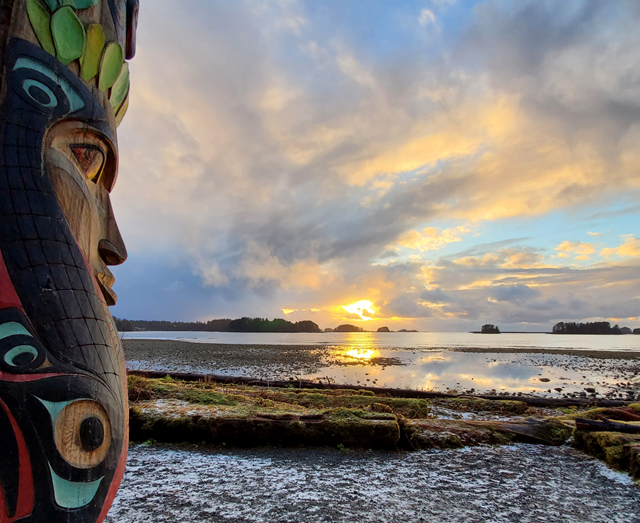
Sitka fees, hours and alertsSitka National Historical Park includes Tlingit relationships with plants, berries, fish and materials in its cultural story. A visitor can learn from that story without claiming permission to harvest from a culturally sensitive site. The NPS material checked for this guide did not establish a general visitor collection quantity for Sitka. A search hit describing historical Tlingit plant use is not enough to authorize a modern visitor to gather there.
Before picking, ask the park for its current superintendent's compendium and the species and location rules that apply. If the permission cannot be verified, leave the plant, mushroom or shell in place. This is also respectful of the difference between living community practices and a recreational outing undertaken by an unrelated visitor.


Make a five-minute rule check, then a food-safety check
Start with the park's current compendium, not a system-wide assumption. Match the named species, the quantity unit and the geography: a quart per person per day, a household annual weight, a shopping bag per family unit, and a qualified subsistence area are not convertible rules. Shenandoah's newer compendium and older plain-language page even differ in their numeric summary. Record the controlling page and ask staff when uncertain.
Then check season and availability. Hopewell's historic orchard could not offer picking in 2026. Great Basin's pinyon guidance limits gathering to fall. Fire Island's beachcombing access varies by season. No listed item is guaranteed to be present, ripe or reachable without crossing a protected area.
Finally, know what you are picking and what you will do with it. Park permission does not identify a mushroom or make a berry safe to eat. Do not uproot a plant, break a branch, disturb a midden or take an occupied shell to meet a target amount. Leave enough for wildlife and for other visitors. When any part of the species, place or permission remains unclear, observe it instead of collecting it.
All 13 Park Service units that list gathering and foraging
Below is every Park Service unit that lists gathering and foraging. Each park sets its own rules for harvest rights, species and seasons. Use the current park rules and, where applicable, your own eligibility before collecting anything.
Free to enter Charges an entrance feePoints are the Park Service reference point for each unit, not a boundary.