An afternoon in a national park can be useful to someone who will never meet you. Count the butterfly crossing a meadow, photograph the same marsh a hundred other visitors have photographed, or record where a mountain goat stands against the skyline. One sighting is small. A careful series across many seasons can tell park scientists what is changing, and where they should look next.
The Park Service lists 42 units with citizen science. That includes full field-survey commitments and projects a first-time visitor can join with a phone. The difference matters more than the label. Glacier trains surveyors for a season; Cuyahoga Valley lets you contribute a photo on a walk. Start with what you can reliably do, then follow the project's instructions so your observation can actually be used. Here are ten ways to take part, ranked for the quality of the work and the clarity of the invitation.
The ten best citizen science projects in the national parks
01Glacier
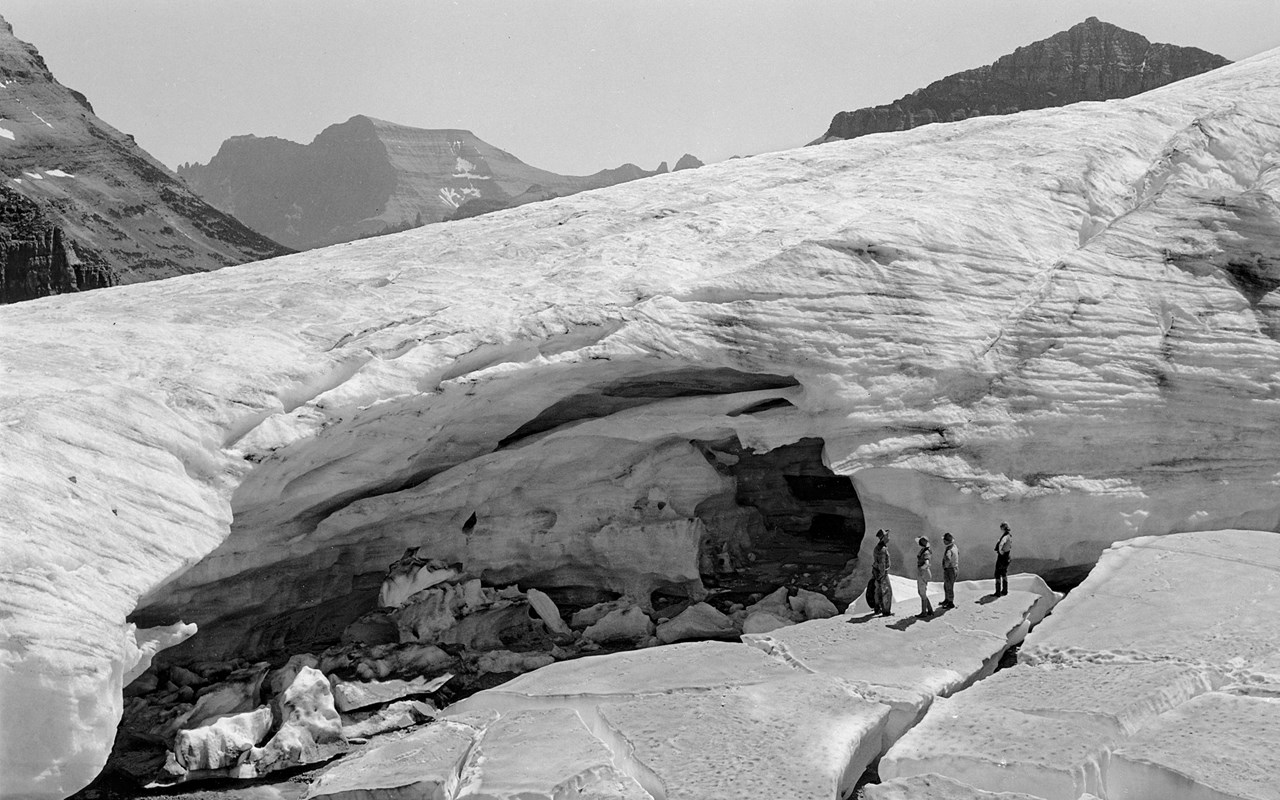
Glacier fees, hours and alertsGlacier's Citizen Science Program has trained volunteers since 2005 to help monitor wildlife that park staff cannot count everywhere on their own. Its loon surveys work at lakes; its high-country routes look for mountain goats, bighorn sheep and pikas. The program is run through the Crown of the Continent Research Learning Center, with field methods taught before volunteers start submitting observations. You are part of a structured study, not merely sending a holiday photo.
The commitment is real. The source program describes a full-day training, multiple surveys over the season and hikes that can run several miles to study sites. Capacity is limited. Ask about this year's recruitment before buying a trip around it, and be candid about the hiking involved. A mountain goat does not shorten the walk back to the trailhead. If you have the time and fitness, the chance to return to a place with a purpose is the point.
02Great Smoky Mountains
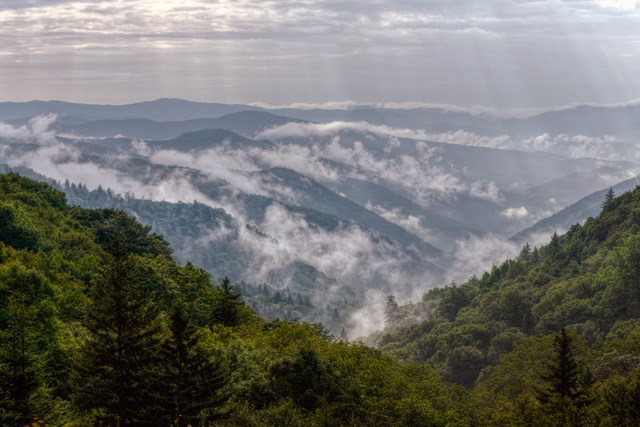
Great Smoky Mountains fees, hours and alertsThe All Taxa Biodiversity Inventory at Great Smoky Mountains has an extravagant goal: document the life of the park, species by species. Discover Life in America coordinates volunteer contributions through field work, education and outreach. It also points visitors to iNaturalist observations for its Smokies Most Wanted project. That range gives a first-timer a door in without pretending everyone must become a trained taxonomist overnight.
The work is more than compiling a spectacular species list. Repeated, identifiable observations make changes visible to researchers, and unexpected finds can lead to questions a staff crew never had time to ask. Check the partner's current volunteer offerings for field days or make an observation using its instructions. The Smokies are crowded in places; the interesting organism may be the one most walkers step past on the way to a waterfall.
03Olympic
Olympic fees, hours and alertsThe Olympic marmot lives in the Olympic Mountains, and the Olympic monitoring project sends volunteer Marmoteers into its habitat to record whether marmots occupy particular patches. The surveys have run since 2010 with support from Washington's National Park Fund. Presence and absence both matter. An empty patch can be part of the story of a changing population, provided the observers followed the same method and looked carefully.
This is not a quick wildlife walk. The park describes backcountry travel, survey training, partners working together and camping or long approaches for many assignments. Applicants should read the current requirements before planning a season around a marmot. The program's 2026 application period was closed when the source draft was checked; future recruitment must be verified on the park page. It is excellent work for people who can handle field conditions, and a poor fit for someone hoping to survey from a roadside overlook.
04North Cascades and Mount Rainier
North Cascades fees, hours and alertsButterfly wings and flowering plants keep two clocks in the Cascades. The Cascades Butterfly Project asks volunteers to monitor both on subalpine routes in North Cascades, Mount Rainier and nearby national forests. Its surveyed sites have documented 57 butterfly species. Repeated walks can show whether emergence and bloom shift with snowpack and temperature; the value lies in returning to the same route with the same method.
The project describes weekly transects for volunteers who learn the identification protocol, and a more accessible photo-inventory route for hikers who can document a butterfly and its location. Pick the role you can sustain. A single sharp photo with a reliable location can help, but it is not interchangeable with a standardized weekly count. The participating forest is Okanogan-Wenatchee, with the second "o" in Okanogan. Check current recruitment and snowmelt conditions before planning a meadow day.
05Cuyahoga Valley
Cuyahoga Valley fees, hours and alertsAt Cuyahoga Valley, a useful scientific contribution can begin with a picture from a marked post. The park describes Chronolog stations at several sites, including Beaver Marsh, where visitors put a phone into a fixed bracket and submit an image. A sequence made from the same viewpoint helps show vegetation and habitat change as restoration work continues. It is a compact lesson in why repeatability matters: the bracket gives a stranger's photo a shared frame of reference.
The park also invites reports of forest pests and recruits volunteers for longer studies of birds, butterflies, bats, trillium and amphibians. Those are different levels of involvement, not a promise that a new volunteer slot is open every day. For an easy first step, follow the sign at a photo station exactly. For a longer role, ask the volunteer office about current openings. You can leave with one honest observation and come back wanting to make a hundred.
06Sequoia and Kings Canyon
Sequoia and Kings Canyon fees, hours and alertsBlue oaks in the Sierra foothills face a question that cannot be answered from one dry year: which trees survive, die or recover over time? Sequoia and Kings Canyon describes long-term monitoring plots, begun after severe drought raised concerns about oak mortality. Volunteers can spend a day helping remeasure trees and learn basic forest-demography methods. The setting is lower-elevation woodland, not the famous grove of giant sequoias; that distinction is part of what makes the project worthwhile.
The park's page invites interested people to contact staff rather than offering a standing drop-in appointment. Ask whether field help is needed now, what training is supplied and what a day outside entails. Measuring a tree twice years apart sounds humble, but its second measurement is what turns a snapshot into a trend. Bring patience and the willingness to count the unglamorous species alongside the spectacular ones.
07Acadia
Acadia fees, hours and alertsAcadia makes the accessible route unusually clear: use iNaturalist to document plants, animals, fungi and lichens, or eBird for birds. The park says those records expand biodiversity information available to managers and researchers. A photograph with date, location and a careful identification is more useful than a vague claim that you saw something near the coast. Others can help confirm a proposed identification after you submit it.
You do not need a formal training day for this one. Walk slowly, photograph a subject well without disturbing it, and save the observation with a precise location that does not put a sensitive resource at risk. The park's citizen-science page also describes earlier organized efforts, but the app-based invitation is the clear ongoing entry point. It suits a visitor with an afternoon who wants to leave an observation rather than sign up for a field season.
08Shenandoah
Shenandoah fees, hours and alertsA phone, a fixed bracket and the same view repeated over months: Shenandoah uses visitor photos to build landscape timelapses at selected sites. Its Chronolog partnership gives directions at the posts, then folds contributed images into a record of ecological and seasonal change. Pass Mountain and Big Run overlooks are among the examples shown on the park's page. You can see how separate visitors' frames become a useful sequence.
It is possible to contribute on a sightseeing day, but take the photograph from the bracket and follow the sign's submission instructions. A clever composition from somewhere else will not line up with the previous observations. The project is a reminder that good science can be less about spotting a rarity than about taking the same ordinary view faithfully. Check the park page for the currently installed stations before driving to one solely for a photo.
09Bryce Canyon
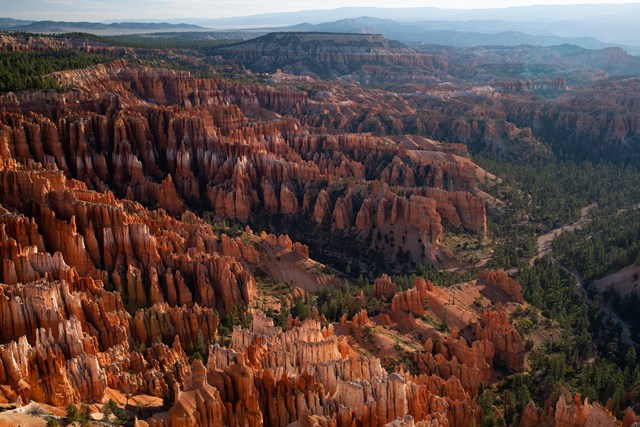
Bryce Canyon fees, hours and alertsBryce Canyon has invited volunteers to an annual butterfly count. It is an event, not a year-round open-ended survey, which makes it a good first structured outing when the date fits. A count puts eyes across a landscape for a shared period and gives beginners a chance to learn from more experienced observers. The park reported a completed count in 2026; the next event and its registration details belong to a future calendar, not an assumed recurring date.
If you have never counted butterflies, ask what identification help and equipment the organizers provide. A quick phone photo may help with a difficult species, but use the count's rules rather than inventing your own tally. The hoodoos draw the crowds, while a small insect can take you into questions about habitat, flowering and the season. Make the event the reason to look carefully, not a reason to chase wildlife off-trail.
10Petrified Forest
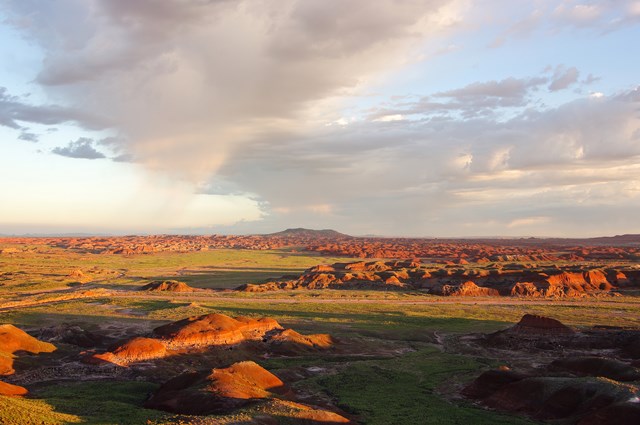
Petrified Forest fees, hours and alertsAt Petrified Forest, a past BioBlitz brought volunteers into a biodiversity survey across a large area of newly acquired park land. That is a strong example of what a short, coordinated field event can do: many people follow a shared effort to record life in a place whose fossil reputation may obscure its living ecology. It is not, however, an assurance that a BioBlitz is scheduled for your visit. Treat the park's earlier event as a reason to watch for another, not as a booking option already open.
For an immediate contribution, use the current park or national BioBlitz instructions if an event is on the calendar. If none is, the broader NPS biodiversity program describes how iNaturalist records can help document species occurrence. Keep to marked access and do not handle or remove specimens unless an authorized event explicitly directs you. A useful record begins with restraint as well as curiosity.





When to go: the fieldwork year
Spring opens recruitment and first surveys. Glacier's training and many high-country projects are announced ahead of summer, while Cuyahoga's photo stations can be an easier day out. Apply to a structured project before booking travel, and read how many repeat visits it expects. A program that needs a full season cannot be done in an afternoon.
Summer is the mountain window. Olympic's Marmoteers and the Cascades Butterfly Project depend on terrain that takes time to lose snow. Warm-weather access does not erase steep approaches, storms or the need to follow the protocol. Check the park's current field requirements, and do not claim a training place until the coordinator confirms it.
Fall is good for seeing what changed. Revisit a fixed-photo station, enter careful sightings at Acadia or ask a project when its observations are reviewed. A few observations across seasons can be more useful than many careless submissions on one day. If the organized count has ended, don't invent a late entry into it.
Winter still has work. Bird records, a repeat landscape photograph or a local project may remain possible when a meadow transect is buried. Watch for recruitment notices for the coming field season. Winter is also the time to learn the apps and identification basics, so your first summer observation is not your first attempt at using the method.
How to contribute records the park can use
- 1
Choose the right level of commitment. Glacier needs training and repeat surveys; a Cuyahoga photo station needs a careful visit. Ask whether the project is recruiting and what the work requires before booking a trip or volunteering for a role you cannot finish.
- 2
Follow the protocol, even when it feels fussy. Olympic records both occupied and empty marmot habitat; a butterfly transect follows a set route; a fixed photo must match earlier frames. The rules make different volunteers' observations comparable. A missed species is still a valid result if you followed the method.
- 3
Record place, time and uncertainty honestly. A close photograph and accurate location can help confirm an identification. Do not guess a species for the sake of a complete list. A tentative identification that others can review beats a confident error.
- 4
Protect the subject. Stay on permitted routes, give wildlife space and do not collect plants or specimens unless the project authorizes it. Some species locations may be sensitive. Follow the project's settings for sharing, and never trade the health of a habitat for a better sighting.
- 5
Look for the actual invitation. A park's past BioBlitz proves that it happened, not that another is open. Read the park's current get-involved page or the partner's volunteer page for openings, training and the person to contact. If all you have is an old event notice, keep researching before you travel.
A short history of counting together
Volunteer naturalists were counting birds long before a phone could identify one. The Christmas Bird Count began in 1900 under the Audubon Society, replacing a holiday bird shoot with an organized census. The method asked many observers to work within a common frame. That simple idea still matters: repeated observations across time and place can answer questions an isolated sighting cannot.
As parks took on bigger inventory and climate questions, volunteer roles became more formal. The Smokies' All Taxa Biodiversity Inventory began in the late 1990s with the ambition to document the park's life; Glacier's citizen-science program followed in 2005 with training linked to wildlife surveys. Olympic's marmot monitoring, running since 2010, asks volunteers to revisit habitat patches so changes in occupancy can be tracked. Each program gives the observer a job that serves a specific research question.
Apps widened the door again. Acadia invites an ordinary visitor to log a well-documented organism, and Shenandoah turns repeat phone photos into a landscape timelapse. Those are not substitutes for a trained field crew. They are different ways to contribute, each useful when the method matches the question. The park still needs people who will look closely and write down what they actually saw.
All 42 parks with citizen science
Below are Park Service units that list citizen science. Open the park's current get-involved page or partner project page for active opportunities, training and dates; a past count is not an invitation to a new one.
Free to enter Charges an entrance feePoints are the Park Service reference point for each unit, not a boundary.