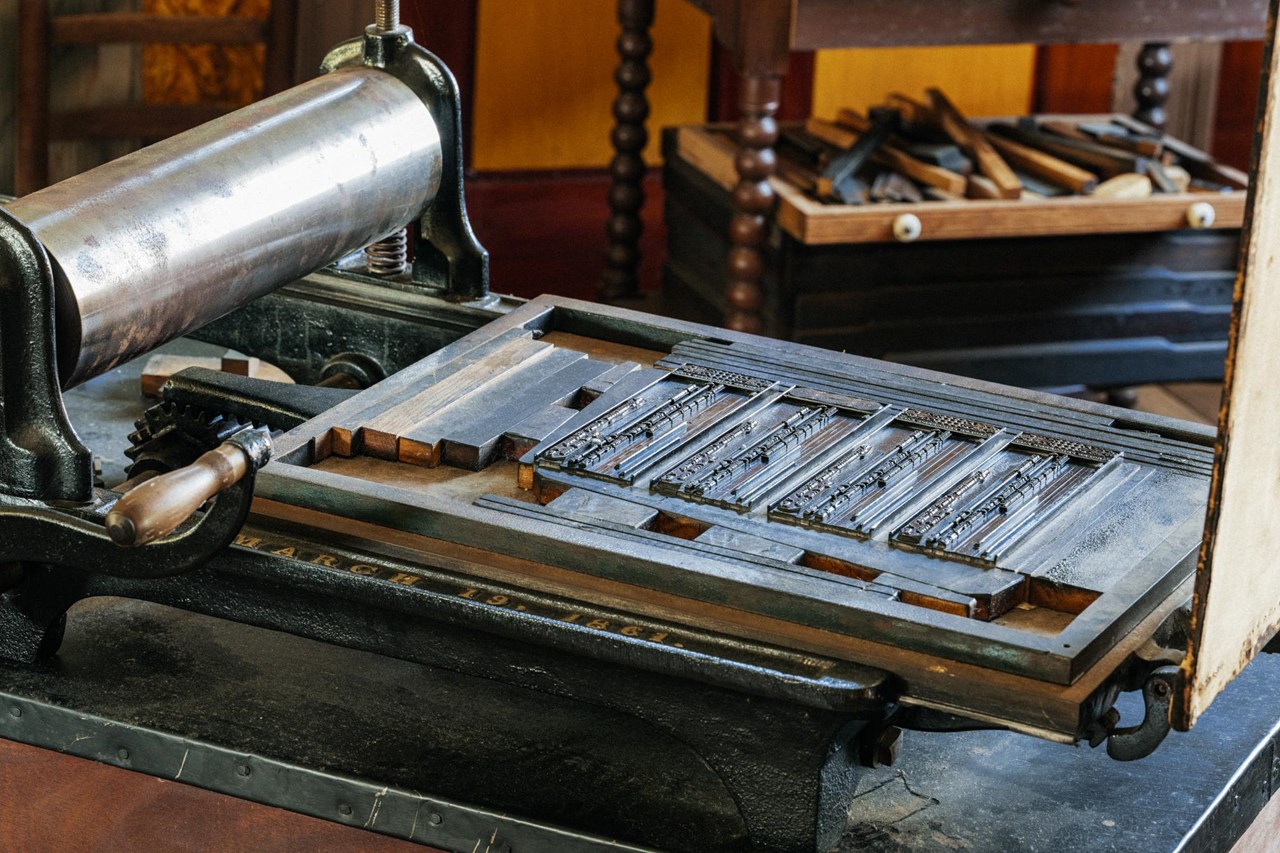
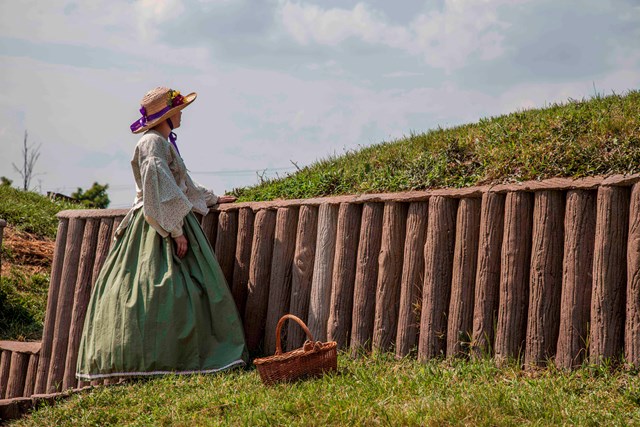
"The surrender happened here" and "I was here when it happened" put you in different conversations with the past. In first-person interpretation, an actor or interpreter speaks within a researched historical character's point of view. At Appomattox you might hear from a soldier or village resident. At a New York tenement, you can ask a teenager about her home in 1916. The form makes questions feel immediate, but it never gives one character the last word on an event.
The Park Service lists 35 units with first-person interpretation. Their offerings are not interchangeable. Some have a clearly advertised live encounter, one uses character voices in an exhibit, and others offer broader costumed history without promising that someone will speak in character that day. The first five below have the clearest route to a first-person experience; the remaining places are worth exploring with a careful calendar check. Choose the voice you want to hear, then verify who will actually be speaking on your visit.
Ten places to encounter history in a character's voice
01Appomattox Court House
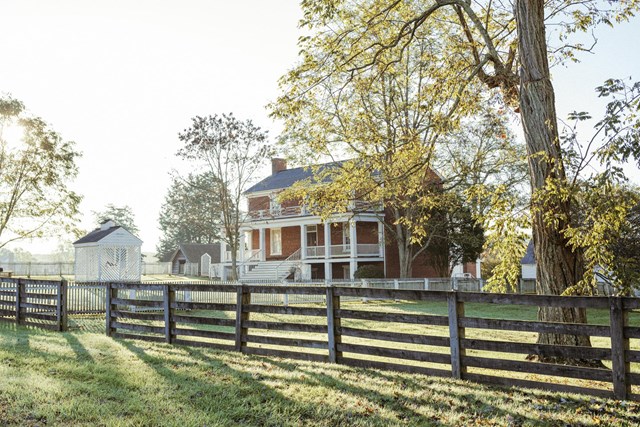
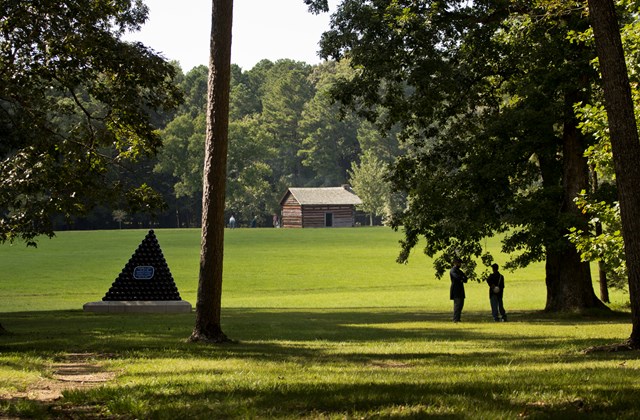
Appomattox Court House fees, hours and alertsAppomattox is the clearest starting point. The park explicitly describes first- and third-person historic character programs during its visitor season. Its roster spans different positions around the surrender: Robert Caldwell, a wounded Confederate soldier; Isaiah Edwards, a Union provost guard; and Martha Hix, a village resident. The same village can look like duty, loss or household disruption, depending on who tells the story. Programs last about half an hour, and the park asks visitors to inquire at the visitor center for the day's schedule.
Ask which character appears and whether that particular program is in first person. Not every costumed talk uses the same form. If you meet a character, ask what that person could have known at the time: where the news arrived, what work remained, who would be leaving. Follow up with a ranger or exhibit for the broader record. A resident's account may be vivid without explaining the whole surrender, emancipation or aftermath. That limit is part of the honesty of the form.
02Lower East Side Tenement Museum
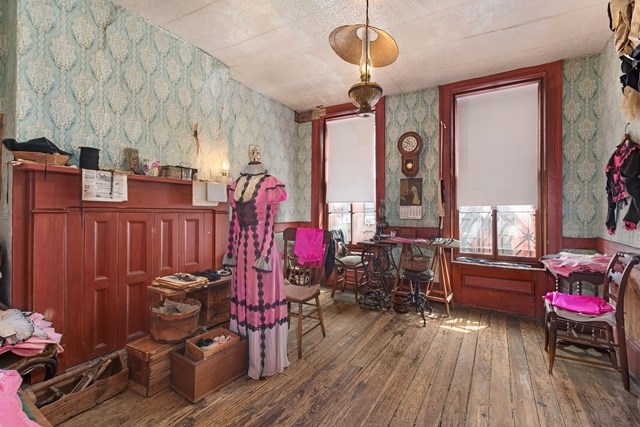
Lower East Side Tenement Museum fees, hours and alertsAt the Lower East Side Tenement Museum, "Meet Victoria" places an actor portraying Victoria Confino in a recreated apartment at 97 Orchard Street. The museum describes Victoria as a real immigrant teenager who came to the United States from Greece; the encounter is set in 1916. Visitors can ask about her former home, the journey and life on the Lower East Side. A tenement room is an intimate stage: questions about cooking, family and neighbors are as useful as questions about a headline event.
This is an affiliated National Park Service site operated by the museum, not a free ranger drop-in. Check the current tour listing and ticket before traveling, especially if this is the reason for a New York stop. The actor's answers are an interpretation built from historical research, not a transcript of every thought Victoria had. Visit another apartment tour afterward if you want to hear how a different family or decade changes the neighborhood's story.
03Historic Jamestowne
Historic Jamestowne fees, hours and alertsHistoric Jamestowne lists living-history tours led by costumed interpreters portraying residents of seventeenth-century Jamestown. Its examples include Rachel Stanton, John Rolfe, Gabriel Archer, Mrs. Richard Buck and Lady Yeardley. A tour can turn a colonial site into a series of choices and pressures faced by a particular resident. That is a different visit from an archaeology walk, where a present-day expert explains what excavations have found.
Both formats are useful, and the park offers them on different terms. Ask at the visitor center whether a character tour is running, which person is portrayed and how the interpreter handles questions outside that person's knowledge. The excavation has a growing body of physical evidence; a character voice makes an argument about life amid it. Let the two inform each other rather than asking one to prove everything the other says.
04Perry's Victory
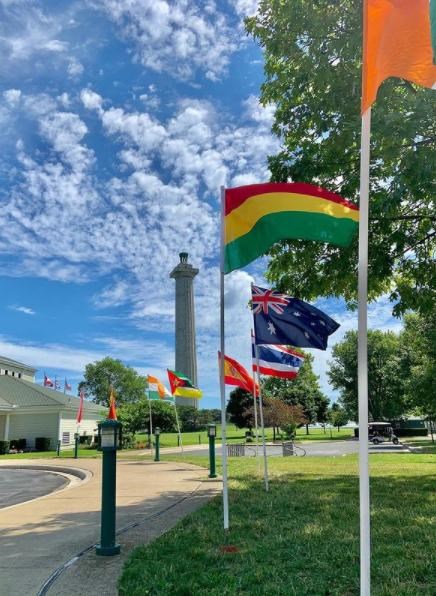
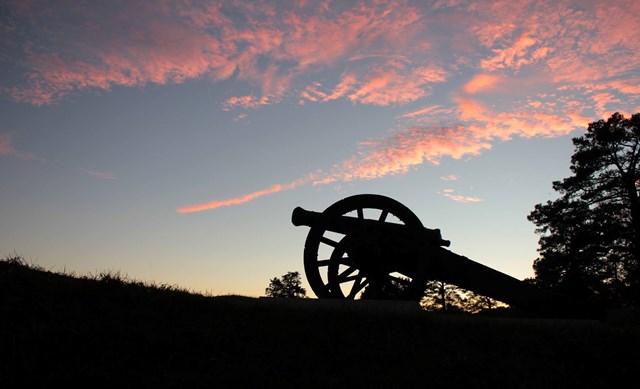
Perry's Victory fees, hours and alertsPerry's Victory and International Peace Memorial lists first-person presentations among its summer ranger programs, alongside talks and historic-weapons demonstrations. That distinction is worth checking before you go. A cannon program can explain the technology of the War of 1812, while someone speaking as a person of the era invites questions about what they knew and feared. The memorial itself connects a battle on Lake Erie to a longer story about relations across the lake.
The park does not promise the same character every day on its general things-to-do page. Check the current events calendar for a named first-person program, its venue and format. If only a ranger talk is scheduled, take that for what it offers rather than expecting someone to stay in character. The point is not to collect costumes; it is to hear how one person's horizon could differ from the hindsight built into a memorial.
05Roger Williams National Memorial
Roger Williams fees, hours and alertsThe first-person voice at Roger Williams National Memorial can be heard in an exhibit rather than from a live interpreter. "Who Has a Voice?" uses audio character statements with on-screen interpretation to explore people in seventeenth-century Providence. The frame matters: the visitor hears a point of view, then gets a chance to question who was allowed to speak and who appears in the surviving sources. The memorial's wider exhibit also considers Williams's ideas about civil power and religious freedom.
This is a good stop if you want to think about how the form works without counting on a performer schedule. It is not a live question-and-answer program. Listen to a character voice, then read the present-day interpretation alongside it. When a short dramatic statement sounds definitive, ask whose testimony it rests on and what the exhibit says about those who left no direct record.
06Andersonville
Andersonville fees, hours and alertsAndersonville has hosted a documented first-person portrayal of Father Peter Whelan, the priest who ministered to prisoners during the Civil War, as a special event. The park's account of that program is historical evidence, not an invitation to see the same character this year. It shows how a carefully chosen viewpoint can bring human scale to a place of enormous suffering without claiming to speak for every prisoner.
If a new character presentation appears on the calendar, read who is being portrayed and what sources support the role. The National Prisoner of War Museum and prison site give the context a single voice cannot carry. Do not plan a trip on the strength of an archived announcement. Andersonville belongs here as a strong example of the form when offered, with a clear limit on current availability. The memorial deserves a visit even on a day with no performer.
07Valley Forge
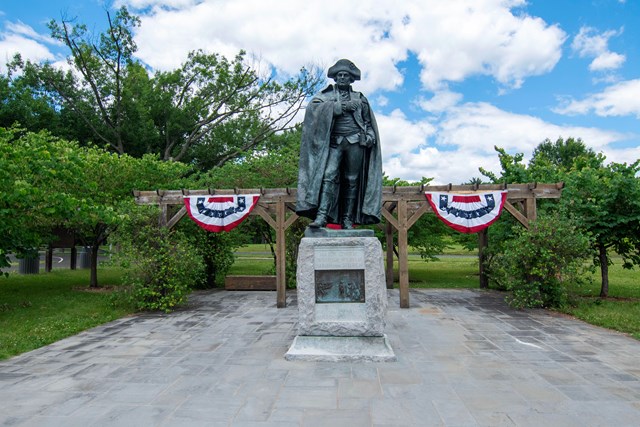
Valley Forge fees, hours and alertsAt Valley Forge, the Muhlenberg Brigade huts are a main living-history setting. Rangers and volunteers in eighteenth-century attire show the building of huts and the daily routine of the Continental Army encampment. A reconstructed hut can make cramped winter life easier to picture than a distant monument, especially when someone explains the work of making and maintaining it.
The park's hut page does not say that every costumed interpreter speaks in first person. Ask what is scheduled and whether a character will remain within a historical point of view or a ranger will explain events from the present. Either can be worthwhile. If your interest is first-person conversation specifically, do not let the presence of a uniform settle the question. See the huts, then use the park's broader interpretation to ask whose labor made the camp possible.
08Fort McHenry
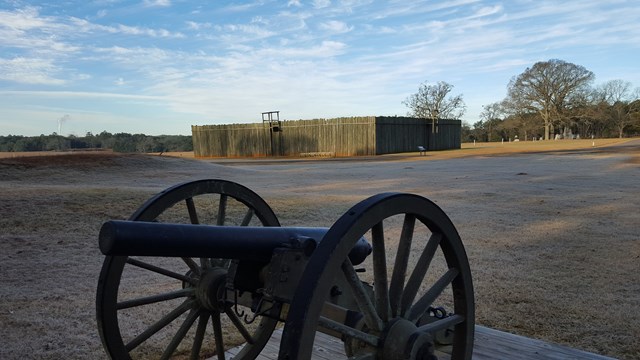
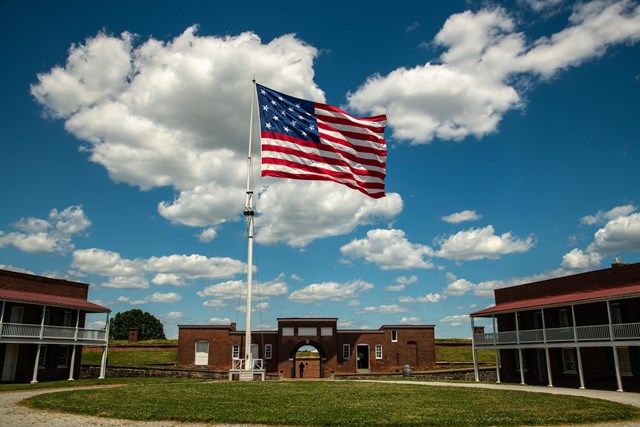
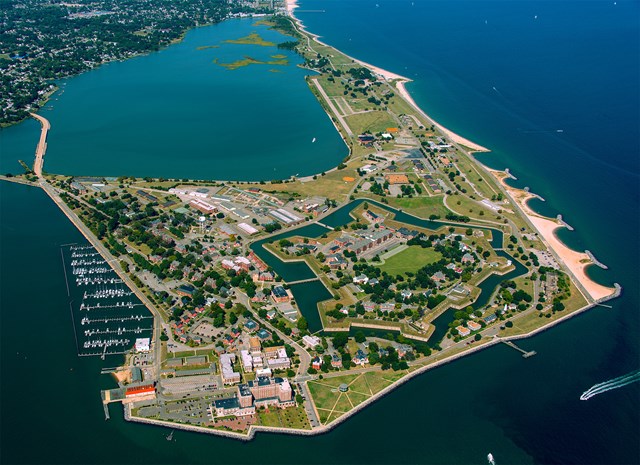
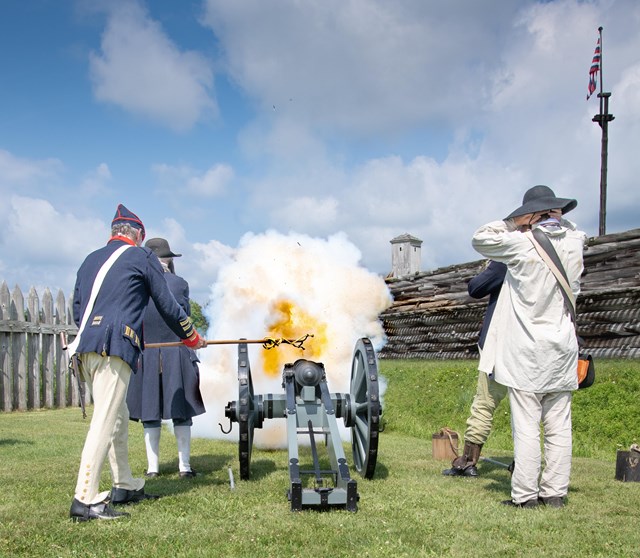
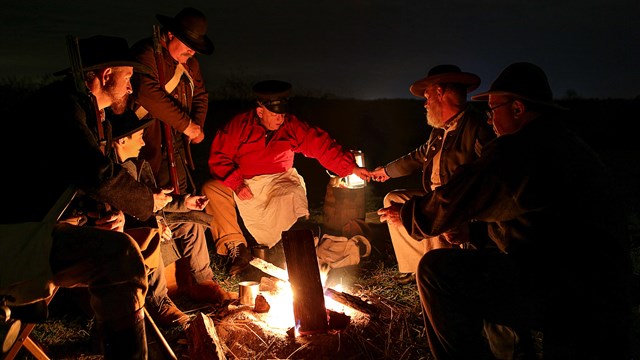
Fort McHenry fees, hours and alertsThe Fort McHenry Guard portrays several generations of people who lived or worked at the fort and in Baltimore. Its War of 1812 impressions include artillery soldiers, field musicians, sailors and civilians, with demonstrations that make garrison labor visible. A fife-and-drum call or weapons drill can tell you something a spoken monologue cannot. The park also represents roles from later periods, so ask which era and person a particular event covers.
The Guard's program description does not mean every appearance is a first-person dialogue. Check the date's program and ask whether you will meet a character, watch a demonstration or hear a present-day explanation. Those are three ways to interpret the same fort. A sailor and a laundress had different information, obligations and chances to be remembered. A good visit keeps those differences rather than turning the whole defense of Baltimore into one stock soldier's speech.
09Palo Alto Battlefield
Palo Alto Battlefield fees, hours and alertsPalo Alto Battlefield invites visitors to talk with living historians in replica Mexican War-era U.S. and Mexican uniforms. Its programs can include camp life, marching, music and weapons demonstrations. Conversation is encouraged, and the park may let visitors try on a uniform piece. That puts a physical question in front of you: what did the clothes and equipment demand of a person before any battle began?
The park's page describes living history broadly, not a guarantee that each participant portrays a named historical person in first person. Ask how the day is being interpreted. A conversation with a modern historian in uniform can be more candid about sources and omissions than a character voice held rigidly in the past. The site tells the story of a war between nations, with individuals whose experiences were not identical. Let the program clarify which viewpoint it has chosen.
10Yorktown Battlefield
Yorktown Battlefield fees, hours and alertsYorktown Battlefield has hosted living-history events, while its regular tours and programs change with staffing. A costumed event on the ground of the siege can help a visitor place an individual's work inside a much larger military operation. It can also be a drill, a demonstration or a modern guided walk rather than a character speaking to you from 1781. The difference is material if you have come for first person.
Use a current event listing, not an old anniversary notice, to find out what is happening. Ask who is being represented, whether the interpreter speaks in character and where the event begins. If no such program is on the calendar, the battlefield still offers a landscape to explore with ranger context. It is better to have an honest guided visit than to promise yourself a performance the park never scheduled.

When to go: find the person, not just the costume
Spring opens event calendars. Historic sites may expand their ranger rosters without offering a daily first-person performance. Check Appomattox's character schedule and Jamestowne's tour lineup by title. A park opening more buildings is not proof that a particular actor or character is on duty.
Summer gives you the broadest chance. Appomattox and Perry's Victory describe character-related programs during the busier season, while parks such as Valley Forge and Fort McHenry may also have demonstrations. Check whether the format is first person, third person or a costumed skill presentation. The difference is visible in the program description, or answerable by a call to the visitor center.
Fall can preserve the quieter conversation. A museum tour such as the Tenement Museum's depends on its own ticket calendar, while outdoor events at battlefields may thin with staffing and weather. Reserve the specific tour you want first and build the rest of the day around it. An old event announcement cannot stand in for a current schedule.
Winter is a good time for exhibits and sources. Roger Williams's character audio offers a first-person approach without a performer on an outdoor stage. A battlefield may have fewer living-history events, but its museum and primary accounts remain. If you want an actual conversation with a character, verify one before traveling; otherwise plan for the history the site can reliably show.
How to ask a character a useful question
- 1
Check the format before booking. "Living history" can mean a demonstration, a costumed third-person talk or first-person portrayal. Appomattox explicitly uses more than one mode. Ask the park who appears, where, and whether you can ask that person questions in character.
- 2
Stay within the person's horizon. Ask what they knew on that day, where they learned it and what they had to do next. Do not ask a soldier in 1865 to explain the next century's scholarship. Save hindsight questions for the ranger speaking in the present.
- 3
Listen for the source and the choice. A real historical person may have left letters; a plausible composite may speak from a wider archive. Ask afterward what was documented and what an interpreter had to infer. A vivid answer need not be a verbatim quotation.
- 4
Look for the missing voice. Appomattox's soldier, Yorktown's officer and a tenement resident can each illuminate a narrow part of a larger story. Use exhibits and primary accounts to ask who had less opportunity to leave evidence, and whose labor or loss the performance did not cover.
- 5
Let the program be what it is. A musket demonstration can teach you about work and risk without pretending to be a dialogue. A recorded character voice can prompt thought without taking questions. If you expected something else, adjust the plan rather than forcing one interpretive form into another.
A short history of talking with the past
Costumed interpreters have long helped visitors imagine labor and daily decisions in preserved and reconstructed places. The method became especially tempting at battlefields, where a landscape can seem empty without the voices of those who crossed it. A character can restore scale to a vast event. A single character can also narrow it too far, which is why good programs surround portrayal with documents, exhibits and modern explanation.
Parks have made different choices about the boundary. Bent's Old Fort's living-history guidelines primarily use second- or third-person interpretation and reserve first-person portrayals of actual people for approved formal programs. Appomattox openly offers both first- and third-person character programs. The distinction is not a measure of how entertaining an interpreter is. It tells the visitor whether a sentence is spoken from inside a historical person's knowledge or from the perspective of someone who can compare evidence later.
A museum can use the form without a live actor, as Roger Williams National Memorial does through exhibit voices. The Tenement Museum uses an actor in a recreated apartment and lets visitors ask questions. In each case, the strongest moment is followed by a second one: stepping out of character to examine what the record can and cannot support. The past is easier to approach through a person. It is harder, and more honest, to leave room for everyone else.
All 35 parks with first-person interpretation
Below are Park Service units that list first-person interpretation. Open the park's current event listing to confirm a live character, recorded exhibit or other format; a place on the list is not a performance time.
Free to enter Charges an entrance feePoints are the Park Service reference point for each unit, not a boundary.








Keep planning
- Living historyThe broader world of costumed interpretation.
- ReenactmentsPublic history staged at larger scale.
- Guided toursA ranger can step outside the character's viewpoint.
- Museum exhibitsFollow up with sources after the conversation.
- The best time to visit a national parkCheck event seasons before travel.