Wolf Trap National Park for the Performing Arts
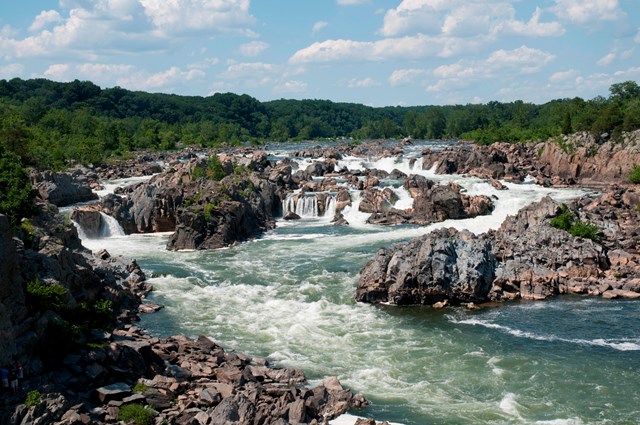
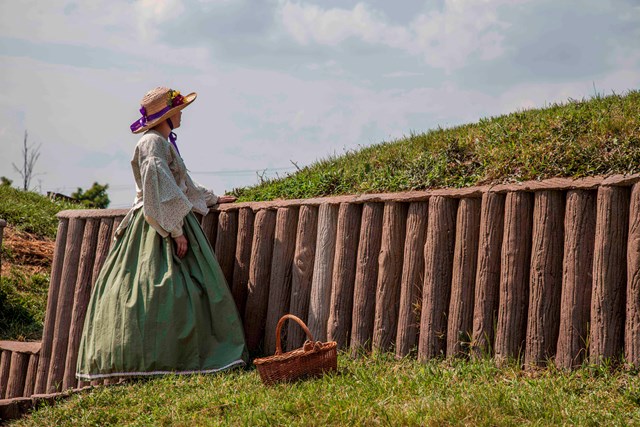
No matter what your age or taste in shows, you'll find something you like onstage at Wolf Trap National Park for the Performing Arts. From May through September, multiple amphitheaters in the park present performances such as musicals, dance, opera, jazz, and popular and country music. A good time to explore the beauty and history of the park without the crowds is October - April.
About under an hour from Washington and 1 hours from Baltimore by car.
Fees & passes
Free. No entrance fee here.
Hours
| Park Operating Hours | Daily · Sunrise to Sunset |
When to go
August draws the most visits here and February the fewest, averaged over 2021 to 2025.
Visitor centers
- Ranger StationPassport stamp
The Ranger Station is located on the left side of the Main Gate to the Filene Center. Brochures, trail maps, and Junior Ranger books are available inside. Lost and Found can also be found here and retrieved during office hours.
Explore
Things to do
- Explore the Outdoors at Wolf Trap30-90 Minutes
Winding through the woods and walking through the native meadows, discover the natural side of Wolf Trap!
Opens on the Park Service site
Films
National Park Service productions, public domain.
Events
- 02:00 PM · free · registration requiredTour begins at Stage Door of the Filene Center.
- 10:00 AM · freeWalk starts at the Ranger Station and parking is available along circular drive.
- Park Explorers - Fall Adventure!11/0101:00 PM · free · registration requiredEvent will be held in the Meadow beside the Filene Center and parking will be in Lot 1, Gil's Hill and Lot 3 as needed.
Map
Interactive map by the National Park Service
Historic landmarks nearby
%2C_21_Oct_2012.JPG/960px-DC_Boundary_stone_SW9_(Banneker)%2C_21_Oct_2012.JPG)


Public land nearby
Distances are approximate. Wilderness Atlas publishes a center point and an acreage for each area rather than a boundary, so each area is treated here as a circle of the same size and the figure is the gap to that circle.
Guidebooks for the South
We earn a small commission if you buy through these links. It does not change what we list.
Titles come from Open Library's catalog, matched by subject.
Reference
Wildlife
Seen this monthRed Fox 98× · Bald Eagle 35× · Osprey 17× · Barred Owl 14× · Belted Kingfisher 9× · Greater Yellowlegs 8× · Peregrine Falcon 7× · Lesser Yellowlegs 5×Research-grade observations within 25 km, last 30 days, via iNaturalist
Full checklist: 82 birds, 17 mammalsHide
Raptors & owlsAmerican Kestrel · Barn Owl · Black Vulture · Cooper's Hawk · Red-shouldered Hawk · Red-tailed Hawk · Sharp-Shinned Hawk · Turkey Vulture
Waterfowl & wadersAmerican Black Duck · Black-crowned Night Heron · Canada Goose · Great Blue Heron · Wood Duck · green heron
Shorebirds & seabirdsKilldeer
Gamebirds & dovesCommon Pigeon · Mourning Dove
WoodpeckersDowny Woodpecker · Hairy Woodpecker · Northern Flicker · Pileated Woodpecker · Red-bellied Woodpecker · Yellow-Bellied Sapsucker
Hummingbirds & swiftsChimney Swift · Ruby-Throated Hummingbird
Also on the checklistAcadian Flycatcher · American Crow · American Goldfinch · American Robin · Baltimore Oriole · Barn Swallow · Belted Kingfisher · Black-and-white Warbler · Blue Jay · Blue-gray Gnatcatcher · Blue-headed Vireo · Brown Thrasher · Brown-headed Cowbird · Carolina Chickadee · Carolina Wren · Catbird · Cedar Waxwing · Chipping Sparrow · Common Grackle · Common Starling · Common Yellowthroat · Dark-eyed Junco · Eastern Bluebird · Eastern Kingbird · Eastern Phoebe · Eastern Towhee · Eastern Wood Pewee · Field Sparrow · Fish Crow · Golden-crowned Kinglet · Great Crested Flycatcher · Hermit Thrush · House Finch · House Sparrow · House Wren · Indigo Bunting · Mallard · Northern Cardinal · Northern Mockingbird · Orchard Oriole · Purple Martin · Red-Winged Blackbird · Red-eyed Vireo · Rose-breasted Grosbeak · Rusty Blackbird · Scarlet Tanager · Song Sparrow · Swainson's Thrush · Tree Swallow · Tufted Titmouse · Veery · Warbling Vireo · White-breasted Nuthatch · White-throated Sparrow · Wood Thrush · Yellow-billed Cuckoo · brown creeper
Small mammalsBeaver · Eastern Chipmunk · Eastern Cottontail · Eastern Gray Squirrel · Southern Flying Squirrel · White-footed Deermouse · mole shrew
PredatorsAmerican Black Bear · Common Gray Fox · Cross Fox · common raccoon
Hoofed mammalsWhite-tailed Deer
BatsBig Brown Bat · Eastern Pipistrelle · Eastern Red Bat · Hoary Bat
Also on the checklistWoodchuck
Activities
Activity guides for this park Hiking in the national parks
Weather & climate
The weather at Wolf Trap National Park for the Performing Arts is typical for the mid-Atlantic area. There are four seasons. The majority of visitation is during the summers, which can be hot and humid during the day and cooler at night.
Questions people ask
Does Wolf Trap National Park for the Performing Arts charge an entrance fee?
No. Wolf Trap National Park for the Performing Arts is free to enter.
Source: National Park Service
What are the hours at Wolf Trap National Park for the Performing Arts?
Standard hours are Sunrise to Sunset, every day.
Source: National Park Service
How busy is Wolf Trap National Park for the Performing Arts?
437,413 recreation visits in 2025, number 123 of 387 units that report visitation.
Source: Most visited parks
Is there cell service at Wolf Trap National Park for the Performing Arts?
At the park's reference point, FCC coverage maps show Verizon 5G, AT&T 5G, and T-Mobile 5G. Coverage inside the park varies by location.
Source: FCC Broadband Map
When was Wolf Trap National Park for the Performing Arts established?
1966.
Source: Wikipedia
What is the weather like at Wolf Trap National Park for the Performing Arts?
The weather at Wolf Trap National Park for the Performing Arts is typical for the mid-Atlantic area. There are four seasons.
Source: Weather & climate
Follow this park
- Alerts feed (RSS)
- Every active Park Service alert for this unit, one item each, rebuilt with the nightly data refresh.
- Add dates to your calendar (.ics file)
- Fee-free entrance days that apply here and each published hours exception, as all-day events.