
The National Park Service is many things, but a golf operator is not one of them. Out of more than 400 units, exactly five list golf among their activities. Two more courses sit on park land without the listing, Langston in Washington's Anacostia Park and the nine holes at Wawona in Yosemite. None of the five was built for a park. Each was somebody else's good idea - an army post's perk, a seaside hotel's amenity, a city that wanted public golf - and the park boundary eventually grew around the fairways. What the Park Service inherited is a strange, wonderful little collection: the lowest golf course on Earth, one of the oldest courses in the West, a genuine Scottish-style links, and two century-old Washington munis whose futures made news in 2026.
All five are open to the public, all five are affordable by resort-golf standards, and each one is worth the round for reasons that have nothing to do with your score. Here they are, ranked.
All five national park golf courses, ranked
01Death Valley: Furnace Creek Golf Course
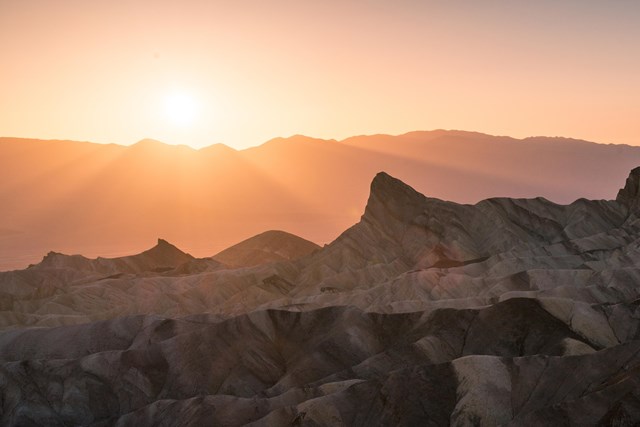
Death Valley fees, hours and alertsThe only round of golf you will ever play 214 feet below sea level, at the lowest-elevation course in the world. The par-70 layout sits on the Oasis at Death Valley resort grounds, palm and tamarisk trees framing fairways with the Panamint Range over every shoulder. The physics are the first hazard: down here the air is denser, the ball flies shorter and stranger, and Golf Digest once put Furnace Creek on its list of America's 50 toughest courses for exactly that reason. The second hazard is the calendar. This is a winter course. From October to May, 18 holes with a cart runs $78.50; from May into September the same round drops to $45, and the resort quietly recommends early tee times, which is a polite way of saying the fairway is 120 degrees by lunch. Tee times open 120 days out, and rental sets are available, which matters when your clubs are a checked bag you did not bring. Coyotes watch from the rough at no charge.
02Presidio of San Francisco: Presidio Golf Course
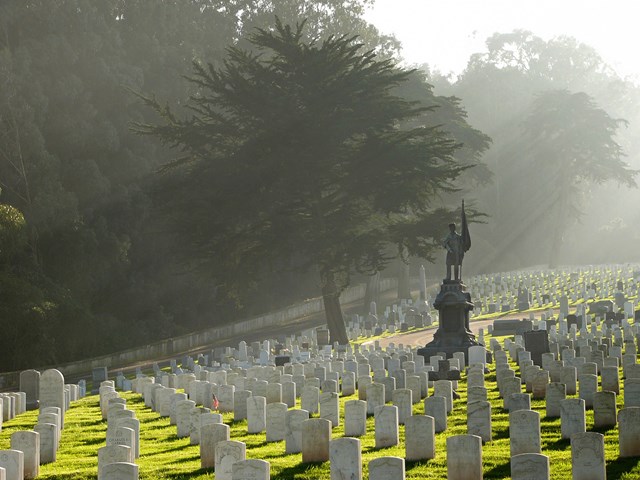
Presidio fees, hours and alertsThe oldest golf course west of the Mississippi, and for a century you could not play it. The course started in 1895 as nine scruffy holes laid out by an officers' club, greens fees 50 cents, on a working Army post. It grew to 18 holes in 1910, got its final routing in 1921, and spent most of the 20th century reserved for the military while the eucalyptus and Monterey pine the Army planted grew into a forest around it. When the Presidio became a national park site in the 1990s, the course finally opened to the public, and it turned out the officers had been keeping one of the best municipal-quality tracks in California to themselves. It is now the priciest golf in the park system: $105 to $137 depending on the day and whether you walk, with a 3 percent park fee on top that goes back into the Presidio. San Francisco residents get a real discount. The fog is free.
03Cape Cod: Highland Links
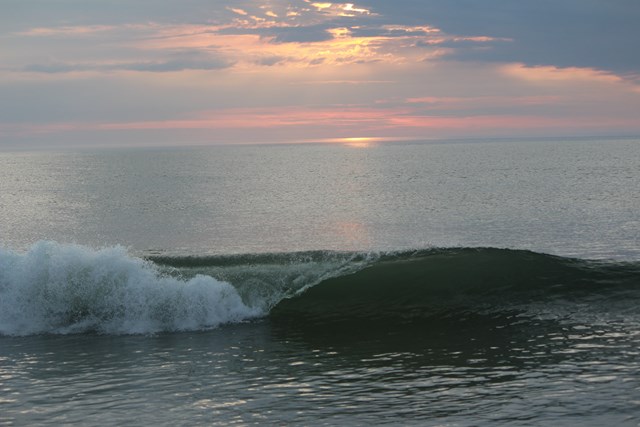
Cape Cod fees, hours and alertsA golf course from the 1890s that plays like it, in the best way. Highland Links has been sitting on the bluffs of North Truro since sometime between 1892 and 1898, next to the lighthouse, and it remains the closest thing to a Scottish links on the East Coast: deep natural rough, heath and Scotch broom, ocean wind as the primary defense, 5,331 yards of par 70 that will beat up a modern player who shows up expecting target golf. Francis Ouimet played an exhibition here after the sand greens became grass, back when that was how you knew a course had arrived. When Cape Cod National Seashore was created in the 1960s, Highland Links became federal property, and it now anchors the Truro Highlands Historic District. The price stayed stuck in another era too: nine holes for $40, 18 for $70 on the 2026 rate card, with the Atlantic filling the left side of your vision all day. There is no finer argument for the park service's accidental golf portfolio.
~delta, CC BY-SA 4.0, image source
04National Mall and Memorial Parks: East Potomac Golf Links
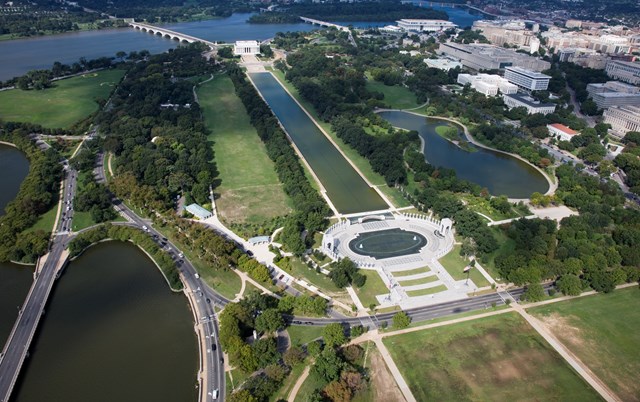
National Mall fees, hours and alertsThe cheapest and most improbable golf in the system: a municipal course at Hains Point, surrounded by the Potomac, where you can hit a 7-iron with the Washington Monument over the flag and pay a municipal greens fee for the privilege. East Potomac was built from 1918 to 1923, in the middle of the Golden Age of public golf, and it has been Washington's everyman course ever since. As of September 2026, it is also the most contested fairway in America. The Park Service is pursuing a championship-scale redesign, more than 150 trees have already come down, the plan is in federal court, and a judge has ordered that the course cannot be closed or overhauled without prior notice. What that means for a visiting golfer is simpler: it is still open, still cheap, and still one of the most unusual urban rounds in the country, and its future is genuinely uncertain. Play it while it looks like this. And bring the kids, or your own childhood, for the adjacent miniature golf course: built in 1931, it is the oldest continuously operating mini-golf course in the United States.
05Rock Creek Park: Rock Creek Park Golf Course
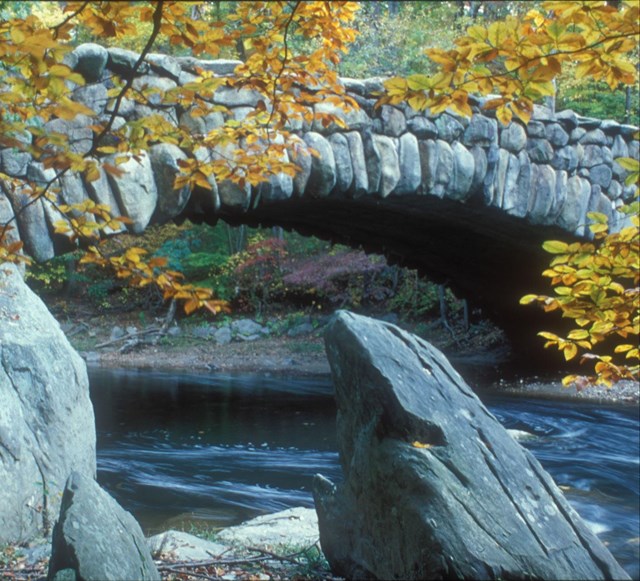
Rock Creek Park fees, hours and alertsA golden-age municipal in the middle of Washington's big urban forest, at half strength and mid-comeback. The original nine holes opened in May 1923 with President Harding in attendance, designed by William Flynn, the architect behind the 1931 redesign of Shinnecock Hills, who expanded it to 18 holes by 1926. The course was beloved, then neglected, then beloved again, and the back nine has been closed since 2019, with a long-planned rehabilitation now stalled. What you play today is the hilly, tree-lined front nine for $19 on a weekday, plus a five-hole loop for $12, which might be the best value in American golf with a pedigree. The nonprofit National Links Trust is running the city's courses for now, and its restoration plan is on hold. When it comes, this ranking changes.

How to play a national park course
Nothing here books through Recreation.gov. Each course is run by its own operator - a resort, a trust, a management company - with its own website and tee sheet, and each park page above links you toward the right front door. A few things carry across all five.
Book ahead for the famous ones. Furnace Creek opens tee times 120 days out and fills in winter, when Death Valley is at its best. The Presidio rewards early booking and punishes spontaneity on weekends. Highland Links is easier, but summer weekends on Cape Cod are summer weekends on Cape Cod.
Chase the twilight rates. Every one of these courses discounts late-day rounds, and the park courses make twilight an experience: Death Valley cools, the Presidio's fog comes in, Hains Point glows. Furnace Creek's sundowner rate cuts the peak-season price by more than a third.
Rent the clubs. All five rent sets, which turns a national park golf stop into something you can fold into a road trip without checking a bag. Quality varies; price does too ($14 at Rock Creek, $50 at Furnace Creek).
Respect the season. The single biggest mistake is showing up at the wrong time of year. Death Valley is October to May. Highland Links is a fair-weather New England course. The DC courses and the Presidio play year-round. Our guide to the best time to visit a national park applies to fairways too.
Walk if you can. Four of the five are walkable, the prices drop, and these are courses built for walking before carts existed. The exception is midsummer Death Valley, where the cart is life support.
A short history of golf in the national parks
None of these courses was a park service idea. Golf came first, and the parks followed.
The oldest two were private recreation. Highland Links went up in the 1890s as the amenity of a Truro resort hotel, and the Presidio's nine holes appeared in 1895 because an Army commander let a group of San Francisco businessmen mow some fairways on the post. Both were eventually swallowed by park boundaries: the seashore in the 1960s, the Presidio's conversion from Army post to national park site in the 1990s. Death Valley's course was a desert resort's way of keeping winter guests entertained, and it became the park's pride when the monument grew around Furnace Creek.
The courses have outlasted the hotel, the Army post, the borax company and several golf booms.
Washington did it on purpose. In the Golden Age of public golf, when the sport was exploding and cities raced to build municipal courses, the capital built some of the best: East Potomac, built from 1918 to 1923 on reclaimed river flats, then Rock Creek in the 1920s with a genuine golden-age architect in William Flynn. These were people's courses, cheap and crowded and central, and they stayed that way for a century.
The modern chapter is about rescue. By 2020 the DC courses were worn down, and the Park Service leased them to the nonprofit National Links Trust to restore. The lease was ended early at the end of 2025, and the trust now runs them on a temporary basis: Rock Creek's rehabilitation has stopped mid-swing, East Potomac sits in court and in the headlines, and the argument over what public golf on federal land should be is being had in real time. The courses have outlasted the hotel, the Army post, the borax company and several golf booms. The fairways tend to win.
All 5 parks with golf
The complete list is below - this page is the rare Park Atlas activity where the top-ten list had to stop at five. Click through for each park's fees, hours, alerts and campgrounds.
Free to enter Charges an entrance feePoints are the Park Service reference point for each unit, not a boundary.


Keep planning
- Mini-golf in the parksOne course, and it is the oldest in America.
- The best time to visit a national park, by park typeThe season question, settled.
- How to plan a national park road tripDeath Valley and the Presidio pair nicely.
- Stargazing in the parksWhat to do at Death Valley after the last putt drops.