Kalaupapa National Historical Park
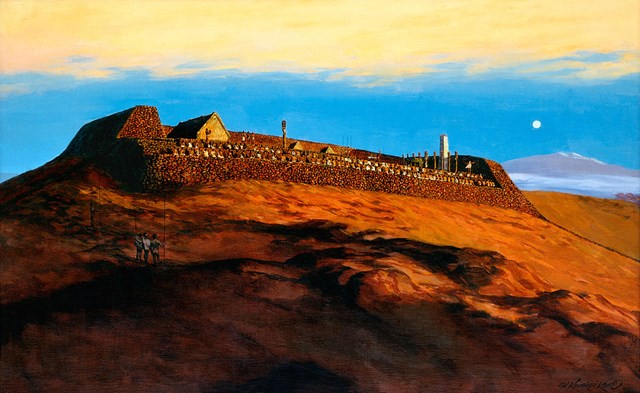
When Hansen's disease (leprosy) was introduced to the Hawaiian Islands, King Kamehameha V banished all afflicted to the isolated Kalaupapa Peninsula on the north shore of Molokai. Since 1866, more than 8,000 people, mostly Hawaiians, have died at Kalaupapa. Once a prison, Kalaupapa is now a refuge for the few remaining residents who are cured but were forced to live their lives in isolation.
Consequently, there is no road access into the peninsula. Directions from the Park Service ↗
Alerts
- ClosureNPS ↗Kalawao County Restrictions
Access to the park, including Kalawao County, the Kalaupapa Trail, the settlement, and Waikolu Valley, is restricted to residents and visitors with approved permits issued by Hawaii State Department of Health. Violations will result in arrest/fine.
- InformationPhones Are Not Operational
We continue to experience intermittent outages with our phone lines. If your call does not go through, please try again later, or try to leave us a message and we will get back to you. Thank you for your understanding.
- InformationArrival by Boat
It is prohibited to come within 1/4 mile of the Kalaupapa shoreline. Access by boat within the quarter mile offshore park boundary requires a special use permit.
- InformationUnmanned Aircraft
Launching, landing, or operating an unmanned aircraft from or on lands and waters administered by the National Park Service within the boundaries of Kalaupapa National Historical Park is prohibited. This includes model airplanes, quadcopters, and drones.
Fees & passes
Free. No entrance fee here.
The National Park Service does not charge any entrance fees for admission to Kalaupapa National Historical Park, but all visitors need a permit before entering the park*. Read below for more information on obtaining permits for your visit. Children under the age of 16 are not allowed in Kalaupapa Settlement. *Permits are required by the National Park Service and the Hawaii State Department of Health.
Hours
| Park Hours | Daily · All Day |
When to go
July draws the most visits here and September the fewest, averaged over 2021 to 2025.
No campgrounds, no webcams, no things to do or events in Park Service data. What is here comes from the official page. The rest lives there.
Checked nightly. Modules appear as soon as the Park Service publishes the data.
Explore
Films
National Park Service productions, public domain.
News
- Kalaupapa National Historical Park to Offer Public Tours ↗2026-06-24
For the first time, Kalaupapa National Historical Park will offer public tours starting July 9, 2026. The tours will be provided twice a week, and reservations can be made beginning June 26.
Map
Interactive map by the National Park Service
On the National Register nearby
- U.S. Coast Guard Molokai LightStructure · Kalaupapa · 2.8 mi
- R. W. Meyer Sugar MillStructure · Kalae · 3.8 mi
Public land nearby
Distances are approximate. Wilderness Atlas publishes a center point and an acreage for each area rather than a boundary, so each area is treated here as a circle of the same size and the figure is the gap to that circle.
Hawaii guidebooks
We earn a small commission if you buy through these links. It does not change what we list.
Titles come from Open Library's catalog, matched by subject.
Reference
Wildlife
Full checklist: 33 birds, 15 mammalsHide
Raptors & owlsBarn Owl
Shorebirds & seabirdsBulwer's Petrel · Laysan Albatross · Pacific Golden Plover
Gamebirds & dovesSpotted Dove · Zebra Dove
Also on the checklistBlack Francolin · Black Noddy · Common Myna · Eurasian Skylark · Hawaiʻi ʻAmakihi · House Finch · Japanese Bush-warbler · Northern Cardinal · Nutmeg Mannikin · Red-billed Leiothrix · Red-crested Cardinal · Warbling White-eye · `a · koa'e 'ula · koa'e kea · white-rumped shama · ʻA · ʻAkekeke · ʻApapane · ʻAukuʻu · ʻAʻo · ʻEwaʻewa · ʻIwa · ʻIʻiwi · ʻUaʻu · ʻUaʻu Kani · ʻŪlili
Small mammalsNorway rat · Polynesian rat · black rat · house mouse
Marine mammalsHawaiian monk seal · humpback whale · rough-toothed dolphin
Hoofed mammalsaxis deer · feral horse
BatsHawaiian hoary bat
Also on the checklistDomestic Cat · domestic dog · feral goat · feral pig · small Indian mongoose
Weather & climate
Hawaii enjoys warm temperatures year-round, although site conditions at the park can vary depending on weather and time of year. The rainy season is in the winter with the more hot and humid days in the summer. Trade winds are fairly constant and typically blow from the northeast. Daytime temperatures range from 65–75° F in the winter to 80-90°F in the summer. Nighttime temperatures are often in the 60-70°F range.
Questions people ask
Does Kalaupapa charge an entrance fee?
No. Kalaupapa is free to enter.
Source: National Park Service
Is Kalaupapa open year-round?
Yes. The grounds are open 24 hours a day, year-round.
Source: National Park Service
Is anything closed at Kalaupapa right now?
4 active alerts as of October 14, 2026: Kalawao County Restrictions; Phones Are Not Operational; and more.
Source: Alerts
How busy is Kalaupapa?
15,335 recreation visits in 2025, number 339 of 387 units that report visitation.
Source: Most visited parks
When was Kalaupapa established?
1980.
Source: Wikipedia
What is the weather like at Kalaupapa?
Hawaii enjoys warm temperatures year-round, although site conditions at the park can vary depending on weather and time of year. The rainy season is in the winter with the more hot and humid days in the summer.
Source: Weather & climate
Follow this park
- Alerts feed (RSS)
- Every active Park Service alert for this unit, one item each, rebuilt with the nightly data refresh.
- Add dates to your calendar (.ics file)
- Fee-free entrance days that apply here and each published hours exception, as all-day events.
More in Hawaii